

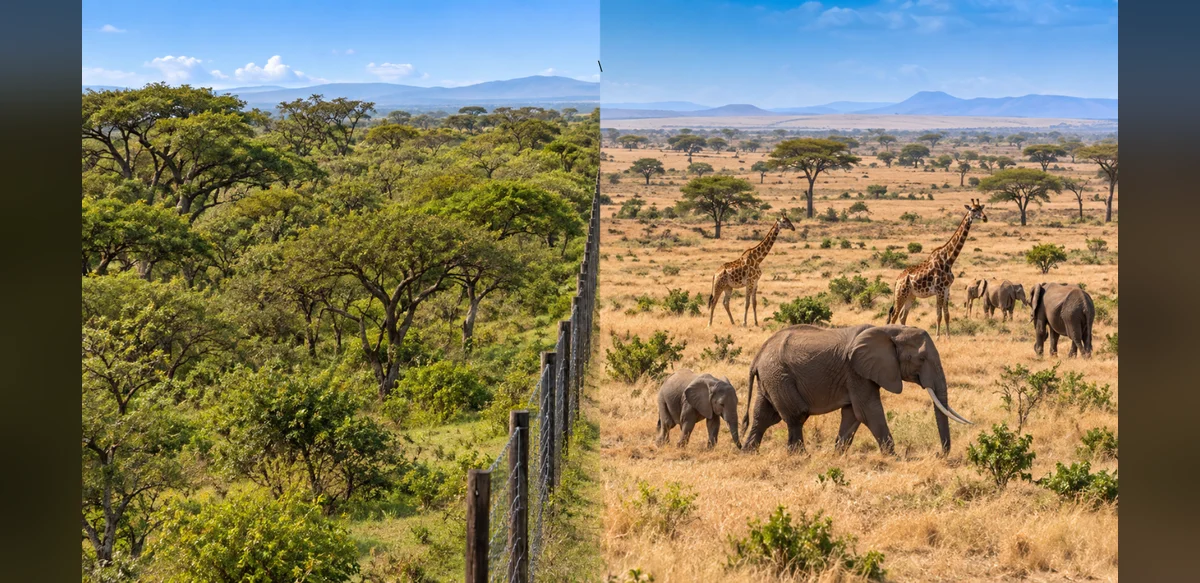
A recent study in Kenya has documented a notable reduction in tree cover within a savanna ecosystem after large herbivores were allowed to return to an area from which they had been excluded for nearly two decades. Researchers observed the changes following the reintroduction of elephants and giraffes to a protected zone in the region.
The investigation focused on how these animals influence vegetation patterns over extended periods. During the 18 years of exclusion, the landscape experienced an increase in woody plant growth due to the absence of browsing pressure. Once the animals resumed their natural movements through the area, tree density began to decrease steadily.
Scientists monitored multiple plots to compare conditions before and after the animals returned. Data collected through field measurements and satellite imagery confirmed that browsing by the large mammals played a primary role in limiting tree regeneration. Smaller plants and grasses showed different responses compared to taller woody species.
The findings highlight the complex interactions between herbivores and plant communities in savanna environments. Elephants in particular are known to push over young trees and strip bark, while giraffes target higher foliage that other species cannot reach. These behaviors collectively shape the structure of the landscape.
Local conservation teams noted that the results align with broader patterns observed across African grasslands. Maintaining balanced populations of native wildlife remains essential for preserving the characteristic open character of savannas. Without such natural controls, areas can transition toward denser woodland that alters habitat availability for other species.
The study also considered additional factors such as rainfall variability and soil conditions. While these elements influence plant growth, the return of the herbivores emerged as the dominant driver of the observed decline in tree cover. Controlled experiments helped isolate the effects from seasonal fluctuations.
Community members living near the study site expressed interest in the outcomes. Many rely on the savanna for grazing livestock and gathering resources. Understanding how wildlife affects vegetation can support more informed land management decisions that benefit both people and animals.
Further research is planned to track longer-term trends as the ecosystem continues to adjust. Monitoring will include assessments of biodiversity, carbon storage in woody plants, and potential shifts in fire frequency. Such data could inform strategies for managing protected areas across similar environments.
The project involved collaboration between Kenyan research institutions and international partners specializing in ecology. Fieldwork combined traditional observation methods with modern remote sensing tools to build a comprehensive record of changes. Results have been shared with wildlife authorities to guide future policy.
Overall, the observations underscore the importance of large herbivores in maintaining savanna dynamics. Their presence prevents unchecked woody encroachment that could reduce open habitats preferred by many grazing species. Continued study will help clarify how these processes respond to changing climate conditions and human activities in the region.


