

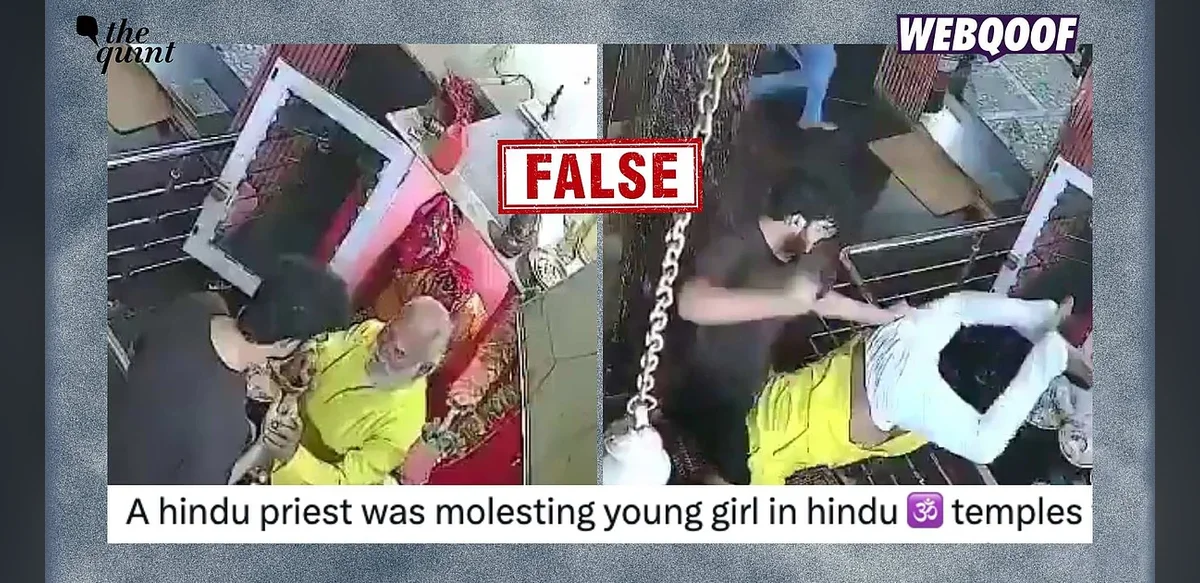
A video depicting a physical confrontation inside a place of worship has been circulating widely on various online platforms accompanied by inaccurate descriptions of the events shown. The footage shows a man dressed in religious garments being struck and restrained by others present at the location. Multiple posts have asserted that the incident occurred because the individual had allegedly harmed a young girl and that a family member responded with violence in retaliation. These descriptions do not align with verified information about the recording.
Investigations into the origin and context of the clip reveal that the claims linking the assault to any act of molestation lack supporting evidence. No official reports or credible accounts confirm the alleged offense mentioned in the posts. Instead the video appears to stem from a separate dispute whose precise details remain under examination by local authorities. Sharing the material with fabricated explanations has contributed to the rapid spread of false narratives across social networks.
Fact-checking organizations monitoring online content have flagged numerous instances of the same video being reposted with altered captions. In each case the added text introduces elements not present in the original recording or in contemporaneous news coverage. Such modifications can mislead viewers who encounter the material without additional context. Platforms hosting the posts have begun attaching warning labels or reducing distribution in response to user reports and internal reviews.
Public reaction to the misleading claims has included expressions of outrage and calls for stricter moderation of unverified stories. Community leaders have urged individuals to consult reliable sources before accepting or forwarding sensational accounts. Authorities responsible for public safety have also noted that unsubstantiated allegations can complicate ongoing inquiries and place unnecessary strain on investigative resources.
The episode illustrates broader challenges associated with rapid information sharing in digital environments. Videos captured in one setting can be repurposed to support unrelated stories when stripped of accurate background. Viewers are encouraged to examine multiple independent reports and official statements prior to forming conclusions about depicted events. Continued vigilance from both platform operators and individual users remains essential to limiting the reach of distorted material.
Local media outlets covering the original incident have published timelines based on eyewitness statements and police records. These accounts focus on the immediate circumstances of the altercation without introducing unconfirmed motives. Cross-referencing such reports against viral posts quickly reveals discrepancies in the narrative being promoted online. Readers seeking clarity are advised to prioritize coverage from established news organizations over anonymous social media commentary.
Efforts to trace the earliest appearance of the altered captions point to accounts that frequently circulate unverified or sensational content. Patterns observed in similar past cases suggest that engagement metrics can incentivize the creation of provocative descriptions regardless of factual accuracy. Addressing this dynamic requires both technological interventions and greater public awareness of verification practices.
In summary the video does not document the sequence of events described in the accompanying claims. The assault captured on camera occurred for reasons distinct from those alleged and no evidence supports assertions of prior misconduct by the individual shown. Accurate reporting depends on adherence to confirmed details rather than speculative additions. Users encountering comparable material are encouraged to pause before sharing and to seek corroboration from multiple trustworthy outlets.


