


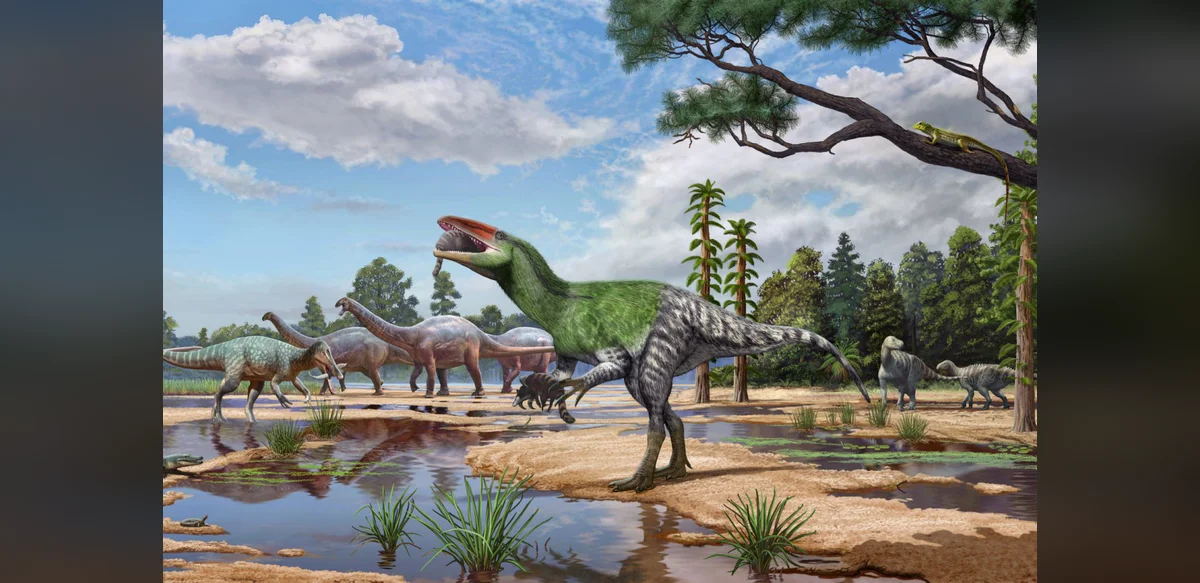
Scientists have formally described a previously unknown species of predatory dinosaur based on a fossil specimen collected more than one hundred years ago. The creature, now named Invictibellatrix amberina, belonged to the megaraptoran group and inhabited the region that is today part of Britain approximately one hundred twenty million years ago. Researchers suggest the animal may have possessed claws reaching lengths of up to twenty centimeters.
The fossil was originally recovered from the Isle of Wight, an area long recognized for its rich deposits of early Cretaceous remains. Although the specimen had been stored in collections since the early twentieth century, modern analytical techniques allowed paleontologists to recognize distinctive anatomical features that distinguish it from known species. Detailed examination of the bones revealed characteristics consistent with megaraptorans, a clade of theropod dinosaurs noted for elongated limbs and large manual claws.
Megaraptorans are thought to have been agile hunters that occupied specific ecological niches during the Cretaceous period. The newly identified species adds to the growing record of theropod diversity in what was then a subtropical environment with river systems and floodplains. The twenty-centimeter claw estimate is based on comparative measurements with related taxa and provides insight into potential predatory adaptations.
Reevaluation of historic specimens has become an important practice in paleontology. Many fossils collected decades ago were described under limited information or placed in broad categories. Advances in imaging technology and phylogenetic methods now permit more precise classification. In this case, the reexamination confirmed that the Isle of Wight material represents a distinct taxon rather than an existing species.
The formal naming process involved publication in a peer-reviewed journal, where the authors presented diagnostic traits supporting the new species designation. The genus name reflects regional heritage while the specific epithet refers to amber-like coloration observed in the preserved material. Such naming conventions follow established rules of zoological nomenclature.
The Isle of Wight continues to yield important vertebrate fossils, contributing to understanding of European dinosaur faunas during the early Cretaceous. Ongoing fieldwork and museum curation efforts ensure that additional specimens may come to light or that existing ones can be studied with updated approaches. The description of Invictibellatrix amberina underscores the value of maintaining and revisiting scientific collections over long periods.
Further research may focus on biomechanical modeling of the large claws and comparisons with other megaraptoran remains from South America and Australia. These studies could clarify evolutionary relationships and ecological roles within the group. For now, the species stands as a notable addition to the British fossil record, illustrating how discoveries can emerge from material gathered generations earlier.


