


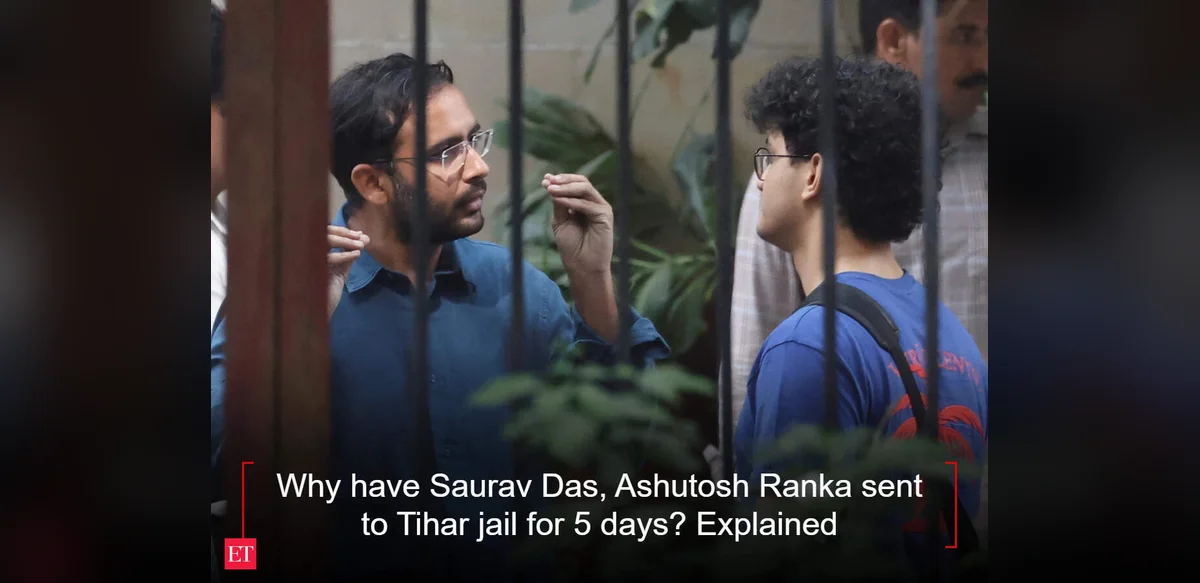
Two individuals associated with a civil rights group were placed in judicial custody for five days by a Delhi court. The detention followed their apprehension by local police in connection with entering an area previously used for demonstrations but later removed from the list of designated protest sites. Authorities stated that the location in question had been officially de-notified, meaning permissions for gatherings there were no longer in effect. The two men, identified as Saurav Das and Ashutosh Ranka, were taken into custody shortly after the incident. Reports indicate the action occurred several days after an earlier release related to the same matter. Court proceedings resulted in the five-day judicial custody order. Details surrounding the precise circumstances of the entry remain limited in official statements. The case involves questions about access rules at the historic site known as Jantar Mantar. Police maintained that the individuals had entered despite the change in status. Legal representatives for the detained individuals have not yet issued detailed public comments on the latest development. The matter is expected to return to court after the custody period concludes. Observers note that such cases often involve procedural aspects of protest regulations in the capital. The de-notification of protest sites has been discussed in administrative circles as a measure to manage public order. No additional charges or outcomes have been confirmed at this stage. Further updates are anticipated once the judicial process advances.
The sequence of events began with the detention at the specified location. Following standard procedure, the individuals were produced before a magistrate who issued the custody directive. Five days of judicial custody means the persons will remain in Tihar jail during this interval without the possibility of immediate release on bail. This type of order is common in cases where investigation or further inquiry is pending. The broader context includes ongoing discussions about where demonstrations may legally take place in Delhi. Jantar Mantar had long served as one such venue before the change in its designation. The shift in policy has led to several similar incidents involving activists and organizers attempting to use the space. In this instance, the police acted on the reported unauthorized presence. The court considered the police submission and granted the requested custody period. Supporters of the detained leaders have expressed concern over the use of custody in such matters, while authorities emphasize enforcement of updated rules. The case continues to draw attention from those monitoring civil liberties and public assembly regulations. As the five-day period progresses, additional information may emerge regarding any formal charges or next steps in the legal process. The incident underscores the evolving framework governing protest locations within the city.
Neutral reporting on this development focuses solely on the documented actions and court order. No independent verification of intent or additional background has been provided by either side beyond the basic facts of detention and custody. The individuals involved hold positions within the mentioned organization, which has been active in various advocacy efforts. Their arrest and subsequent custody order represent the latest chapter in a series of interactions with law enforcement over site access. Public records show that the de-notification occurred through official channels prior to the event. Enforcement of the new status has resulted in multiple detentions in recent weeks. This particular case led directly to the five-day judicial remand. Observers continue to watch for any statements from the court or police that might clarify the investigation status. The situation remains fluid pending the conclusion of the custody term and any subsequent hearings. All parties are expected to present their positions when the matter is next listed. The emphasis remains on procedural adherence to the updated site regulations.


