


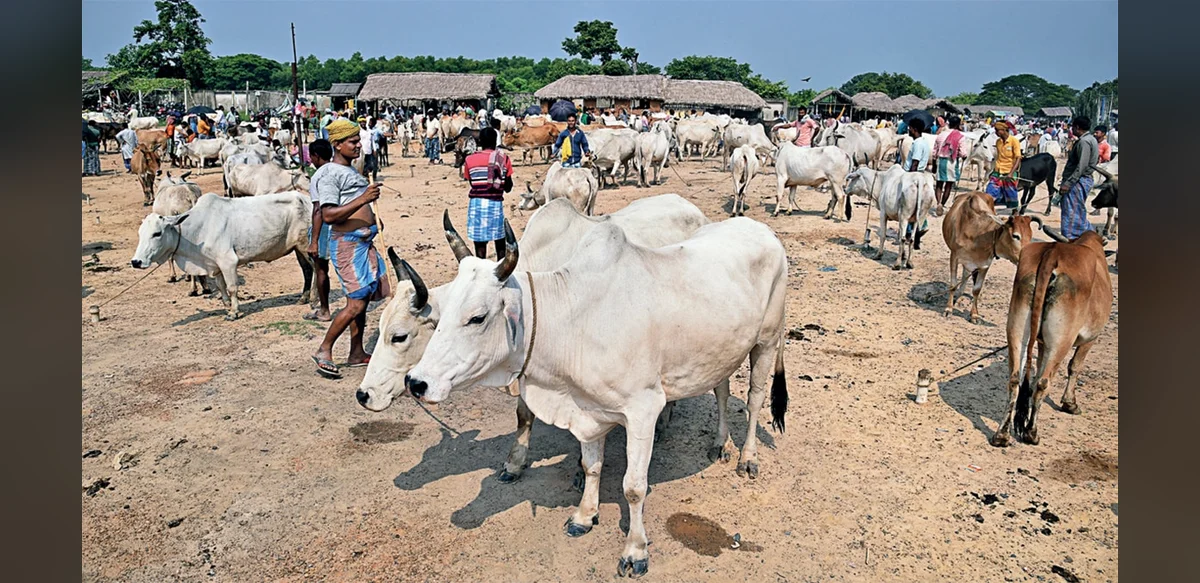
Cattle rustling has emerged as a persistent challenge in parts of eastern India, particularly in West Bengal where the terrain and border proximity create unique conditions for such activities. Reports indicate that organized groups exploit remote villages and riverine routes to move livestock across state and international boundaries.
Local authorities have noted an increase in incidents over recent years. Farmers in districts bordering Bangladesh often discover missing animals at dawn, with tracks leading toward less monitored areas. The economic impact on smallholders is significant, as cattle represent both livelihood and cultural value in rural communities.
Law enforcement agencies have responded by strengthening patrols along known smuggling corridors. Joint operations involving state police and border security forces aim to intercept groups before they reach crossing points. However, the vast network of waterways and dense vegetation complicates surveillance efforts.
Community leaders emphasize the need for better awareness programs. Villagers are encouraged to report suspicious movements promptly and to secure livestock enclosures more effectively. Some districts have introduced community watch initiatives that have shown modest success in deterring theft.
Experts point to broader factors contributing to the problem. Demand for meat in neighboring regions, combined with price differentials, creates incentives for illegal trade. Weak enforcement at certain checkpoints allows perpetrators to operate with relative impunity.
Government officials have called for enhanced coordination between states. Proposals include shared databases of stolen animals and improved tracking mechanisms using modern technology. Funding for additional checkpoints and night patrols remains a priority in budget discussions.
Residents in affected areas express frustration over repeated losses. Many rely on cattle for agricultural work and dairy production, making each theft a severe setback. Rehabilitation support for victims has been limited, prompting calls for dedicated compensation schemes.
Investigations reveal that rustling networks often involve multiple layers, from local scouts to transporters and middlemen. Breaking these chains requires sustained intelligence gathering and cross-border cooperation where applicable.
Public discourse on the issue highlights the balance between security measures and the rights of legitimate traders. Clear regulations distinguishing legal movement from illicit activity are seen as essential to avoid undue harassment.
As authorities continue to refine strategies, the focus remains on protecting vulnerable rural economies while respecting the complexities of the region. Ongoing monitoring and adaptive policies will determine whether incidents decline in the coming seasons.

