


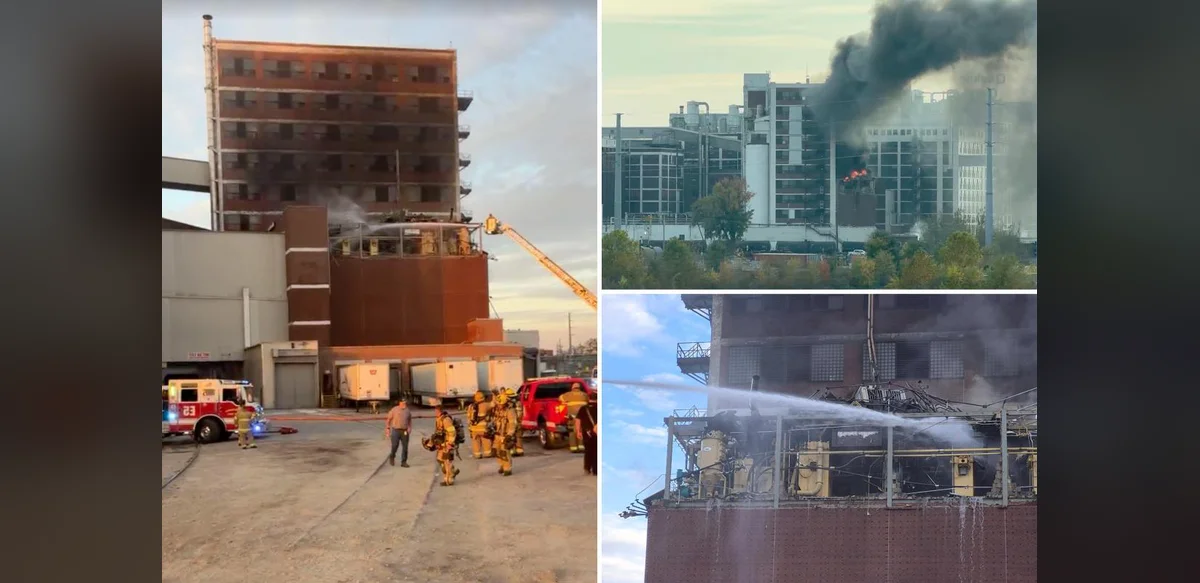
An explosion at a major food processing facility in Cedar Rapids, Iowa, triggered a large fire that drew significant attention from local emergency services. The site, known as the Quaker Oats plant, is described as the largest facility of its type anywhere in the world. Despite the intensity of the blast and subsequent blaze, every employee present was able to leave the premises without harm. Officials confirmed that no injuries occurred during the incident.
The event unfolded when an initial explosion sent flames and smoke into the air above the plant. Responders arrived quickly to contain the fire and ensure the safety of those inside. Evacuation procedures were followed promptly, allowing all workers to reach designated safe zones. Investigations into the cause are expected to begin once the area is secured and the fire is fully extinguished.
Cedar Rapids has long been home to this expansive production site, which plays a notable role in regional manufacturing. The facility processes oats and related products on a massive scale, contributing to the local economy through employment and output. The explosion highlighted the importance of robust safety measures at such industrial locations, where rapid response can prevent harm even in unexpected situations.
Emergency teams worked through the day to monitor the fire and prevent it from spreading to nearby structures. The plant’s size meant that containment efforts required coordination among multiple agencies. Firefighters focused on isolating affected sections while ensuring ventilation and structural stability. By evening, the main blaze had been brought under control, though crews remained on site to address hotspots.
Company representatives stated that production would be paused pending a full assessment of damage and safety conditions. Employees were directed to temporary arrangements while the review takes place. Local authorities emphasized that the priority remained the well-being of workers and the surrounding community. No impact on nearby residents was reported beyond visible smoke.
The incident serves as a reminder of the risks inherent in large-scale processing operations. Regular drills and equipment checks are standard at facilities of this kind, helping to facilitate orderly evacuations when needed. In this case, those preparations appear to have contributed to the positive outcome of zero injuries.
Further details about the sequence of events leading to the explosion will likely emerge from ongoing inquiries. Investigators will examine machinery, storage areas, and operational records to determine contributing factors. Until then, the focus stays on recovery and ensuring the site meets all safety standards before any resumption of activities.
Community members expressed relief that no one was hurt. Local leaders noted the plant’s longstanding presence and its importance to the area’s identity. Support services were made available to workers affected by the temporary shutdown. The event, while dramatic, ended without the human cost that such accidents can sometimes carry.
In the broader context of industrial safety, this occurrence underscores the value of preparedness. Facilities handling large volumes of materials maintain strict protocols precisely for moments like these. The successful evacuation at the Cedar Rapids site demonstrates how those measures function in practice.
As cleanup and inspection efforts continue, attention will turn to lessons that can be applied elsewhere. Similar plants across the country may review their own procedures in light of this event. The absence of injuries provides a measure of reassurance even as the cause is determined.
The Quaker Oats plant remains a key landmark in Iowa’s manufacturing landscape. Its scale and output have made it a point of reference for the industry. The recent fire, though serious, did not result in any reported long-term effects on the workforce beyond the immediate disruption.
Authorities continue to monitor air quality and structural integrity around the site. Updates will be provided as more information becomes available. For now, the emphasis rests on recovery and the confirmation that all personnel emerged unharmed from a potentially dangerous situation.

