


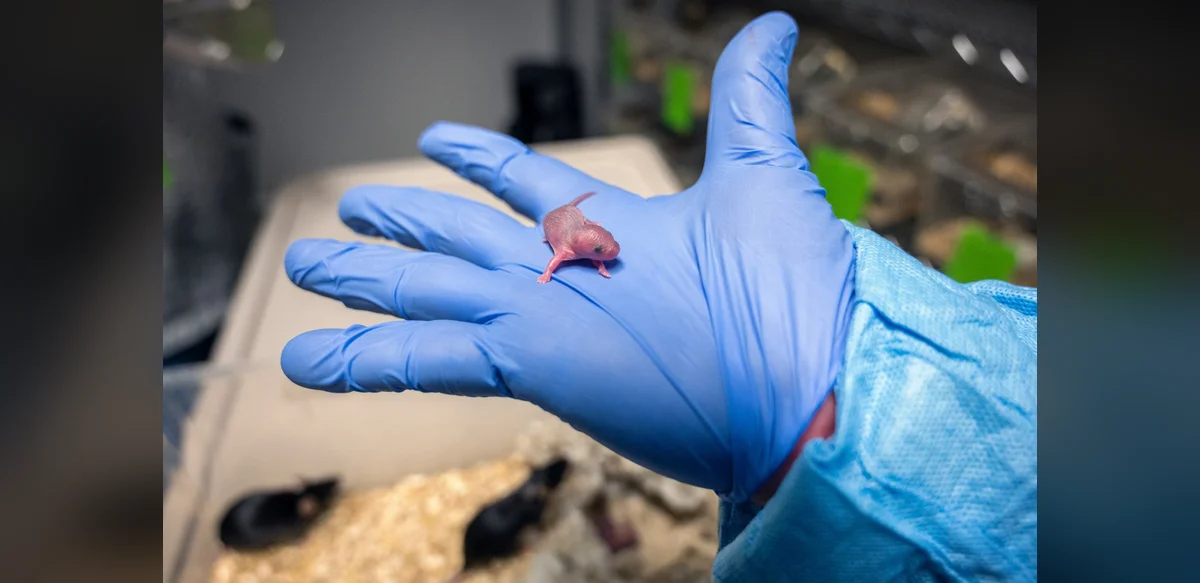
Recent research conducted on mice indicates that the natural process of breathing out following birth may deactivate certain tissue regeneration capabilities. The investigation points to a biological mechanism that appears linked to changes in carbon dioxide levels. Scientists observed that this shift occurs shortly after birth and leads to a reduction in the capacity for nerves and other tissues to repair themselves effectively.
The study highlights how exposure to higher levels of carbon dioxide could potentially reverse this deactivation. In experiments, researchers found that adjusting the breathing environment in young mice allowed some regenerative functions to resume. This suggests the pathway is not permanently fixed and may respond to external factors such as gas composition in the air.
Nerve regeneration has long been a focus in biological research because many injuries to the nervous system result in limited recovery. The findings from this mouse model provide new insights into why regeneration declines after the early stages of life. By examining the transition from fetal to postnatal breathing patterns, the team identified carbon dioxide as a key element influencing cellular behavior.
The reversible nature of the observed changes opens possibilities for further exploration in controlled settings. Researchers noted that the effects were measurable through tissue analysis and functional tests on the animals. While the work remains at the preclinical stage, it underscores the importance of environmental conditions in developmental biology.
Additional details from the investigation show that the switch in regenerative ability coincides with the onset of independent breathing. Before birth, the fetal environment maintains different gas levels that support ongoing tissue development. After birth, the drop in carbon dioxide appears to signal a change that limits regrowth potential in certain cell types.
Scientists involved in the project emphasized the need for additional studies to confirm these observations across different models. They also stressed that any potential applications would require extensive safety evaluations. The current data are based solely on laboratory mice and do not extend to other species at this time.
The research contributes to a broader understanding of how physiological transitions at birth shape long-term biological functions. It also raises questions about whether similar mechanisms operate in other tissues beyond nerves. Continued investigation could clarify the molecular signals involved in this carbon dioxide-related pathway.
Overall, the study presents evidence that targeted adjustments in carbon dioxide exposure might influence regeneration outcomes in specific contexts. The results are described as preliminary yet consistent within the parameters of the mouse experiments. Future work will likely examine dosage, timing, and duration of any interventions to better define the limits of reversibility.
This line of inquiry aligns with ongoing efforts in biology to map the factors that control tissue repair. By focusing on a naturally occurring gas, the approach avoids introducing entirely new substances into the system. The emphasis remains on understanding existing biological processes rather than creating novel ones.
Readers interested in the field of regenerative biology may find these observations useful for tracking developments in related areas. The publication of the findings is expected to prompt discussion among researchers studying developmental transitions and cellular plasticity. As with all such studies, replication and peer review will play important roles in validating the conclusions.

