


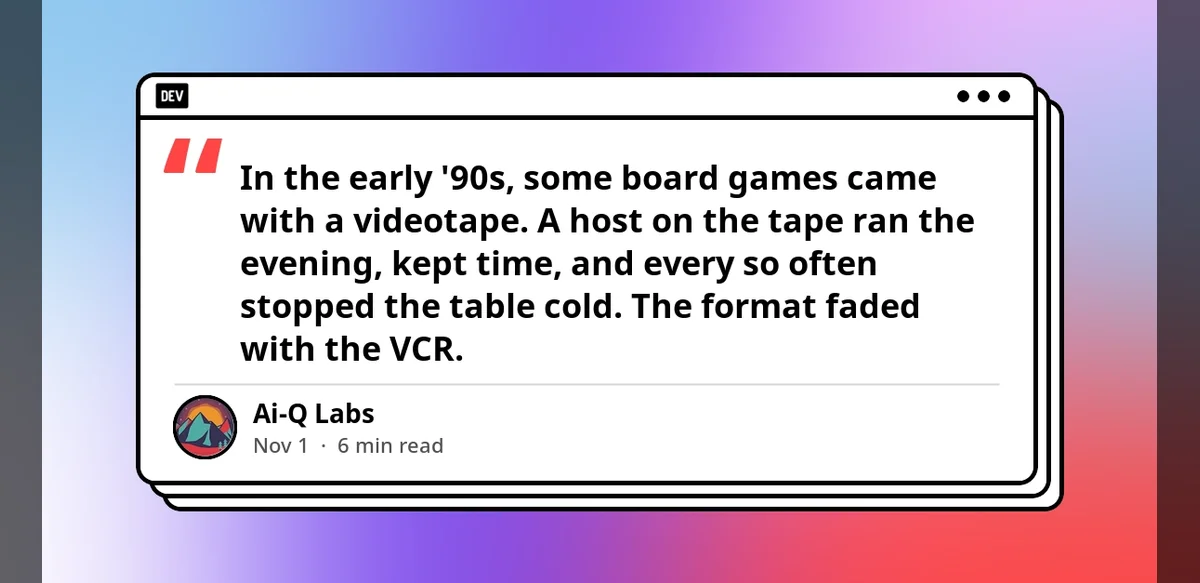
A new project developed during a recent hackathon event seeks to recreate the experience of vintage VCR-based board games using modern command-line tools. The initiative, known as VCR Party Host, focuses on a specification-driven approach to building software that emulates the interactive elements once popular in physical media formats.
Participants in the event aimed to blend retro entertainment concepts with current development practices. The project emphasizes building from the command line, allowing users to interact with game mechanics through text-based inputs that simulate the selection and playback features of old VCR systems.
Organizers noted that the effort highlights how legacy gaming formats can inspire fresh digital experiences. By relying on detailed specifications rather than traditional coding methods, the team created a functional prototype that maintains the core appeal of the original board game while adapting it for contemporary platforms.
The hackathon setting provided a structured environment for rapid iteration. Team members collaborated on defining clear requirements upfront, which guided the implementation process from initial concept to working version. This method helped ensure consistency across different components of the application.
Feedback from the event suggested strong interest in preserving elements of past media technologies. Attendees observed that the project successfully captured the tactile and sequential nature of VCR interactions within a software framework.
Further development could explore additional features such as multiplayer support or expanded content libraries. The current build serves as a foundation for exploring how command-line interfaces can deliver engaging user experiences rooted in historical formats.
Overall, the entry demonstrates the potential for creative reinterpretations of older entertainment styles in today’s technology landscape. It underscores the value of structured development processes in delivering projects that honor their inspirational sources while meeting modern usability standards.

