


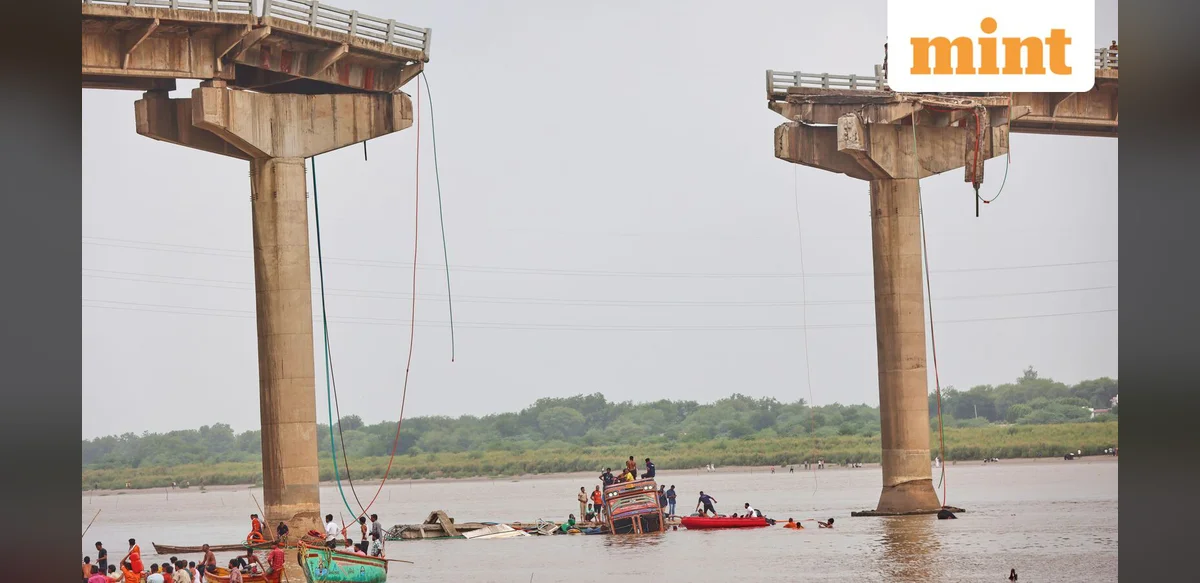
Infrastructure such as bridges, tunnels and highways forms essential connections that support daily travel and economic activity across the country. Despite their importance, numerous projects encounter structural problems either during building phases or shortly after completion. These incidents often result in loss of life and significant financial setbacks.
Recent years have seen several high-profile cases where newly constructed or existing spans collapsed under normal loads or during seasonal weather events. Investigations typically point to a combination of factors including substandard materials, inadequate engineering oversight and rushed timelines driven by project deadlines.
Experts note that monsoon conditions place additional stress on foundations and supports. Water levels rise rapidly, leading to erosion around piers and abutments. In many instances, drainage systems prove insufficient to handle the volume, accelerating wear on critical components.
Government agencies have responded with reviews of safety protocols and increased funding for inspections. Independent audits are now required at multiple stages of construction to identify weaknesses before they become hazards. Contractors face stricter penalties for deviations from approved designs.
Maintenance remains a persistent challenge. Older structures built decades ago often lack modern reinforcements and require regular assessments that are not always carried out on schedule. Budget allocations for upkeep frequently fall short of what engineers recommend.
Public safety concerns have prompted calls for greater transparency in project reporting. Local communities affected by failures seek clearer communication about risks and timelines for repairs. Advocacy groups emphasize the need for community input during planning to account for local environmental conditions.
Technological solutions are being explored to improve monitoring. Sensors embedded in concrete can track stress levels and moisture content in real time, allowing early intervention. Drone surveys provide detailed imagery of hard-to-reach areas without disrupting traffic.
International comparisons suggest that countries with rigorous quality controls experience fewer incidents. Adopting similar standards could reduce the frequency of problems, though implementation requires sustained commitment from multiple stakeholders.
The economic impact extends beyond immediate repair costs. Disruptions to transport routes affect supply chains, delay goods delivery and increase expenses for businesses reliant on timely movement of products. Rural areas suffer disproportionately when links to markets are severed.
Policy discussions continue around balancing speed of construction with durability. Some proposals advocate for longer project durations to allow proper curing of materials and thorough testing. Others focus on training programs to build a skilled workforce capable of meeting technical demands.
While progress has been made in certain regions through targeted investments, nationwide consistency remains elusive. Continued attention to design standards, material quality and ongoing surveillance offers the best path toward safer and more reliable infrastructure networks.

