


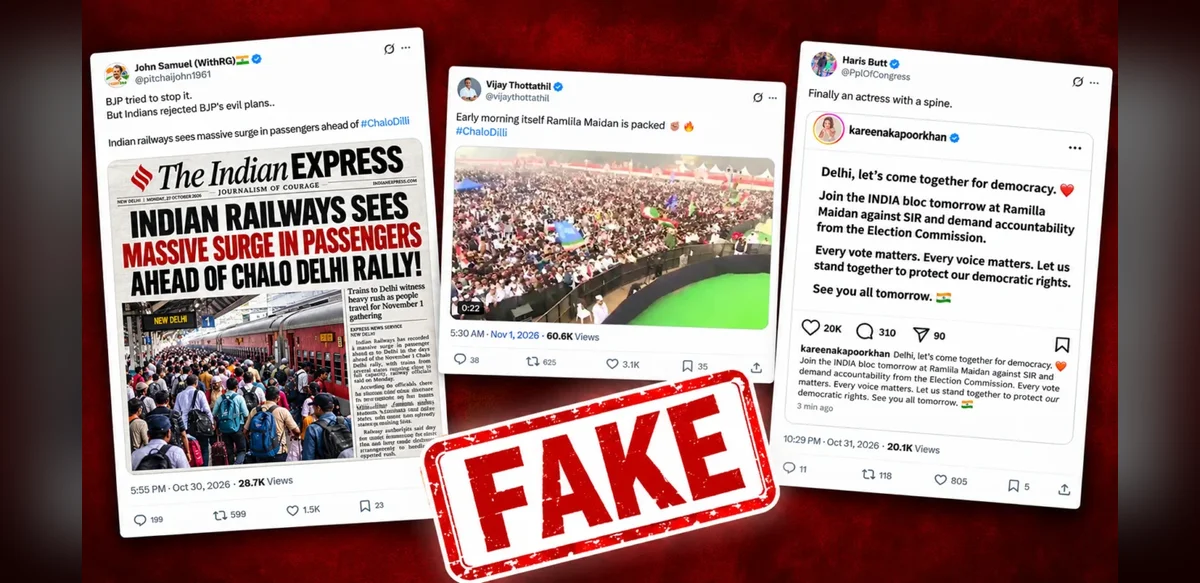
New Delhi: Ahead of the opposition alliance event scheduled for November 1 at Ramlila Maidan, several misleading items appeared on social media platforms. These included a fabricated front page from a major newspaper, an outdated video clip, an artificially created image of a large gathering, and a false social media post linked to a film actor. Verification showed that none of the items accurately represented the upcoming gathering.
The newspaper clipping presented as the October 27 edition carried a headline about increased rail travel linked to the event. Examination revealed multiple errors, including an incorrect day of the week for the date and a tagline printed in the wrong color. Visual distortions in the image further indicated manipulation. Detection software confirmed the use of artificial intelligence tools in its creation. The actual edition of the newspaper contained no matching report, and its online version showed no such story.
A video depicting a substantial assembly in an open area was shared with claims that it showed preparations at the venue on the morning of the event. Reverse image searches connected the footage to posts made by political figures in mid-December of the previous year. Those earlier posts described the scene as part of a separate party-organized protest against alleged electoral irregularities held at the same location. The clip therefore originated from an earlier occasion and bore no relation to the November gathering.
An image showing a dense crowd with visible political posters was also circulated as proof of attendance. The posters featured party leaders, yet the faces appeared altered. Analysis by detection tools identified the photograph as generated through artificial intelligence methods rather than captured on site. Organizers had anticipated significant participation from across regions, while authorities prepared for a venue capacity of approximately fifty thousand attendees and implemented measures to manage any excess numbers on adjacent streets. The image did not correspond to verified conditions at the site.
A screenshot presented as an appeal from a well-known actor urging attendance at the rally was likewise found to be inauthentic. The actor official account displayed no such message. The fabricated post included a reference to joining the event the following day, implying a publication date of October 31. No independent news sources corroborated any public statement by the actor supporting the rally. Detection tools again flagged the image as artificially produced.
Overall, the circulated materials combined fabricated documents, reused footage from prior events, and computer-generated visuals to suggest widespread public interest and celebrity involvement. These items did not reflect actual developments connected to the November 1 assembly. The pattern indicated an effort to project an image of broad mobilization that lacked supporting evidence from reliable records.
The episode highlights ongoing challenges with verifying visual content during politically charged periods. Social media users encountered repeated instances of synthetic material presented as contemporaneous evidence. Fact-checking organizations noted that such practices can distort perceptions of event scale and support levels. In this case, the combination of old and invented elements created a misleading narrative around participation numbers and endorsements.
Authorities maintained standard security and crowd management protocols for the venue, consistent with previous large-scale gatherings at the historic site. Organizers focused on logistical arrangements for participants traveling from various states. No official statements from the alliance confirmed the exaggerated turnout figures implied by the viral posts.
The verification process relied on cross-referencing dates, metadata analysis, and direct checks against original sources. This approach consistently demonstrated discrepancies between the shared content and documented reality. The incident serves as a reminder of the need for careful scrutiny of visual claims during election-related activities.
Public discussion around the rally continued through established media channels, which reported on preparations without relying on the disputed materials. The focus remained on policy positions and alliance coordination rather than unverified crowd estimates. The spread of the misleading items did not alter the core facts surrounding the planned event.
In summary, multiple layers of inauthentic content converged to create an impression of heightened activity that did not match available evidence. The newspaper clipping, video, photograph, and social media screenshot each failed independent verification. Viewers are advised to consult primary sources when encountering dramatic visual claims tied to political events.

