


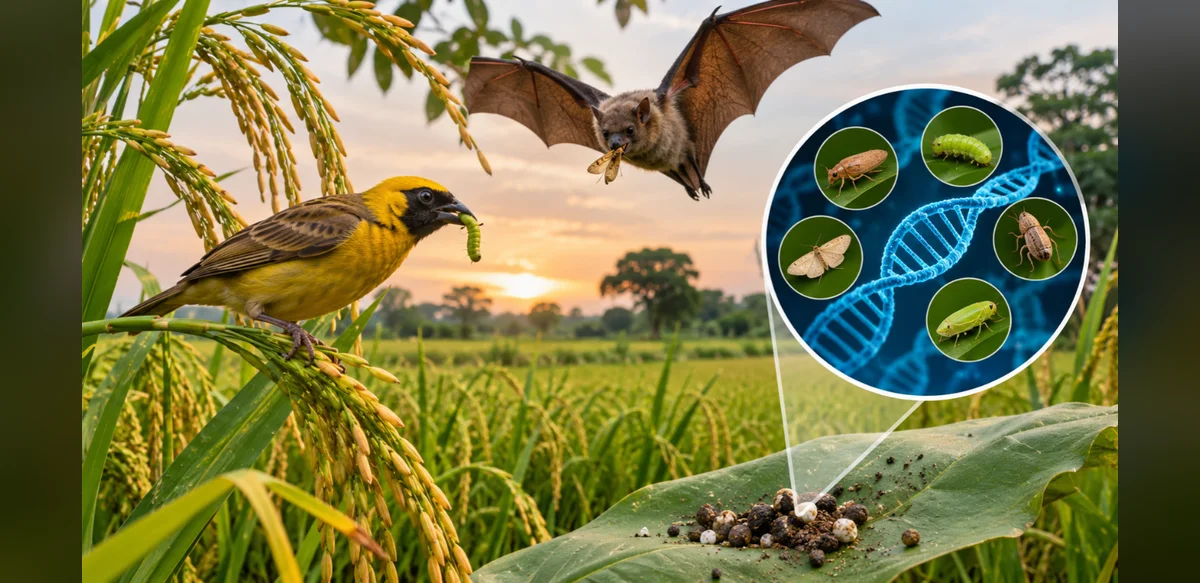
A recent scientific investigation has used advanced DNA techniques to examine the diets of birds and bats in West African rice-growing regions. Researchers collected samples from the animals and identified genetic material from their prey. The analysis showed that these creatures consume a total of 87 different species known to damage rice crops.
The study highlights the role of natural predators in controlling agricultural pests. Rice is a staple food across much of West Africa, and farmers often face significant losses from insects and other organisms. Traditional methods of pest management can involve chemical applications, which carry environmental and health concerns.
By confirming the presence of pest DNA in the digestive systems of birds and bats, the findings suggest these animals provide an important ecosystem service. This service could help reduce reliance on synthetic pesticides if habitats that support such wildlife are maintained.
The research team focused on areas where rice cultivation is widespread. They employed metabarcoding, a method that allows simultaneous identification of multiple species from mixed samples. This approach proved effective for revealing dietary patterns that would be difficult to observe through direct field monitoring alone.
Results indicated that both birds and bats target a broad range of rice pests. Some of these pests include stem borers, leaf folders, and planthoppers, all of which can severely affect crop yields. The diversity of 87 species underscores the breadth of the predation pressure exerted by these vertebrates.
Scientists note that preserving biodiversity in agricultural landscapes may enhance natural pest control. Wetlands, hedgerows, and other non-crop areas can serve as habitats for birds and bats. Such measures might offer long-term benefits for sustainable farming practices.
The investigation also considered seasonal variations in diet. During periods of high pest activity, consumption rates appeared elevated. This timing aligns with critical stages of rice growth when plants are most vulnerable.
Further analysis revealed regional differences in the specific pests consumed. Variations likely reflect local crop varieties and environmental conditions. Understanding these patterns can inform targeted conservation strategies.
Experts emphasize that the findings are based on observational data rather than controlled experiments. Additional studies would be needed to quantify the exact impact on crop yields. Nevertheless, the evidence supports the value of integrating wildlife considerations into agricultural planning.
Public health and environmental organizations have expressed interest in the results. Reduced pesticide use could lower exposure risks for farm workers and nearby communities. It may also help protect water sources and non-target species.
The project involved collaboration among institutions focused on ecology and agriculture. Data collection occurred over multiple growing seasons to ensure robustness. Genetic reference libraries were essential for accurate species identification from the samples.
Challenges included obtaining sufficient sample sizes and accounting for DNA degradation. Despite these hurdles, the team achieved comprehensive coverage of the target region. The work contributes to broader efforts in understanding food web dynamics in tropical agroecosystems.
Future directions may include modeling the economic value of pest control provided by birds and bats. Such models could support policy decisions on land use and habitat protection. They might also guide farmer education programs on biodiversity-friendly practices.
Overall, the study adds to the growing body of evidence that wildlife plays a functional role in agriculture. Maintaining ecological balance appears beneficial for both productivity and conservation goals. Continued monitoring will help track changes as farming systems evolve.
The research underscores the importance of interdisciplinary approaches. Combining molecular biology with field ecology yielded insights not possible through either method in isolation. This integrated perspective can advance knowledge of species interactions in human-modified environments.

