


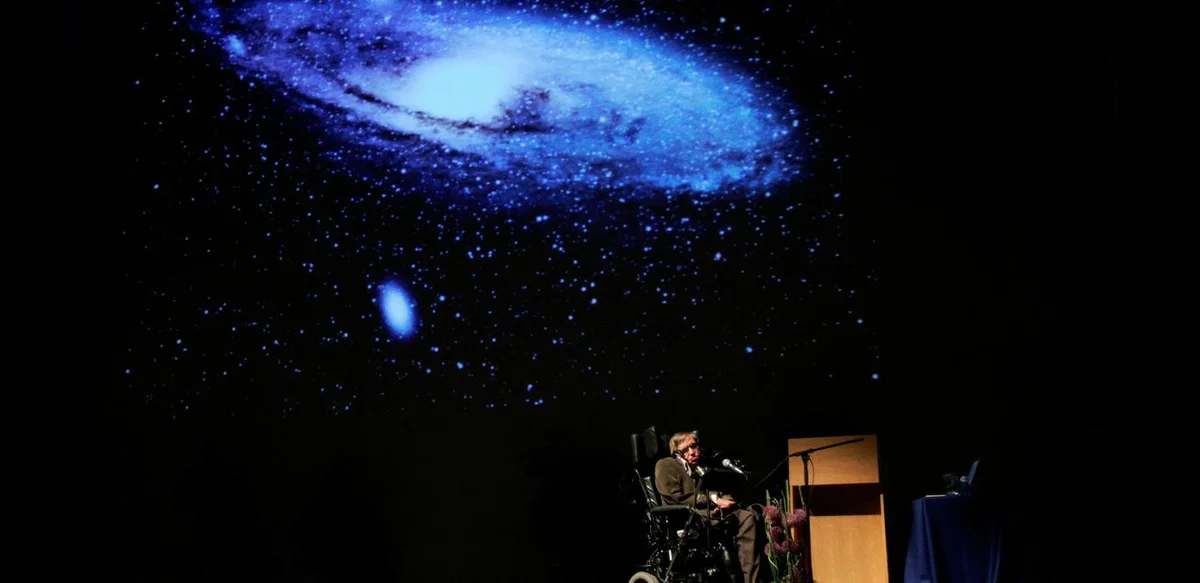
On November 8, 2018, an early wheelchair associated with a prominent theoretical physicist sold for nearly 300,000 pounds at auction. At the same event, a copy of his doctoral thesis achieved a sale price close to 585,000 pounds. These transactions underscore the widespread public fascination with the individual’s contributions to science and his personal story.
The physicist in question rose to prominence through groundbreaking work on cosmology and black holes. His research proposed that black holes emit radiation, a concept now known as Hawking radiation. This idea bridged quantum mechanics and general relativity in novel ways, influencing generations of researchers.
Born in 1942 in Oxford, England, he pursued studies in physics at University College, Oxford, before moving to Cambridge for graduate work. There, he developed motor neuron disease, which progressively limited his mobility. Despite these challenges, he continued academic pursuits and became a leading voice in theoretical physics.
His 1988 book, A Brief History of Time, explained complex ideas such as the Big Bang and singularities to general audiences. The publication became a global bestseller, remaining on charts for years and introducing scientific concepts to millions of readers worldwide.
Beyond academic circles, the physicist appeared in popular media, including television series and documentaries. These engagements helped demystify advanced topics like the nature of the universe and the search for a unified theory. His distinctive synthesized voice further amplified his recognizability.
The auction results reflect how personal items tied to his life attract collectors and institutions. Proceeds from such sales often support scientific research or charitable causes related to his advocacy for disability rights and space exploration.
Throughout his career, he held the position of Lucasian Professor of Mathematics at Cambridge University, a role once occupied by Isaac Newton. His lectures and writings emphasized the importance of curiosity and the pursuit of fundamental questions about existence.
Collaborations with other scientists advanced understanding of gravitational singularities and the early universe. These efforts earned numerous awards, including the Presidential Medal of Freedom in 2009.
His life demonstrated resilience in the face of physical limitations. Assistive technologies enabled continued communication and productivity, inspiring developments in accessibility tools for others.
Public interest in his story extends to biographical films and books that portray his scientific achievements alongside personal experiences. Such portrayals have sparked discussions on the intersection of science, disability, and fame.
The 2018 auction serves as a marker of his lasting cultural impact. Items from his career continue to draw attention, illustrating how theoretical work can resonate far beyond laboratory or academic settings.
Future generations may build upon his ideas regarding quantum gravity and the information paradox. Ongoing experiments in cosmology and particle physics test predictions linked to his theories.
Educational programs worldwide reference his explanations of time, space, and the cosmos. These resources encourage students to explore physics and related fields.
Charitable foundations established in his name focus on research into motor neuron disease and support for scientific outreach. They carry forward his commitment to advancing knowledge and aiding those affected by similar conditions.
The combination of profound scientific insight and effective communication elevated the physicist to celebrity status in the modern era. His example shows how complex ideas can capture public imagination when presented with clarity and enthusiasm.
Archival materials from his work, including theses and personal equipment, hold value for historians of science. They provide tangible connections to pivotal moments in 20th and 21st century physics.
As interest persists, similar auctions may occur, further documenting the trajectory of a career marked by intellectual rigor and broad appeal. The events of 2018 highlight this ongoing narrative without diminishing the core contributions to human understanding of the universe.

