


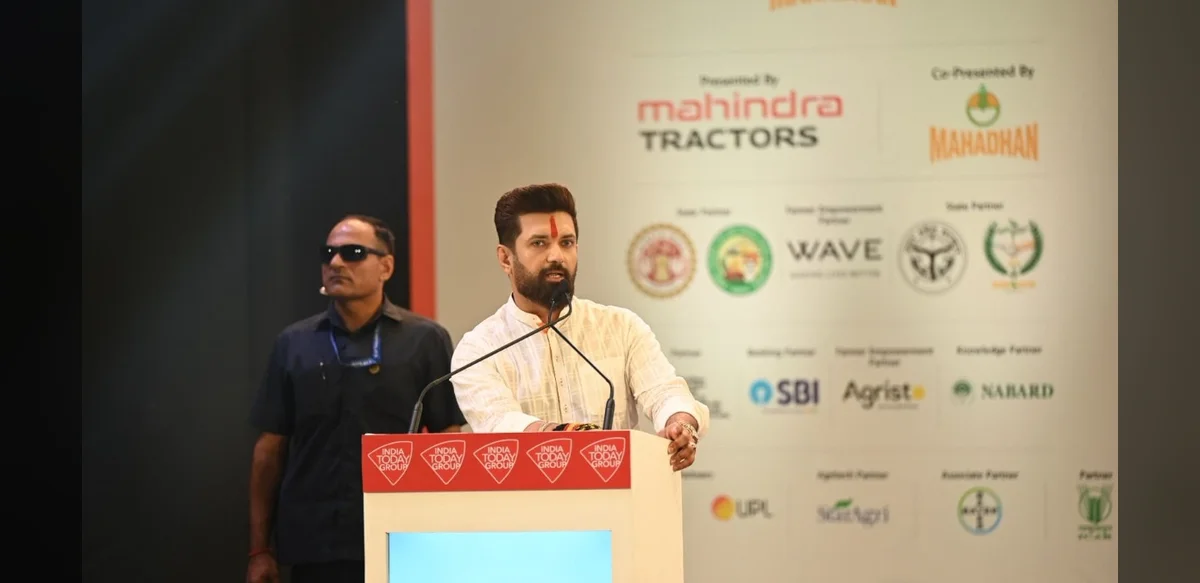
Union Minister Chirag Paswan has urged greater investment in food processing industries across India. He stated that such measures would help reduce post-harvest losses and improve earnings for farmers. The remarks highlight ongoing efforts to strengthen the agricultural value chain.
Paswan emphasized that India produces large quantities of fruits, vegetables, and grains each year. However, a significant portion goes to waste due to inadequate storage and processing facilities. By expanding food processing units, the country could convert surplus produce into value-added products like juices, jams, and packaged foods.
This approach, according to the minister, would create new market opportunities for growers. Farmers often face distress when prices drop during peak harvest seasons. Processed goods can be stored longer and sold at steadier rates throughout the year.
Paswan noted that food processing also generates employment in rural areas. Small-scale units near farms could provide jobs in sorting, packaging, and transportation. These activities would supplement income from traditional farming.
The minister called for policy support to attract private investment in the sector. Incentives such as subsidies for cold storage and tax benefits for processing plants were suggested as possible steps. He argued that coordinated action between central and state governments is essential.
India aims to become a major exporter of processed foods. Paswan pointed out that reducing wastage at the source would improve supply chain efficiency. This in turn could help meet both domestic demand and international standards.
Discussions around food processing often focus on infrastructure gaps. Many regions lack reliable power supply and modern equipment. Addressing these issues would enable consistent operations in processing facilities.
Paswan’s comments come amid broader talks on agricultural reforms. Stakeholders have long sought ways to link farmers directly with industries. Food processing is viewed as one bridge between production and consumption.
The minister stressed the need for training programs for rural youth. Skills in food handling and quality control could open new career paths. Such initiatives would align with goals of youth development in agricultural regions.
Overall, the push for food processing seeks to balance production with preservation. By minimizing losses, the sector could contribute to higher and more stable incomes for those dependent on farming. Government and industry collaboration remains key to realizing these benefits.
Further details on specific schemes or timelines were not provided in the statement. The focus stayed on the potential economic gains from better processing infrastructure. Observers expect continued dialogue on implementation strategies in coming months.
Paswan reiterated that sustainable growth in agriculture requires attention to every stage from farm to market. Food processing represents a practical step toward that objective. Reduced waste and improved farmer returns stand as primary goals of the proposed measures.
The statement has sparked interest among agricultural economists and industry bodies. They see opportunities for scaling up existing projects in states with high produce output. Coordination with local cooperatives could accelerate adoption of processing technologies.
In summary, the call underscores the importance of value addition in India’s farm economy. By investing in processing, the nation could turn challenges of surplus and spoilage into advantages of efficiency and profitability for primary producers.

