


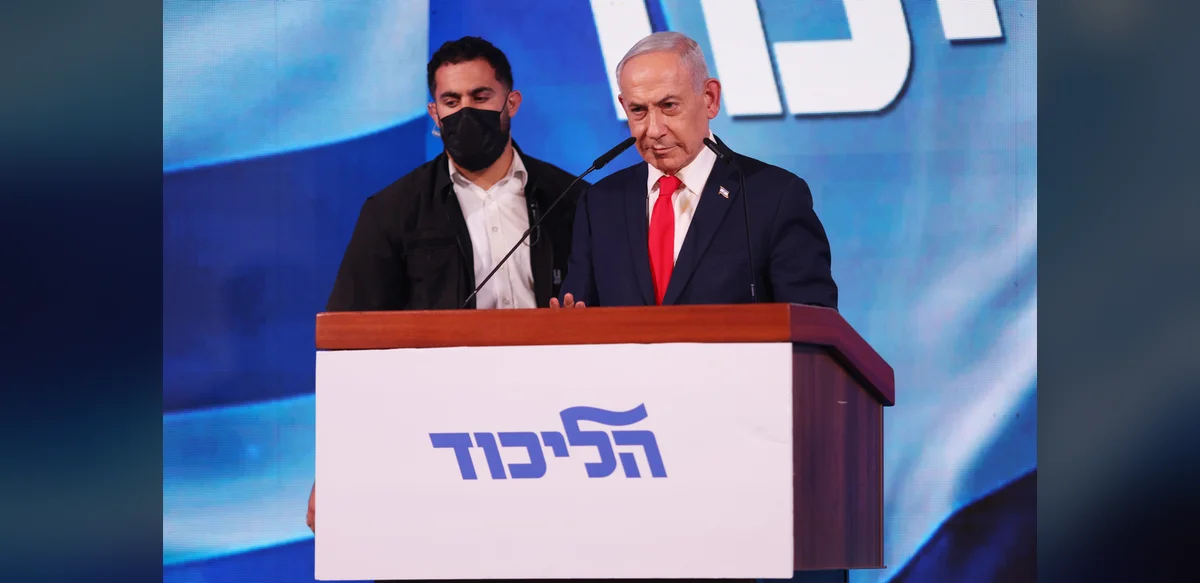
Israeli Prime Minister Benjamin Netanyahu stated that his country would not accept the establishment of a Palestinian state under current conditions. He emphasized ongoing security concerns linked to regional instability and specifically highlighted threats from Iran as a central issue for national defense.
During a televised address, Netanyahu argued that any future arrangements must prioritize Israel’s safety and prevent hostile groups from gaining territory near its borders. He described recent developments in the Middle East as requiring a unified approach among political factions inside Israel.
The prime minister called for the formation of a broad unity government that would include parties from across the political spectrum. Such a coalition, he said, could provide the stability needed to address multiple challenges simultaneously, including military operations and diplomatic efforts.
Netanyahu pointed to Iran’s support for militant organizations as a key factor influencing his position. He claimed that Tehran continues to supply weapons and funding to groups operating near Israeli territory, creating risks that cannot be ignored in peace negotiations.
Opposition leaders responded cautiously to the unity government proposal. Some expressed willingness to discuss cooperation on security matters while maintaining differences on other policy areas. Others questioned whether the offer represented a genuine attempt at consensus or a tactical move ahead of upcoming political deadlines.
International reactions varied. Several Western governments urged restraint and continued dialogue between Israeli and Palestinian representatives. Regional actors expressed concern that the rejection of statehood talks could prolong tensions and affect broader stability efforts.
Analysts noted that Netanyahu’s statements align with long-standing positions held by his party regarding territorial control and security guarantees. They also observed that the appeal for unity comes at a time when public opinion polls show divided views on how to handle the conflict.
The address included references to recent military actions and intelligence assessments regarding Iranian activities. Netanyahu described these assessments as evidence that external powers are actively working to undermine Israeli interests through proxies.
Palestinian officials condemned the remarks, describing them as an obstacle to any renewed peace process. They reiterated demands for recognition of statehood based on previous international agreements and frameworks.
Domestic media coverage focused on the potential implications for coalition negotiations in the Israeli parliament. Commentators discussed whether smaller parties would join a unity arrangement or maintain independent stances on key votes.
Economic markets showed limited immediate reaction to the speech, though analysts suggested that prolonged uncertainty could influence investor sentiment in the coming weeks. Defense spending and regional trade routes remain areas of attention for financial observers.
Netanyahu concluded by stressing the need for national resilience and cooperation. He invited all parties committed to Israel’s security to participate in discussions aimed at forming a new government structure capable of managing both internal and external pressures.
Further statements from government offices are expected in the days ahead as consultations continue. The situation remains fluid, with developments likely to influence both domestic politics and regional diplomacy.

