


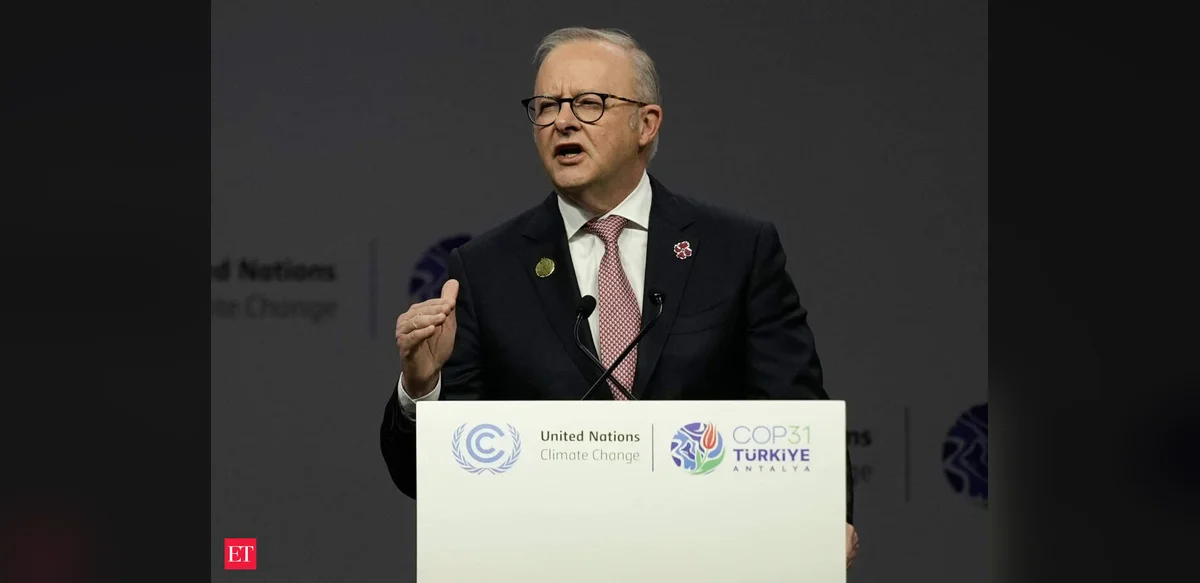
During an international climate conference known as COP31, the Australian prime minister and the nation’s climate minister were overheard in a private exchange that included lighthearted comments. The conversation took place as the two discussed how a mobile phone might affect personal health when kept close to the body. In the exchange, the prime minister suggested in a joking manner that the climate minister should pay closer attention to the device in his pocket. The remarks were captured on an open microphone and later drew public notice.
The setting was a formal gathering focused on global environmental issues, where delegates from various countries meet to address policy matters. Such events often involve side conversations among participants on a range of topics, including practical concerns like device usage. The brief exchange occurred amid these discussions and was not part of any official proceedings.
Reports indicate that the comments remained informal and were not intended for broadcast. Observers noted that the tone appeared humorous rather than serious. No further details emerged about any response from other attendees or about subsequent actions taken by the individuals involved.
Climate conferences of this scale typically feature packed schedules with sessions on emissions targets, adaptation strategies, and international cooperation. Participants often move between formal meetings and informal chats. In this instance, the recorded moment highlighted how private remarks can become public when microphones remain active.
The incident underscores the challenges of maintaining privacy in high-profile environments where media presence is constant. Officials at such events are frequently recorded, and stray comments can circulate widely once captured. Australian government representatives have not issued an official statement on the matter based on available information.
Broader coverage of the conference continued to center on policy negotiations rather than the brief exchange. Delegates proceeded with agenda items related to environmental regulations and collaborative efforts among nations. The event itself remained focused on its primary objectives despite the attention given to the recorded remarks.
Journalists covering the summit emphasized the importance of context when reporting overheard conversations. The discussion about phone placement and health was presented as a casual aside rather than a policy debate. No evidence suggests the comments influenced any decisions or outcomes at the conference.
Public reaction to the recording varied, with some viewing it as an example of everyday banter among colleagues and others seeing it as inappropriate for the setting. The prime minister and climate minister continued their participation in the event following the incident.
Overall, the episode serves as a reminder of the scrutiny faced by public figures during international gatherings. Conferences like COP31 bring together leaders to tackle pressing global challenges, yet moments of levity can occasionally surface in recordings. The core facts of the exchange remain limited to the described comments on the phone and its placement.
Further reporting on the climate summit highlighted ongoing talks about energy transitions and regulatory frameworks. The Australian delegation maintained its involvement in these discussions without interruption from the recorded remarks. Attention gradually returned to the substantive issues on the agenda.

