


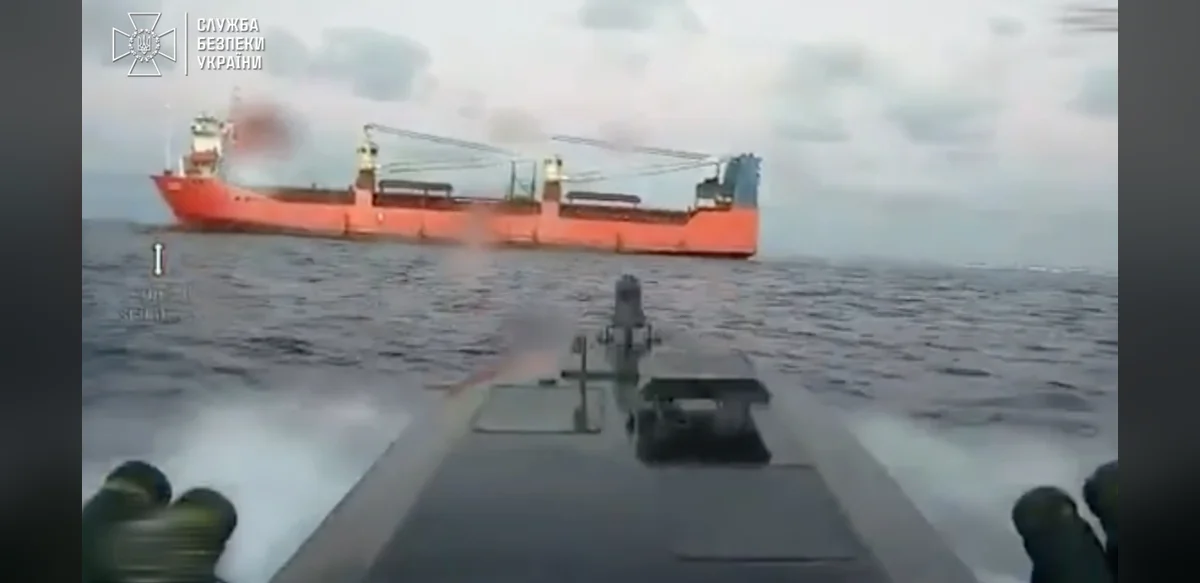
The Ukrainian armed forces conducted a targeted drone strike against a Russian cargo freighter long suspected of involvement in transporting weapons from North Korea. The operation took place on Sunday and also resulted in the destruction of a Russian warship positioned off the coast of Libya. Kyiv authorities confirmed the details on Monday, describing the action as a precise response within the framework of ongoing hostilities.
Reports indicate that the freighter, identified in the strike, had previously drawn attention from international observers for its potential role in moving sensitive cargo across maritime routes. The Ukrainian statement highlighted the vessel’s history without providing additional operational specifics. The simultaneous loss of the warship added another dimension to the reported events, occurring in a separate theater near Libyan waters.
This development underscores the extended reach of Ukrainian military capabilities beyond immediate front lines. Officials in Kyiv presented the strikes as part of efforts to disrupt supply chains that may support Russian operations. No independent verification of the cargo’s contents was offered in the initial announcement, and the focus remained on the vessels involved.
Maritime analysts have noted that such freighters often operate in regions where monitoring is challenging due to vast distances and limited oversight. The incident near Libya illustrates how distant locations can become connected to broader geopolitical tensions. Ukrainian sources avoided speculation about future actions, sticking to the facts of the Sunday engagement.
The freighter sustained significant damage according to the military update, rendering it inoperable for continued voyages. Details about the exact location of the primary strike were not disclosed, likely for security reasons. The warship’s destruction was presented as a secondary outcome of coordinated unmanned systems.
International reactions have been measured so far, with calls for further clarification on the circumstances. Both vessels were described as Russian-flagged or operated assets, though ownership structures in commercial shipping can be complex. Kyiv emphasized that the targets were selected based on intelligence regarding their past activities.
The event adds to a pattern of long-range Ukrainian strikes on Russian naval and logistics assets. Such operations require substantial planning and real-time intelligence to execute successfully across different regions. The inclusion of the Libya coast as a site demonstrates the geographic scope involved.
Neutral observers continue to monitor developments for any escalation signals. The Ukrainian report did not mention casualties or environmental impacts from the strikes. Focus remained on the military objectives achieved during the operation.
Further statements from Kyiv may provide additional context in coming days as assessments are completed. The freighter’s alleged history with North Korean shipments has been referenced in prior public discussions by various governments, though confirmation of specific loads remains limited. This latest action brings renewed attention to those earlier concerns.
Overall, the reported strikes reflect the fluid nature of the conflict extending into maritime domains. Both the cargo vessel and the warship represent assets that Ukrainian forces deemed relevant to their defensive posture. The Monday announcement served to inform the public and international community of the outcomes without embellishment.
Additional reporting may emerge from other involved parties or third-party monitors as the situation develops. The emphasis in official communications stayed on factual outcomes rather than broader strategic implications at this stage.

