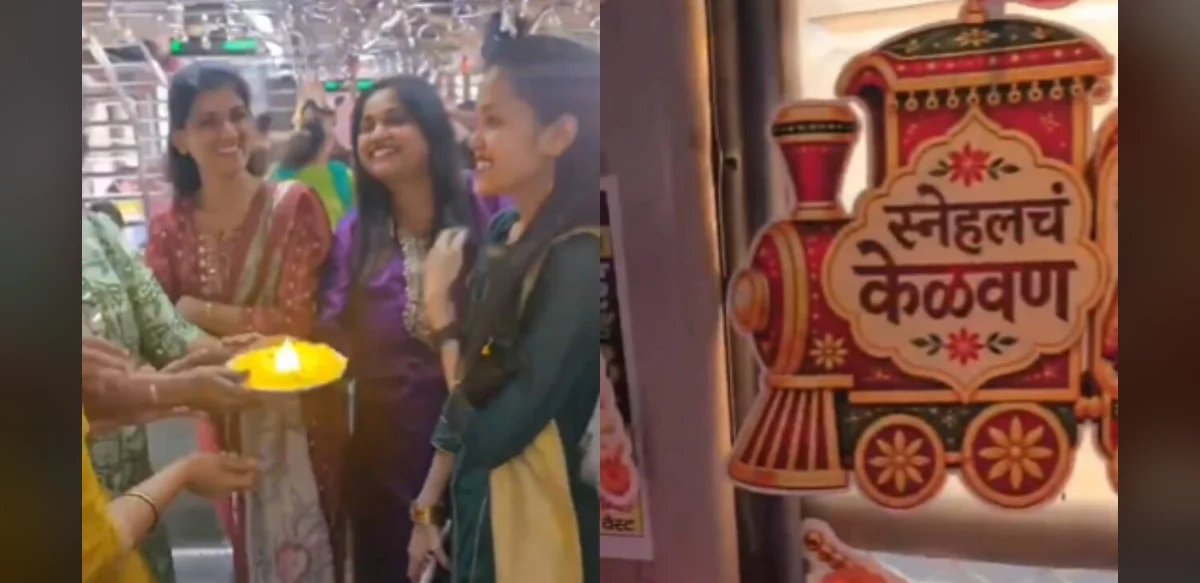
In Mumbai, a group of women recently transformed a routine journey on the city’s local train network into an unexpected celebration. They decorated a regular compartment with vibrant flowers and other adornments to mark a pre-wedding occasion. The spontaneous nature of the gathering drew immediate attention from fellow passengers and later from a wider online audience.
Local trains in Mumbai serve as a vital part of daily life for millions of residents. These services operate under strict guidelines that prioritize efficient movement and safety for all users. When personal events occur in such shared spaces, they can prompt discussions about appropriate conduct in public areas. In this instance, the decorations and activities stood out against the usual backdrop of commuting routines.
Following the event, various comments appeared across social media platforms. Some observers expressed support for the creative approach, while others raised concerns regarding the suitability of hosting private functions in public transport. The range of opinions highlighted differing views on personal expression versus collective use of shared facilities.
Authorities connected to the Railway Seva responded by notifying relevant officials about the occurrence. This step reflects standard procedures for addressing activities that may affect regular operations or passenger experiences. The notification also brought forward broader considerations about how public spaces are utilized for individual or group milestones.
The incident illustrates ongoing conversations in urban settings about balancing personal moments with communal responsibilities. Mumbai’s extensive rail system accommodates diverse needs each day, yet events like this one can lead to reviews of existing norms. Officials continue to monitor such situations to maintain order and accessibility for everyone.
Public reactions continued to evolve as more details circulated online. The division in responses underscores how social media can amplify local happenings into topics of wider debate. Participants in the discussion often focused on themes of respect for shared environments and the limits of spontaneous celebrations.
Overall, the episode serves as a reminder of the complexities involved in using public infrastructure for private purposes. While the women involved aimed to create a memorable occasion, the aftermath included both appreciation and critique. Railway personnel remain engaged in evaluating the implications for future passenger conduct.
This type of occurrence is not entirely uncommon in densely populated cities where personal and public spheres frequently intersect. The emphasis on flowers and decorations added a visual element that contrasted with typical train interiors. Such contrasts can capture attention quickly among those present and those viewing shared images later.
Continued dialogue around these matters may influence how similar situations are handled moving forward. The focus stays on ensuring that public transport remains functional and inclusive for its primary purpose of daily travel. The event in question has contributed to that ongoing exchange without altering core operational policies at this stage.