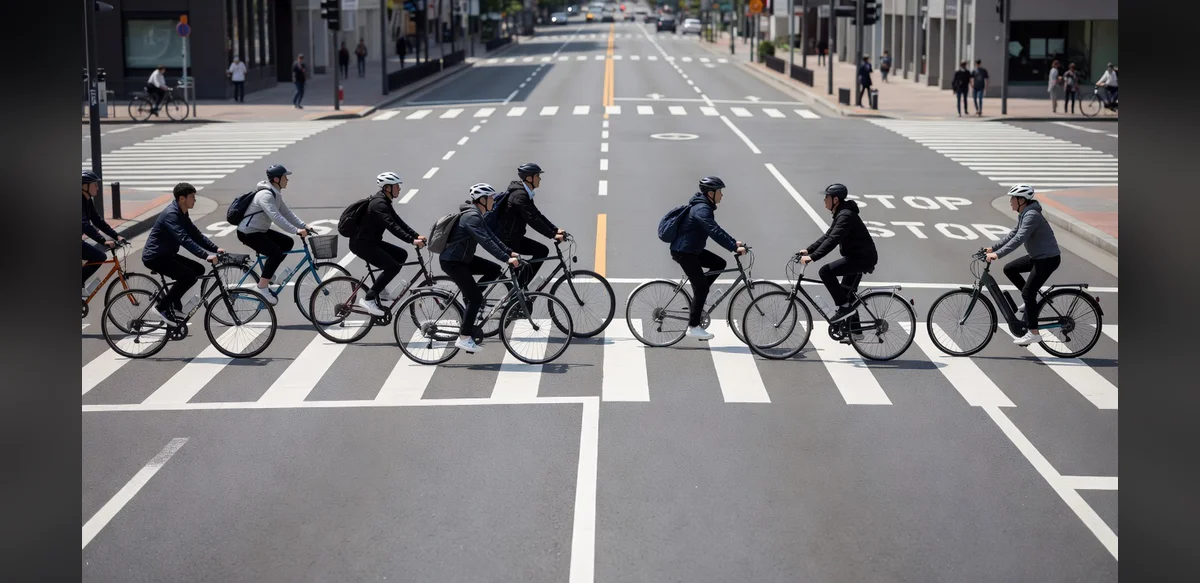
Observations from various city intersections indicate that a notable number of bicyclists do not come to a complete stop when approaching crosswalks. This pattern has been noted by local residents and traffic monitors who regularly observe commuting routes during peak hours. In many cases cyclists slow down but proceed without halting fully at the designated lines. Such behavior occurs across different times of day though it appears more frequent during morning and evening rush periods when overall traffic volume increases. Pedestrians waiting to cross have reported needing to remain cautious even when signals indicate it is their turn. City traffic guidelines specify that all road users including those on bicycles must obey stop requirements at crosswalks to ensure safety for everyone involved. Enforcement of these rules varies and often relies on visible police presence or automated monitoring systems where available. Educational campaigns by municipal authorities have aimed to remind cyclists of the legal obligations at intersections yet compliance levels remain inconsistent according to periodic surveys. Factors contributing to the issue may include the desire to maintain momentum on longer commutes or assumptions that crosswalks are clear of oncoming traffic. Weather conditions and road surface quality can also influence rider decisions though data on these correlations is limited. Community discussions have highlighted the need for clearer signage and perhaps dedicated bike lanes that separate cycling paths from pedestrian zones to reduce conflicts. Some intersections have seen recent upgrades including painted markings and raised platforms intended to encourage better adherence to stopping rules. Long term studies on urban mobility suggest that consistent enforcement combined with infrastructure improvements tends to produce higher rates of compliance among all categories of road users. Residents are encouraged to report persistent problem areas to local transportation departments so that targeted interventions can be considered. Overall the situation underscores the shared responsibility among drivers cyclists and pedestrians to follow established traffic protocols at crosswalks and similar locations. Continued monitoring and public awareness efforts are expected to play a role in addressing the observed patterns over time.