


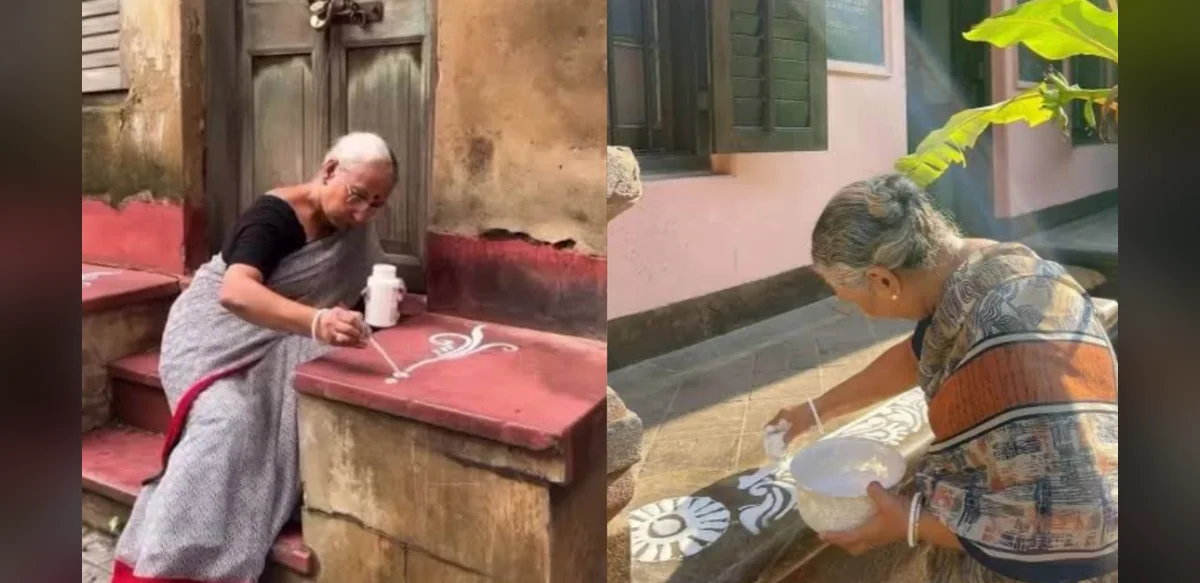
A former educator based in Kolkata has taken up the quiet practice of creating traditional floor artworks on the thresholds of homes belonging to people she does not know. The activity started when a nearby resident suggested she apply her skills to produce these designs without revealing her identity. She now moves through different residential areas each day, completing the patterns early enough that most occupants remain unaware of her presence until later.
The designs draw from longstanding regional customs that involve rice-paste motifs placed at entrances during festivals and daily routines. Observers who notice the fresh artwork often pause to appreciate the detail and share their approval with others nearby. These encounters provide the main encouragement for her to maintain the routine across multiple locations.
She selects spots based on foot traffic patterns and the general appearance of the surroundings, aiming to add visual interest without disrupting normal movement. The process usually takes place before sunrise or during low-activity periods so that the work remains unnoticed until dry. Passersby who discover the additions frequently comment on how the patterns brighten otherwise ordinary walkways.
Over time the project has expanded to cover several districts within the city. Each completed piece serves as a small contribution toward enhancing public spaces through familiar artistic forms. The creator expresses a desire to sustain these efforts for an extended period, viewing them as a way to improve the overall appearance of urban environments.
Residents who later learn about the source of the designs have responded with appreciation rather than concern. Many describe the unexpected artworks as pleasant surprises that connect daily life with cultural practices. The approach avoids direct interaction, allowing the focus to stay on the visual result rather than the individual behind it.
The tradition of such floor art holds significance in local heritage, often linked to celebrations and household rituals. By placing the motifs in public view on private thresholds, the activity bridges personal creativity with shared community spaces. Continued positive feedback from those who encounter the work reinforces the decision to keep traveling to new areas.
Daily preparation involves gathering simple materials and planning routes that allow for efficient completion of several sites. The emphasis remains on anonymity and subtlety, ensuring the designs appear as spontaneous additions rather than commissioned pieces. This method has allowed the practice to continue without drawing unnecessary attention to the artist herself.
Future plans center on maintaining consistency in the output while exploring additional neighborhoods that might benefit from similar touches. The overall goal stays centered on gradual beautification through repeated small-scale interventions. Observers note that the presence of these patterns can prompt conversations among neighbors about local customs and artistic expression.
The retired educator continues to balance the activity with other personal commitments, treating it as a supplementary pursuit rather than a formal occupation. Each outing adds to a growing collection of locations marked by the distinctive motifs. The cumulative effect contributes to a broader sense of visual renewal across the areas visited.
Community members who have witnessed multiple instances of the artwork report feeling a renewed connection to traditional forms. The anonymous nature of the contributions allows the emphasis to remain on the aesthetic value rather than personal recognition. This ongoing effort illustrates one approach to integrating heritage elements into contemporary urban settings through individual initiative.

