

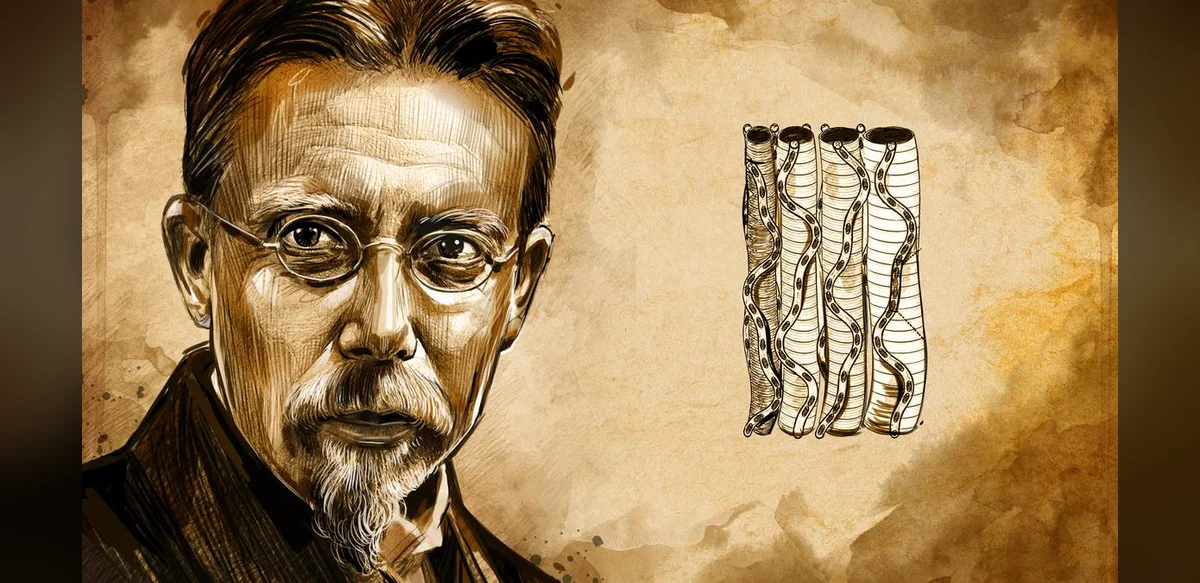
In 1920, Danish physiologist August Krogh received the Nobel Prize in Physiology or Medicine for identifying the capillary motor regulating mechanism. His research examined how muscles obtain sufficient oxygen when demand increases sharply during physical activity. Krogh demonstrated that adjustments in capillary circulation bring blood nearer to muscle fibers and expand the surface area for oxygen transfer. This finding carried major medical significance, as knowledge of oxygen delivery to tissues is key to disorders involving reduced blood flow, such as cardiovascular disease, peripheral vascular disease, diabetes, and non-healing wounds. The concepts of microcirculation and tissue oxygenation established by Krogh now apply to tissue damage, wound repair, exercise physiology, and impaired circulation effects. Born on November 15, 1874, in Grenaa, Denmark, Schack August Steenberg Krogh began studies at the University of Copenhagen in 1893, shifting from medicine to zoology. He joined physiologist Christian Bohr’s laboratory, developing interest in respiration and gas exchange. Krogh earned his zoology degree in 1899 and remained in Bohr’s lab, creating tools for precise physiological measurements on respiration, gas exchange, and fluid balance. He was appointed professor of zoophysiology at the University of Copenhagen in 1916. Krogh investigated oxygen movement from blood to tissue. During exercise, muscles raise oxygen use substantially. Oxygen diffuses from capillaries through tissue to cells, so the distance to a perfused capillary influences delivery. Comparing resting and active muscle, he noted more capillaries appeared blood-filled during activity. In 1919 Journal of Physiology papers, he paired these findings with oxygen diffusion calculations and suggested that recruiting additional capillaries during activity enlarges the exchange surface and reduces diffusion distance. This led to the Krogh cylinder model of oxygen diffusion from capillaries into tissue. Krogh proposed a regulatory mechanism allowing capillary diameter and blood volume to adjust to tissue needs. The Nobel Committee honored this in 1920. In his lecture, he explained that blood-filled capillary numbers vary with tissue activity, increasing during muscle work to boost oxygen exchange area. The discovery directed focus to microcirculation, the small vessel network supplying oxygen and nutrients while removing waste. Later research revised some details. Current evidence does not support routine switching of skeletal muscle capillaries between fully closed and open states, nor capillaries as the main site of blood flow control. Regulation occurs mainly in arterioles, and many capillaries are perfused even at rest. Capillary recruitment is now viewed as shifts in perfusion patterns rather than simple vessel opening. Krogh’s key point endures: capillary network structure and oxygen travel distance through tissue critically affect delivery. Krogh’s later work connected to insulin development. In 1922, he and his wife Marie Krogh, a physician with diabetes, visited North America. They went to Toronto to learn insulin production methods from Frederick Banting and Charles Best. Krogh gained rights to manufacture insulin in Scandinavia and collaborated with Hans Christian Hagedorn in Denmark on its production.


