


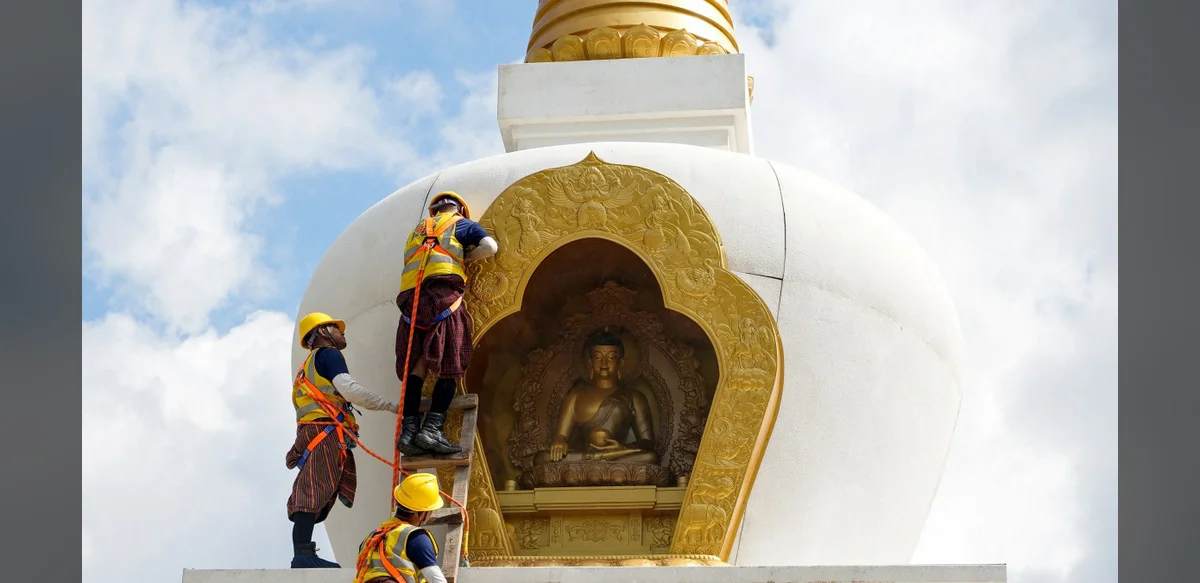
Bhutan has initiated a major development project centered on creating a mindfulness city aimed at fostering economic expansion while encouraging younger residents to remain in the country. The effort involves the construction of 108 Buddhist stupas, with participation from tens of thousands of individuals contributing to the work.
The project seeks to blend traditional cultural elements with modern economic goals. By focusing on mindfulness principles, planners hope to create an environment that supports both spiritual well-being and practical opportunities for growth. This approach is intended to address challenges related to youth migration by offering appealing local prospects.
Construction activities highlight community involvement on a large scale. Thousands have joined forces to erect the stupas, which serve as symbolic structures within the emerging city. The initiative reflects broader aspirations for balanced development that respects heritage while pursuing progress.
Officials emphasize that the mindfulness city will integrate various features designed to promote sustainability and cultural continuity. Economic strategies include potential sectors that align with the project’s core values, aiming to generate employment and retain talent within national borders.
The scale of participation underscores public engagement with the vision. As work progresses on the stupas and related infrastructure, the project continues to draw attention for its unique combination of spiritual symbolism and forward-looking economic planning. Details on timelines and specific outcomes remain under development as the effort unfolds.
Overall, the mindfulness city represents an attempt to harmonize longstanding traditions with contemporary needs. Through this endeavor, Bhutan positions itself to enhance internal stability and vitality by leveraging cultural assets in service of economic and social objectives.

