


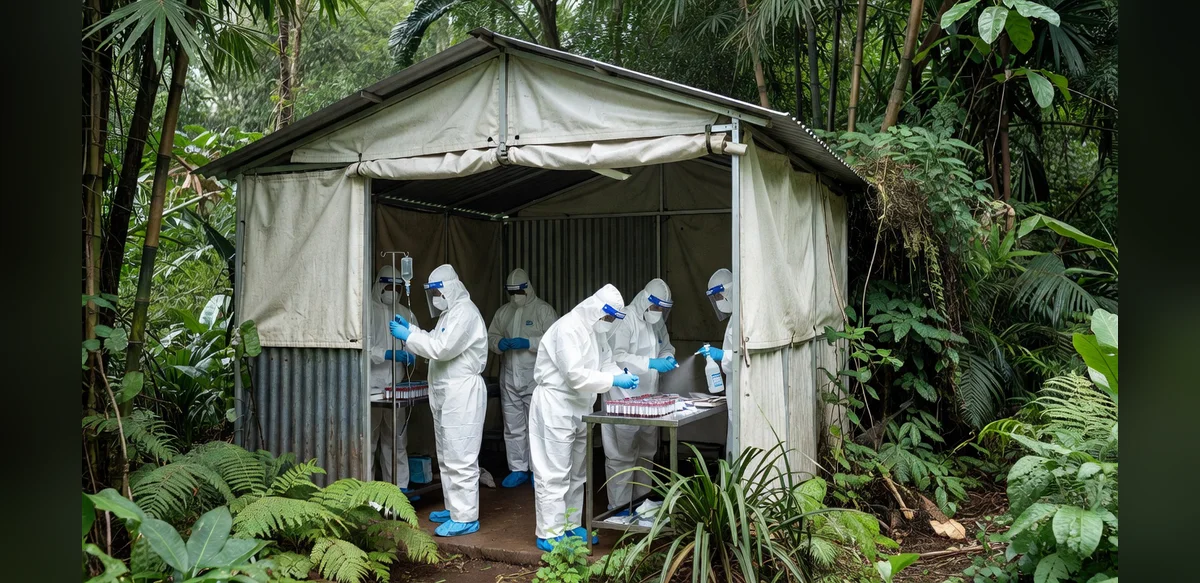
Health authorities in the Democratic Republic of Congo have begun enrolling volunteers in a clinical investigation designed to test whether a new pharmaceutical product can prevent infection with the Ebola virus. More than two hundred and fifty people have already joined the study, which is being conducted amid the most severe outbreak of the disease recorded in the country to date.
Public health specialists view the initiative as an important development in the response to the epidemic. The investigation seeks to determine if the medication under review can serve as a protective measure for individuals who may have been exposed to the virus. By focusing on prevention rather than treatment after symptoms appear, researchers hope to reduce the overall number of cases.
The trial is taking place in regions where transmission remains active. Participants are being monitored closely to assess both the safety and the effectiveness of the intervention. Officials emphasize that enrollment is voluntary and that all ethical standards for such studies are being followed.
Local communities have expressed cautious interest in the research. Many residents understand the gravity of the current outbreak and recognize the need for additional tools beyond existing containment measures. Community engagement teams are working to explain the purpose of the study and to address questions from potential volunteers.
International partners are supporting the effort with technical expertise and logistical assistance. Coordination between national health services and global organizations has allowed the trial to move forward despite challenging field conditions. Supplies and equipment have been transported to the study sites to ensure that data collection can proceed without interruption.
The outbreak has placed considerable strain on the health system in affected areas. Hospitals and clinics have had to expand capacity while maintaining routine services for other medical needs. The addition of a prevention trial offers a complementary strategy that could ease pressure on treatment facilities if the medication proves successful.
Researchers continue to collect information on participant outcomes. Regular reports will be shared with oversight committees to allow for timely adjustments if necessary. The study design includes provisions for stopping the trial early should clear evidence of benefit or harm emerge.
Authorities stress that the investigation is one component of a broader response that also includes contact tracing, safe burial practices, and vaccination campaigns where appropriate. No single measure is expected to end the outbreak on its own, but each contributes to the overall goal of interrupting transmission.
Training for study personnel has been completed in advance of enrollment. Staff members have been instructed on proper procedures for obtaining informed consent, administering the investigational product, and recording observations. This preparation is intended to maintain consistency across all participating sites.
The current situation underscores the importance of sustained investment in medical research for emerging infectious diseases. Lessons learned from previous outbreaks have informed the design of the present trial, yet each epidemic presents unique challenges that require adaptive responses.
Monitoring will continue for an extended period after the initial enrollment phase. Follow-up visits will allow investigators to gather long-term data on any side effects and on the durability of protection, if any is observed. Such information will be critical for decisions about wider use of the medication in future outbreaks.
Health officials remain committed to transparency throughout the process. Updates on enrollment numbers and preliminary findings will be released at appropriate intervals, always with appropriate safeguards for participant confidentiality.
The trial represents a measured step forward in the effort to bring the outbreak under control. While results are not expected immediately, the structured approach offers a pathway toward evidence-based prevention strategies that could benefit populations at risk in Congo and potentially elsewhere.
Continued collaboration among local, national, and international actors will be essential as the study progresses. The shared objective remains the protection of public health through scientifically sound methods.

