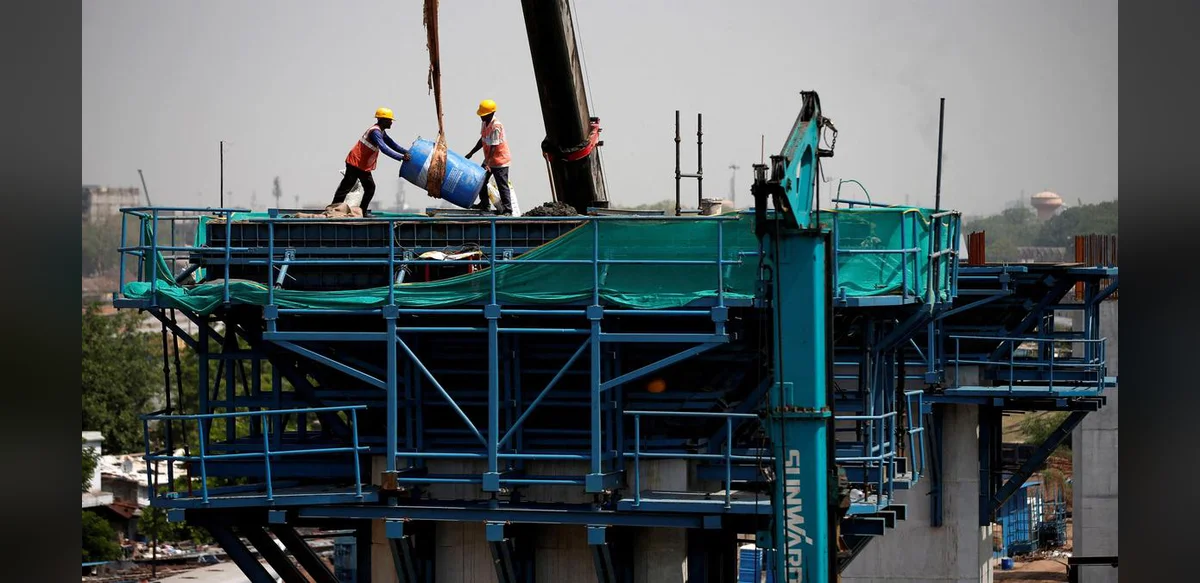
The Mumbai-Ahmedabad high-speed rail corridor is receiving an advanced overhead traction system, among the most sophisticated electrification technologies used globally for high-speed railways, according to the National High Speed Rail Corporation Limited on Wednesday. The 2×25 kV system, introduced in India for the first time, is designed to deliver stable power for trains running at speeds up to 320 kmph. Electrification work is advancing alongside civil construction and track laying on the 508 km route. Power will be supplied from the national grid through substations to 14 traction substations along the corridor, five in Maharashtra and nine in Gujarat. These will ensure continuous supply across sections, supported by 31 switching posts for fault isolation. Sixteen distribution substations will also provide electricity to stations and facilities. The overhead network includes nearly 22,000 steel masts and over 25,700 cantilever assemblies across 1,125 track kilometres. The masts, 10.5 to 14.5 metres high, will support a compound catenary system also new to India, with wires under precise tension for smooth power collection. Significant components are being manufactured domestically, including transformers and various wires. Each traction substation will feature early earthquake detection seismometers, with 28 units installed along the corridor and in seismic zones of both states. The network will be monitored in real time from a central control centre with automated protection systems.