


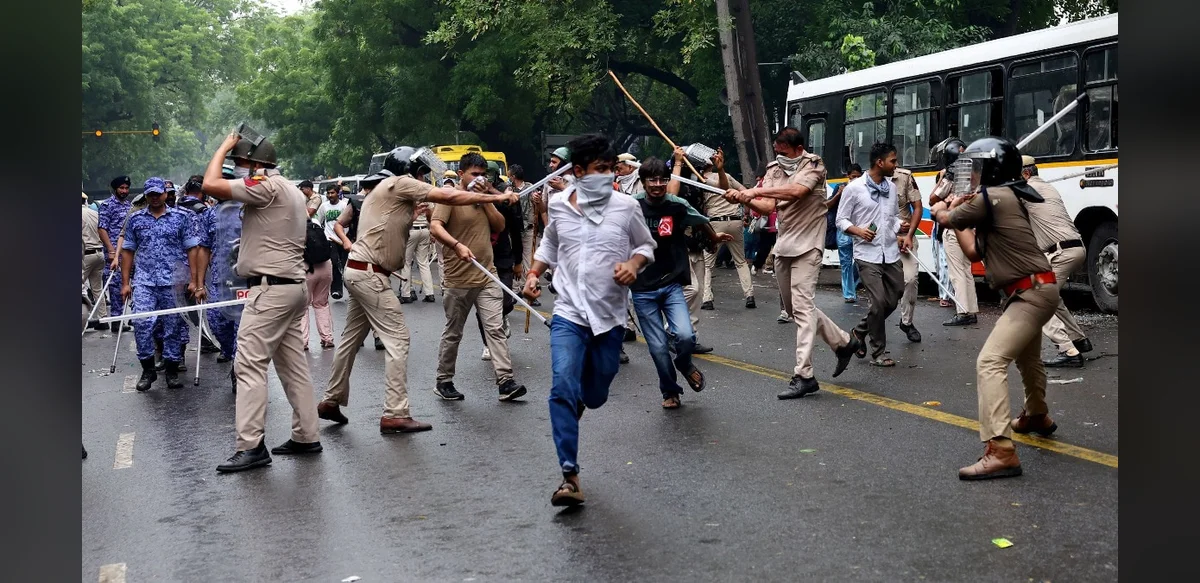
The Tamil Nadu government has withdrawn an earlier directive that instructed schools, colleges, and police to stop students from participating in protests organized by the Campaign for Justice and Peace along with left-leaning groups. The reversal comes after widespread criticism and demonstrations by opposition parties.
Officials confirmed that the initial circular, issued last week, aimed to maintain order on campuses and prevent disruptions to academic activities. It directed educational institutions to monitor student movements and coordinate with law enforcement if any involvement in rallies was suspected. The move drew immediate backlash from student unions and political organizations, who described it as an attempt to curb freedom of expression.
Following days of protests outside government offices in Chennai and other cities, authorities announced the withdrawal of the order. A revised statement clarified that students retain the right to engage in peaceful activities outside school hours, provided they do not violate institutional rules. Education department representatives emphasized that the focus remains on ensuring safety and uninterrupted learning.
Leaders from left-wing parties welcomed the decision but continued to voice concerns over what they called an overreach by the administration. They organized marches in multiple districts to highlight the issue and demand assurances against future restrictions. Several student groups also held meetings to discuss the implications for campus politics.
The episode has sparked debate about the balance between maintaining discipline in educational settings and protecting democratic rights. Analysts note that similar tensions have arisen in other states when governments seek to limit youth participation in political events. Local observers suggest the reversal reflects pressure from both public opinion and internal discussions within the ruling coalition.
No incidents of violence were reported during the recent demonstrations, and police maintained a visible but restrained presence. The government has urged all parties to engage in dialogue rather than confrontation. Further clarification on guidelines for student activities is expected in the coming days.
This development occurs amid broader discussions on youth engagement in social issues across the country. Educational institutions have been advised to promote awareness programs on civic responsibilities while discouraging any actions that could affect studies. Parents and teachers have expressed mixed reactions, with some supporting the emphasis on academics and others defending the value of informed participation in public matters.
The state administration continues to monitor the situation closely. Officials have reiterated their commitment to upholding constitutional principles while addressing concerns raised by various stakeholders. As the academic year progresses, attention may shift toward implementing balanced policies that accommodate both educational priorities and individual freedoms.

