


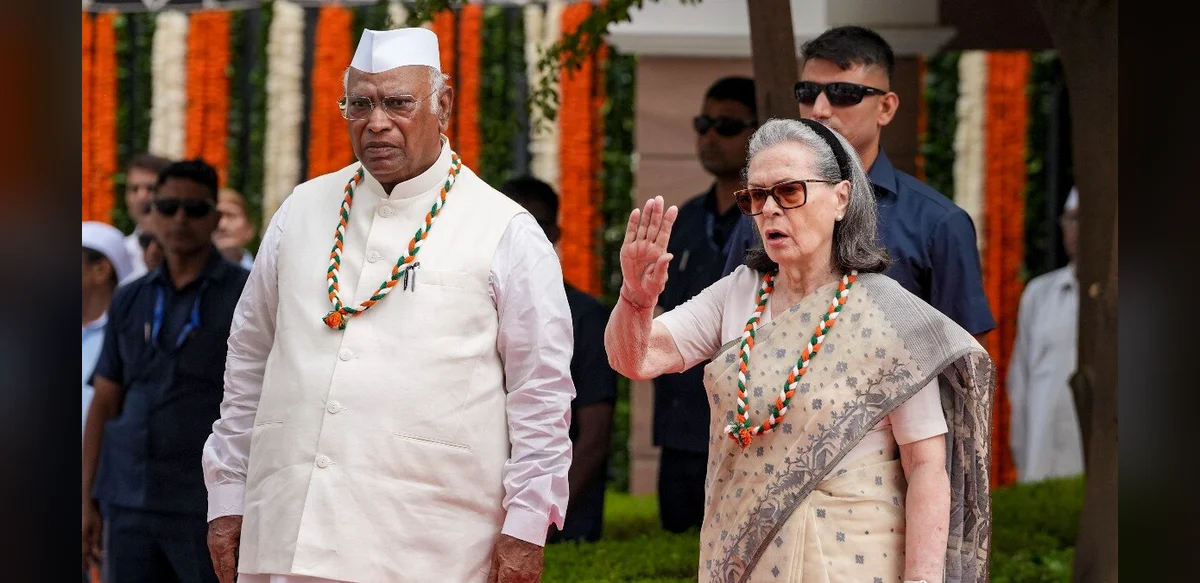
The Indian National Congress has reiterated its longstanding position regarding the national song Vande Mataram. Party leaders confirmed that only the first two stanzas from the 1937 version will be sung during official events. This decision aligns with a resolution passed decades ago and maintains consistency with past practices.
Officials emphasized that the choice reflects respect for historical consensus reached during the freedom movement. The 1937 version was selected after careful deliberation to ensure broad acceptance across diverse communities. By limiting the rendition to the initial stanzas, the party seeks to honor that earlier agreement without introducing alterations.
Senior members noted that this approach avoids unnecessary controversy while preserving the song’s significance as a unifying symbol. Discussions within party circles highlighted the importance of adhering to established norms rather than expanding the verses used in public settings. The stance was communicated clearly during recent internal meetings.
The decision comes amid periodic debates on national symbols and their presentation. Congress representatives stressed that their focus remains on unity and tradition. They pointed out that the 1937 framework has served as a reference point for many years and continues to guide their approach.
Party spokespersons avoided engaging in extended commentary on alternative interpretations. Instead, they directed attention to the practical implementation of the chosen stanzas during upcoming commemorations. This measured response underscores a preference for continuity over revision.
In various state units, local leaders echoed the central directive. They confirmed plans to incorporate the limited version in Independence Day programs and other patriotic gatherings. Training sessions for participants have been organized to ensure accurate delivery of the selected portions.
The overall tone from the party remains one of quiet affirmation rather than confrontation. By sticking to the established practice, Congress aims to project stability in its handling of cultural matters. Observers note that such positions often serve to reinforce institutional memory within political organizations.
Further details on implementation are expected in the coming weeks as preparations for national events advance. The party has urged all members to follow the guideline uniformly to maintain coherence across regions. This coordinated effort reflects standard procedures for handling symbolic elements in public life.
The reaffirmation does not signal any shift in broader policy priorities. Instead, it addresses a specific aspect of ceremonial conduct that has historical roots. Party documents from the relevant period continue to inform current decisions on the matter.
Public communication on the topic has been kept concise and factual. No additional verses or modifications have been proposed. The emphasis stays on faithful adherence to the 1937 selection as the appropriate standard for official use.

