


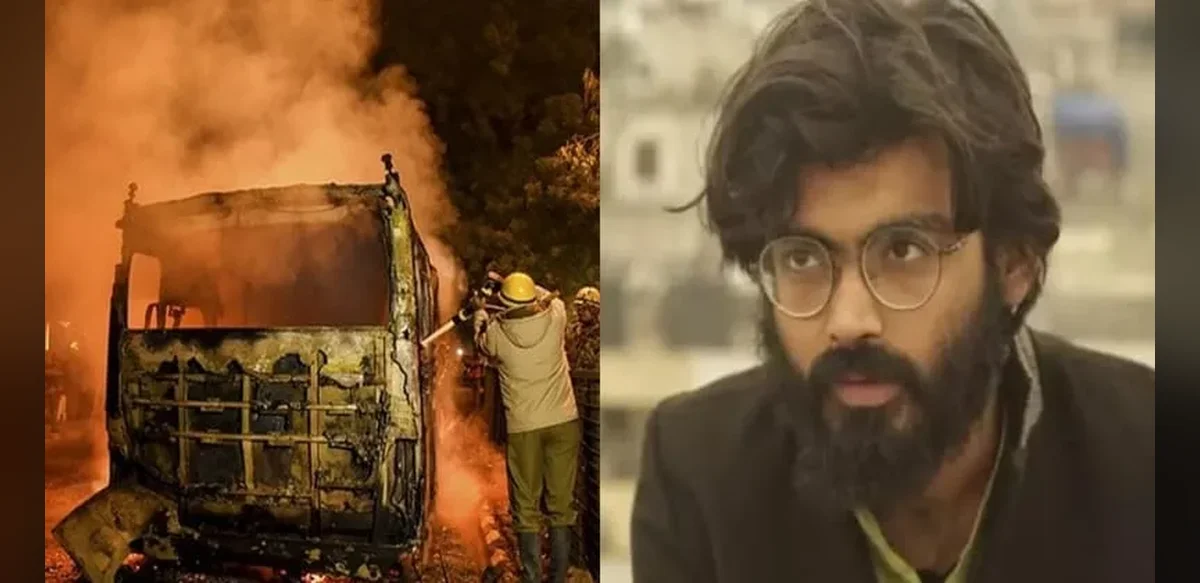
Sharjeel Imam participated in an interview published on September 29 2026 with an online news outlet. The discussion covered his time in custody his religious outlook and his ideas about political organization in India. During the exchange he stated that he does not identify with efforts focused solely on preserving the existing constitutional order. He described secularism as misleading and restrictive. He also noted that the current first past the post voting method limits the influence of Muslim voters in national decision making.
Imam outlined plans to create a group that integrates religious principles with political activity. The proposed body would aim to increase electoral participation organize community efforts and push for adjustments in representation along with greater local control over certain institutions. Observers have examined these comments for insight into his broader approach to public life.
The interview has prompted discussion among those advocating for his release from detention. Some supporters have also backed other individuals facing similar legal proceedings. Questions have arisen about whether such advocacy centers only on procedural concerns or extends to agreement with the specific political positions expressed. Academics and activists involved in these campaigns have been asked to clarify their stance on critiques of the constitutional system.
In the interview Imam expressed the view that the Constitution presents obstacles to the full participation of Muslim communities and other religious minorities. He indicated that he does not align with initiatives aimed at defending the document in its current form. His comments addressed issues of centralized authority fixed geographic voting districts and combined electorates. He suggested that dispersed minority populations may struggle to secure proportional influence even when they take part in elections.
Imam proposed measures including reservations for Muslims official recognition for certain marginalized Muslim and Christian groups proportional representation systems and elected bodies to manage religious endowments. These suggestions form part of a larger framework he described for addressing perceived structural limitations.
He further rejected the idea that secular political alignments or a return to Congress led governance would adequately address minority concerns. He characterized secularism as connected to a broader nationalist structure that shares core elements with opposing ideologies. In his assessment both approaches emphasize a single unified nation state and concentrated authority which he believes leaves limited space for community specific autonomy.
Imam referenced historical texts and figures to illustrate what he termed nationalist storytelling. He argued that reliance on established national parties might provide short term benefits but would not resolve underlying issues. He warned that such support could inadvertently strengthen opposing forces and place communities in a position of defending those they view as responsible for past difficulties.
As alternatives he pointed to regional political formations and traditions linked to socialist communist and social justice oriented movements especially those favoring decentralization and increased local decision making power. Supporters who present him as aligned with secular values have been invited to address how these statements fit with that description.
Imam connected his arguments to interpretations of the period surrounding partition and the establishment of the Indian republic. He claimed that certain political groups opposed earlier proposals for decentralized arrangements because they threatened existing power structures and would have granted greater central influence to Muslim majority areas. He described the post independence framework as emerging from the rejection of democratic aspirations held by Muslims and other groups.
According to his account the resulting state structure lacked sufficient protections for minorities and left them vulnerable. He presented the current constitutional setup not as a neutral foundation open to routine adjustment but as an extension of earlier patterns of exclusion. Commentators have noted that while individuals retain the right to examine historical events and constitutional provisions the assumptions underlying proposed alternatives merit examination.
In a separate address delivered at Aligarh Muslim University in January 2020 Imam discussed legislation concerning citizenship registration and conditions faced by Muslims in Assam. He spoke about moving beyond standard protest methods. One section of the remarks addressed the possibility of organized blockades affecting connectivity between the northeastern region and the rest of the country. He suggested that a sufficiently large coordinated group could disrupt that link either indefinitely or for limited periods to draw attention to policy concerns.
In later comments Imam clarified that the language referred to forms of road obstruction rather than calls for violence. He noted that certain terms carry specific meanings in particular linguistic contexts related to temporary halts in movement.
The Shaheen Bagh sit in began in December 2019 following passage of the citizenship amendment law. The measure provided a citizenship pathway for select non Muslim minorities from neighboring countries who arrived before the end of 2014. Women initiated a continuous protest at the Delhi location which expanded to include students families and additional participants. The gathering became a focal point for opposition to the new provisions and related registration proposals.
Throughout the interview and prior statements Imam has emphasized the need for political mobilization that combines religious identity with electoral strategies. He has advocated for changes in representation mechanisms and greater community control over internal affairs. These positions continue to generate debate among observers regarding their compatibility with established constitutional principles and prevailing political norms in India.
Analysts have observed that the interview provides a detailed record of Imam views developed during his period of incarceration. The remarks touch on historical interpretations electoral mechanics and future organizational goals. Public discussion has focused on the implications for those who support his legal position while differing on substantive policy questions.
The exchange also highlights ongoing conversations about minority representation centralization versus decentralization and the role of religion in public life. Participants in these debates have been encouraged to distinguish between procedural rights and agreement with specific ideological positions. The interview record stands as one contribution to these wider exchanges.

