


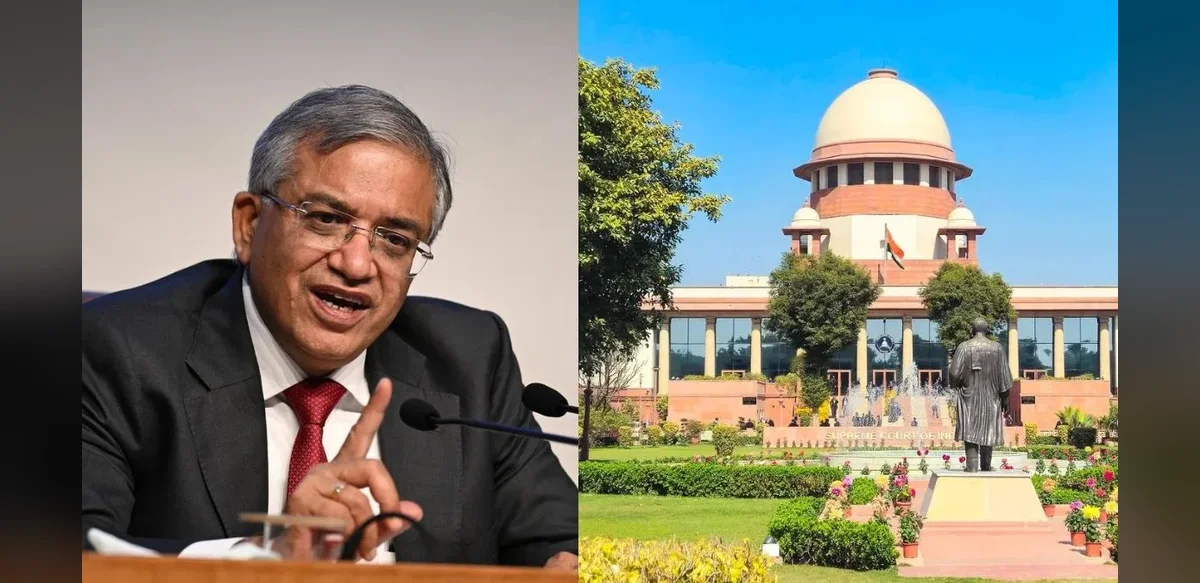
The Supreme Court has declined to suspend Chief Election Commissioner Gyanesh Kumar while issuing notice on a petition that questions certain decisions by the Election Commission of India regarding the Special Intensive Revision of electoral rolls. The order maintains focus on procedural aspects of the revision exercise without halting ongoing work by the poll panel.
The controversy centers on documentation requirements for the revision process. The court previously noted that standard forms used in routine electoral updates may not fully suit the scale of a special intensive revision. It recognized that the commission holds some flexibility to adjust documentation needs to match the goals of ensuring accurate voter lists. This recognition came with the condition that any adjustments must remain connected to statutory objectives and follow logical reasoning.
Observers have highlighted a distinction between the court not endorsing a specific updated version of a registration form and the broader authority of the commission to adapt procedures. The May order from the court addressed this point directly by stating that ordinary forms might require modification for intensive exercises. It stopped short of imposing a complete bar on such adaptations provided they stay within legal bounds.
The Election Commission has stated that all major decisions on the revision, including its nationwide rollout starting with Bihar, received unanimous support from its members. A meeting held in late September reinforced this position, with the panel confirming no internal disagreement on the matter. The commission also pointed out that the Supreme Court had upheld the initial revision order in its earlier judgment.
In response to concerns about voter convenience, the commission announced steps to simplify participation. Booth level officers will visit homes of electors who receive notices for mapping issues or discrepancies. Documents can be collected and uploaded digitally, reducing the need for personal appearances before registration officers except in rare cases. Hearings, when necessary, may occur online, and family members can represent electors under certain conditions.
Special assistance measures include help desks and camps targeted at vulnerable groups such as residents of night shelters, daily wage workers, and homeless individuals. These initiatives aim to address documentation gaps without disrupting the overall timeline of the revision.
Regarding claims of large scale deletions in Goa, the commission reported that local officials have directed booth level staff to conduct fresh house visits and collect fresh applications from affected voters. Data shared by the Goa chief electoral officer indicates that the cited figures represent a small portion of the total electorate and do not reflect systematic exclusion.
The latest proceedings underscore the court emphasis on maintaining both accuracy in electoral rolls and fairness in administrative processes. The commission continues to operate under the framework approved in prior judicial observations while implementing practical adjustments for citizens. Legal proceedings on the pending petition will examine further details in upcoming hearings.
The revision exercise spans multiple states and union territories with phased implementation. Officials stress that the process seeks to update records comprehensively while adhering to rules framed under the Representation of the People Act. Public communication from the commission has focused on clarifying that standard forms remain in use outside the special revision periods.
Critics have raised questions about transparency and internal decision making within the commission. The panel has responded by reiterating the unanimous nature of key resolutions and the judicial backing received for the overall approach. Future updates are expected as the court considers the fresh challenge and as field operations progress across regions.
This development reflects ongoing efforts to balance administrative efficiency with legal safeguards in electoral management. The Supreme Court order preserves the status of the chief election commissioner while allowing scrutiny of specific procedural choices through the notice issued on the petition.

