

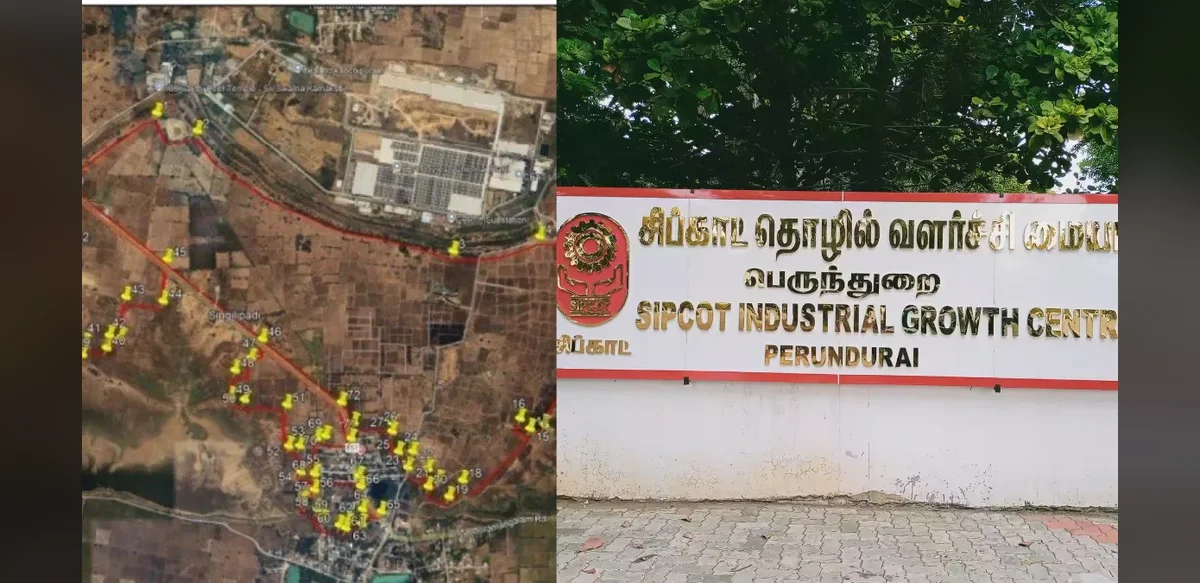
The Tamil Nadu administration has come under scrutiny following its decision to acquire land for an industrial project in a region previously considered for a major airport development. Just days after abandoning plans for the Parandur Greenfield airport due to opposition from farmers and environmental worries, officials issued a formal notice to secure approximately 8.38 hectares for industrial use through the state industries promotion body.
This notification, dated early September, was published in the official gazette and references the relevant state law on land acquisition for industrial needs. It specifies that the land is intended for a new industrial park in the Madhuramangalam area, with compensation to be handled through the managing director of the promoting corporation. Plans for the site also include a semiconductor and electronics manufacturing facility estimated at 175 crore rupees, potentially spanning over 400 acres including both private and government holdings.
Critics have highlighted the apparent inconsistency in the government’s approach. While the airport proposal was dropped citing concerns over agricultural land and local water resources, the new industrial initiative proceeds in close proximity to the original site. Public commentary and political voices have questioned whether similar environmental and farming impacts might arise from the industrial development, particularly regarding water usage in semiconductor production.
The chief minister had previously expressed solidarity with protesting farmers, emphasizing their role in protecting agricultural interests and describing them as essential to the nation’s foundation. In assembly discussions, the industries minister had hinted at repurposing previously acquired land for alternative industrial activities. However, official clarifications from the administration’s fact-checking unit stressed that the current industrial park announcement originated in 2024 under the prior regime and bears no direct link to the Parandur airport lands.
Satellite imagery shared in public discussions shows the presence of farmland and small water bodies in the notified area, prompting further debate on whether the same objections raised against the airport apply here. Some observers noted that the layout for the industrial park had already received preliminary approvals before the change in project focus.
Opposition voices have described the shift as potential political inconsistency, suggesting that halting one infrastructure effort only to advance another on nearby land could invite legal challenges. They argue that abrupt changes in policy without clear justification may not withstand judicial examination and raise concerns about efficient use of public resources on projects that are later set aside.
Supporters of the administration maintain that major developments often face resistance and that addressing specific issues through alternative projects represents a pragmatic response. They point out that the industrial park was envisioned separately and could bring economic benefits without the scale of disruption associated with an airport.
The episode underscores ongoing tensions between development priorities and local concerns in the state. As the land acquisition process moves forward, with maps available for public inspection at designated offices in Kancheepuram district, stakeholders continue to monitor how the government balances industrial growth with agricultural preservation.
Further details indicate that the acquisition invokes specific sections of the 1997 state act, allowing the governor to proceed once satisfaction is established regarding the industrial purpose. The special tahsildar office will handle related inspections during regular hours.
Public reactions on social platforms have varied, with some users calling for consistent application of environmental safeguards across all projects. Others emphasize the need for solutions that mitigate opposition rather than abandoning initiatives after extensive planning.
Overall, the situation reflects broader challenges in regional planning where multiple land uses compete in the same vicinity. The semiconductor park component is positioned as a step toward technological advancement, yet questions persist about its compatibility with surrounding farmland and water systems.
As notifications stand and projects advance, the administration faces calls for greater transparency on how decisions align with earlier commitments to protect farming communities. The coming weeks may see additional clarifications or adjustments as feedback from affected parties is considered.


