


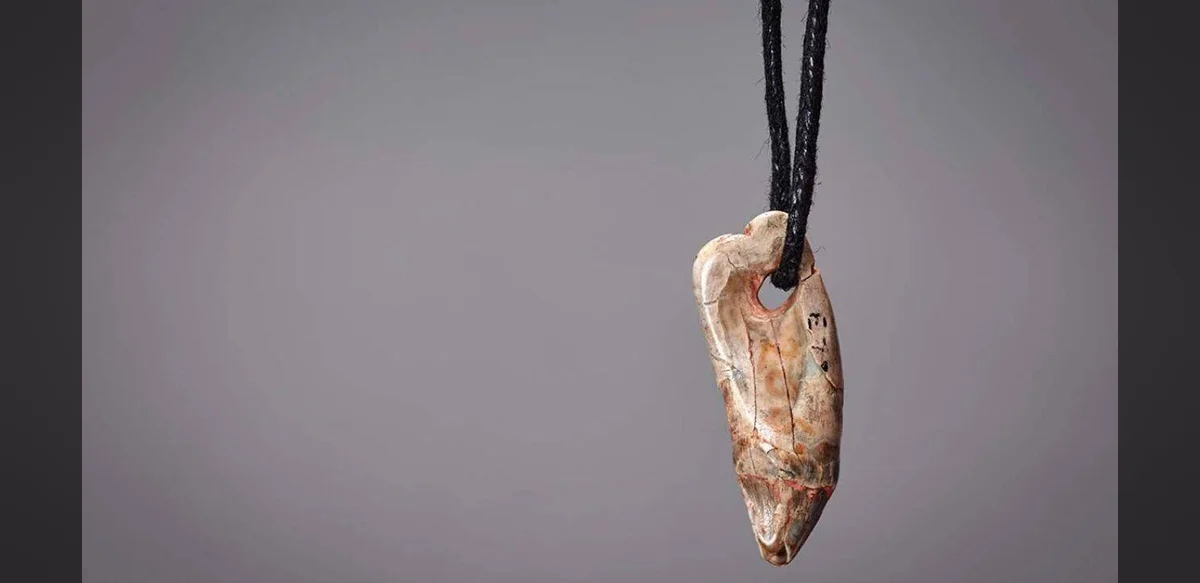
Archaeologists have uncovered a remarkable artifact dating back approximately 15,000 years that offers fresh insights into the lives and interactions of early humans in Britain. The find consists of a pendant fashioned from a seal tooth, carefully shaped and perforated for wear. Its discovery highlights the sophisticated craftsmanship of Paleolithic communities and points to broader networks of exchange or movement during the late Ice Age.
The pendant was recovered from a site in western Britain during recent excavations. Researchers employed advanced dating techniques, including radiocarbon analysis, to establish its age. Microscopic examination revealed deliberate modifications, such as drilling and polishing, indicating intentional creation rather than natural formation. The choice of material from a marine mammal suggests access to coastal resources and possibly seasonal migrations or trade routes.
Experts note that such personal ornaments often served social or symbolic purposes in ancient societies. They may have denoted status, group identity, or connections to spiritual beliefs. The presence of this item in an inland location implies that coastal communities maintained links with groups farther afield, facilitating the movement of goods and ideas across considerable distances.
Comparative studies with similar artifacts from continental Europe support the idea of cultural exchanges. While Britain was connected to mainland Europe by a land bridge at the time, the pendant provides tangible evidence of shared practices. This challenges earlier assumptions of isolated development and instead portrays dynamic human populations adapting to changing environments.
Further analysis of the tooth’s origin indicates it came from a harbor seal, a species common in northern waters. Isotope studies of the material could reveal details about the animal’s diet and habitat, adding layers to the environmental reconstruction of the period. Such interdisciplinary approaches combine archaeology with biology and geology to build a fuller picture.
The discovery contributes to ongoing debates about the peopling of Britain after the last glacial maximum. As ice sheets retreated, human groups recolonized the region, bringing technologies and traditions. Artifacts like this pendant illustrate resilience and creativity in the face of harsh conditions.
Conservation efforts are underway to preserve the fragile item for future study and public display. Museums plan to feature it in exhibitions focused on prehistoric Britain, allowing visitors to appreciate the depth of human history on the islands. Educational programs may incorporate the find to discuss themes of migration, adaptation, and cultural continuity.
Scholars emphasize the need for additional fieldwork to locate more examples and contextualize this single find. Ongoing surveys in caves and river valleys could yield complementary evidence. International collaboration remains essential, as similar pendants appear in collections across western Europe.
Public interest in the artifact has grown rapidly, with media coverage highlighting its age and implications. While interpretations continue to evolve with new data, the pendant stands as a testament to the enduring human impulse to create and connect. Future research promises to refine understandings of these ancient networks without altering the core facts established by current evidence.
In summary, this discovery enriches the narrative of early British history by demonstrating sophisticated material culture and intergroup relations. It serves as a reminder that even small objects can illuminate vast chapters of the human past, encouraging continued exploration and preservation of archaeological heritage worldwide.

