

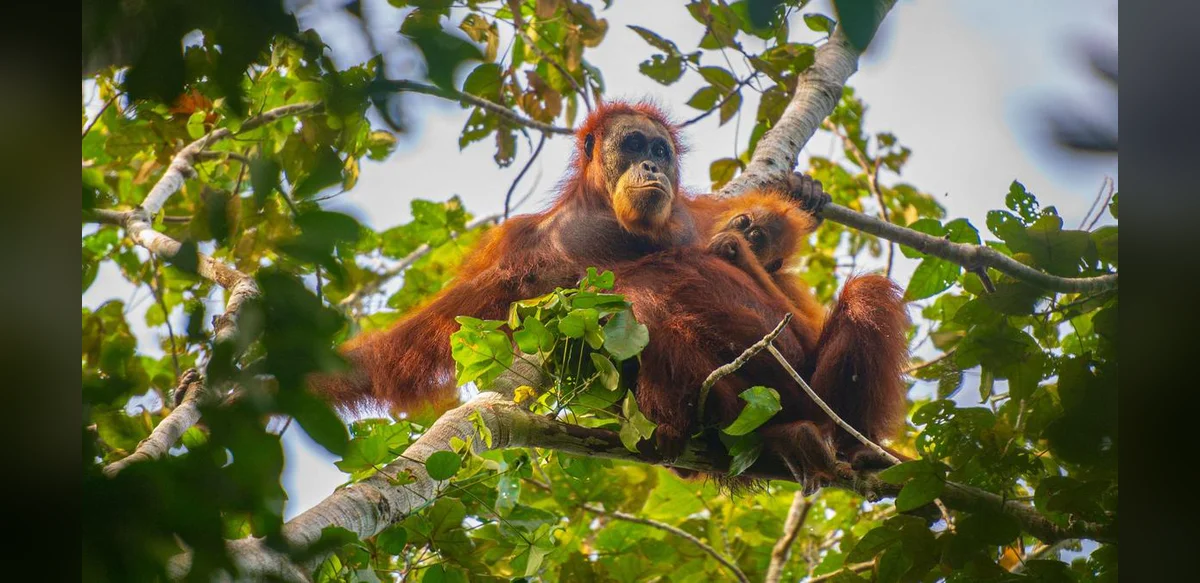
A black-and-white photo circulating online shows an orangutan holding endangered leopard cubs in the forests of Malaysia’s Sabah region. The image is fabricated and forms part of a growing trend of artificial-intelligence wildlife pictures that specialists say threaten both animals and humans.
Fact-checkers have already identified many similar generated images, including an elephant scaling a tree to flee floods in Myanmar and a pink dolphin jumping from water in the Philippines.
Although these visuals may appear harmless, researchers caution that lifelike depictions of wild animals acting like pets or people can warp public understanding of nature and undermine protection work.
Zoology professor Jose Guerrero-Casado of Spain’s University of Cordoba noted that such confusion may prompt individuals to approach animals too closely. He referenced a January case in China’s Xinjiang region in which a woman was injured by a snow leopard while attempting a closer photograph.
Chinese authorities increased patrols afterward and advised the public to keep distance from wildlife.
Advocates argue that AI images portraying animals as friendly or playful make it harder for social-media users to recognize authentic behavior and may encourage exploitation. Chris Lewis of the Born Free charity said the pictures raise demand for species to serve as tourist photo props or pets.
Jenny Roberts of WWF stated that any potential boost to conservation support is outweighed by the drawbacks. She added that fabricated content desensitizes viewers, leading people to doubt even genuine footage, such as a recent camera-trap video of a tiger with five cubs in China.
A September study in Conservation Biology described the rapid spread of AI misinformation as a major threat to environmental efforts. Researchers also warned that such images could impair species identification and distort data on wildlife numbers and locations, affecting citizen-science projects and published studies.
Platforms including Meta and TikTok require labels on realistic AI-generated content, yet many wildlife posts still lack clear markings.


