


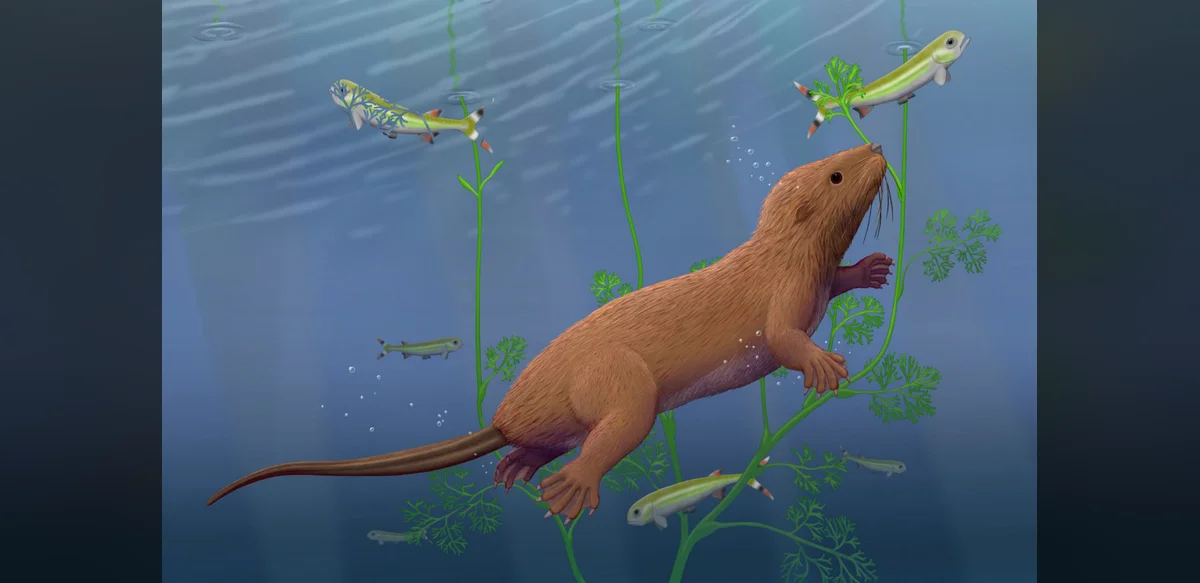
Scientists have uncovered a remarkable fossil that challenges long-held assumptions about how mammals developed their dentition over millions of years. The specimen originates from the Cretaceous period and was located in what is now China. Unlike contemporary mammals that typically develop only two generations of teeth during their lifespan, this early species apparently retained the capacity to grow new teeth repeatedly throughout its existence.
This discovery provides fresh insight into the evolutionary transition from reptilian ancestors to modern mammals. Reptiles often replace teeth continuously as needed, a trait known as polyphyodonty. In contrast, most living mammals exhibit diphyodonty, meaning they possess a primary set of milk teeth followed by a permanent adult set. The fossil suggests that this mammalian pattern may not have become fixed as early as previously thought.
Researchers examined the jaw structure and tooth replacement patterns preserved in the remains. Multiple generations of teeth appear in various stages of development, indicating ongoing replacement rather than a limited cycle. Such evidence points to a more gradual shift in dental characteristics during the Mesozoic era when mammals began to diversify alongside dinosaurs.
The find adds complexity to the narrative of mammalian evolution. It implies that certain lineages maintained ancestral traits longer than expected, possibly adapting to specific ecological niches that favored frequent tooth renewal. This could relate to diet or environmental pressures present during the Cretaceous when flowering plants and new insect groups were emerging.
Further analysis of the fossil’s anatomy reveals a blend of mammalian and reptilian features. While the overall skull shape aligns with early mammal characteristics, the dental system echoes more primitive vertebrates. This combination underscores the mosaic nature of evolution where different traits advance at varying rates across lineages.
Paleontologists note that the specimen belongs to a group of early mammals that lived in forested or riverine habitats. The ability to replace teeth continuously might have offered advantages in processing tough vegetation or abrasive food sources common at the time. Such adaptations could have enhanced survival rates amid changing climates and predator pressures.
The study highlights the importance of continued fieldwork in regions rich with Cretaceous deposits. China has yielded numerous significant fossils in recent decades, contributing substantially to understanding of Mesozoic life forms. Each new specimen refines timelines and relationships within the mammalian family tree.
Comparisons with other known fossils from similar periods show that tooth replacement strategies varied widely among early mammals. Some species appear to have transitioned toward limited replacement earlier, while others preserved the reptilian-style renewal. This diversity suggests experimentation in developmental biology during a critical phase of vertebrate history.
Implications extend beyond dentistry to broader questions of growth and aging in extinct species. Continuous tooth production might correlate with longer lifespans or different metabolic strategies than those seen in today’s mammals. Future research could explore whether genetic mechanisms controlling tooth development in modern animals retain traces of this ancient flexibility.
The fossil stands as a reminder that evolutionary pathways are rarely linear. Traits once considered defining features of mammals may have arisen through incremental modifications rather than sudden innovations. Ongoing examination of such specimens promises to illuminate the complex history leading to the diverse mammal species inhabiting Earth today.

