


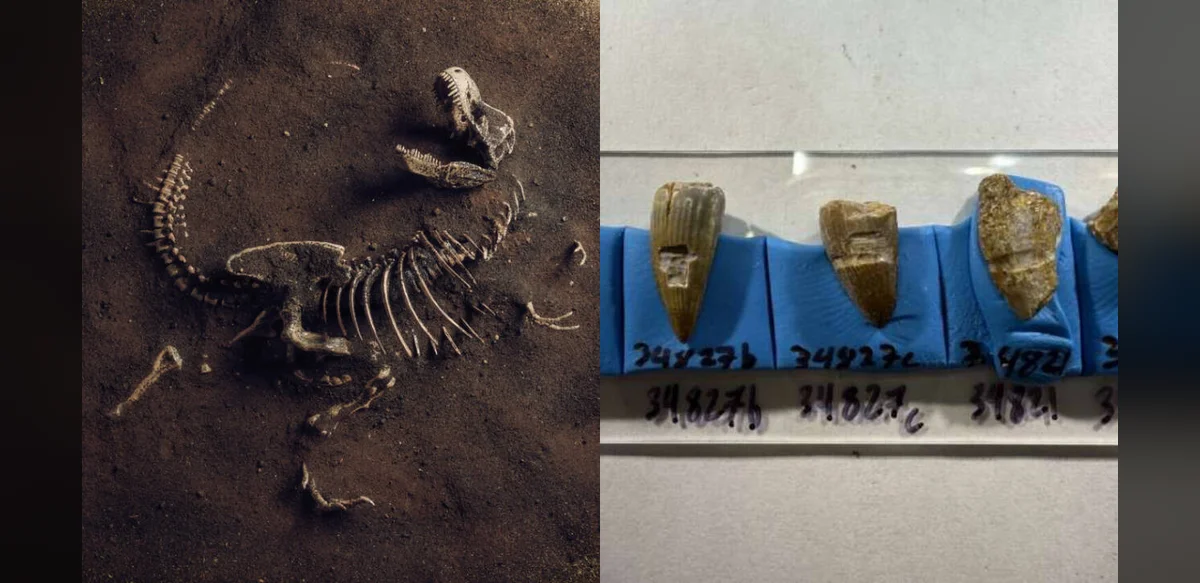
Scientists examining fossilized teeth from the Cretaceous period have uncovered evidence that some dinosaurs may have consumed seaweed that washed up on ancient shorelines approximately 100 million years ago. The discovery provides new insights into the dietary habits of these prehistoric creatures and challenges previous assumptions about their feeding behaviors.
The research focused on dental remains found in sedimentary layers along what was once a coastal region. Analysis revealed microscopic wear patterns consistent with the consumption of tough, fibrous plant material typically found in marine environments. Researchers noted that the teeth showed abrasion marks similar to those seen in modern herbivores that graze on algae and seaweed.
This finding suggests that certain dinosaur species ventured close to shorelines to feed on vegetation deposited by tides. Such behavior would have allowed them access to nutrient-rich food sources that were otherwise unavailable in inland habitats. The study highlights how environmental factors influenced the evolution of dinosaur diets over millions of years.
Experts involved in the project used advanced imaging techniques to examine the tooth surfaces in detail. These methods allowed them to identify specific textures and residues that point to marine plant matter. The results indicate that seaweed formed a regular part of the diet for at least some populations during the mid-Cretaceous era.
The implications extend beyond individual species to broader ecological understandings. If dinosaurs regularly foraged along coastlines, it implies more complex interactions between terrestrial and marine ecosystems than previously recognized. This could reshape models of how these animals migrated and adapted to changing landscapes.
Further examination of the fossil site revealed additional clues about the surrounding environment. Layers of sediment contained remnants of both land-based plants and marine organisms, supporting the idea of a mixed habitat where dinosaurs could access diverse food options. The presence of seaweed in the diet aligns with evidence of periodic flooding and tidal activity in the region.
Paleontologists emphasize that this discovery does not apply to all dinosaurs but rather to specific groups that lived near coastal areas. Carnivorous species likely maintained different feeding strategies, while herbivorous ones may have supplemented their usual vegetation with occasional marine plants. The variation underscores the diversity of dinosaur lifestyles.
Ongoing studies aim to compare these teeth with those from other fossil locations worldwide. Such comparisons could reveal whether similar dietary patterns existed across different continents during the same geological period. Researchers are also investigating whether the practice was seasonal or year-round.
The work contributes to a growing body of knowledge about dinosaur ecology and their responses to environmental pressures. As more data emerges from fossil records, scientists continue to refine their understanding of how these animals thrived for so long before their eventual extinction.
Public interest in the findings has prompted discussions about the interconnectedness of ancient life forms and their habitats. Museums and educational institutions may incorporate these insights into exhibits to illustrate the adaptability of dinosaurs in varied ecosystems.
Future research will likely explore chemical signatures in the teeth to confirm the types of seaweed consumed. Isotope analysis could provide additional confirmation of marine origins for the plant material. This multidisciplinary approach combines geology, biology, and paleontology to build a more complete picture.
Overall, the study opens new avenues for investigating dinosaur behavior and diet. It reminds us that even well-studied creatures can yield surprises when examined through fresh perspectives and technologies. The evidence from these fossil teeth adds a compelling chapter to the story of life on Earth during the age of dinosaurs.

