


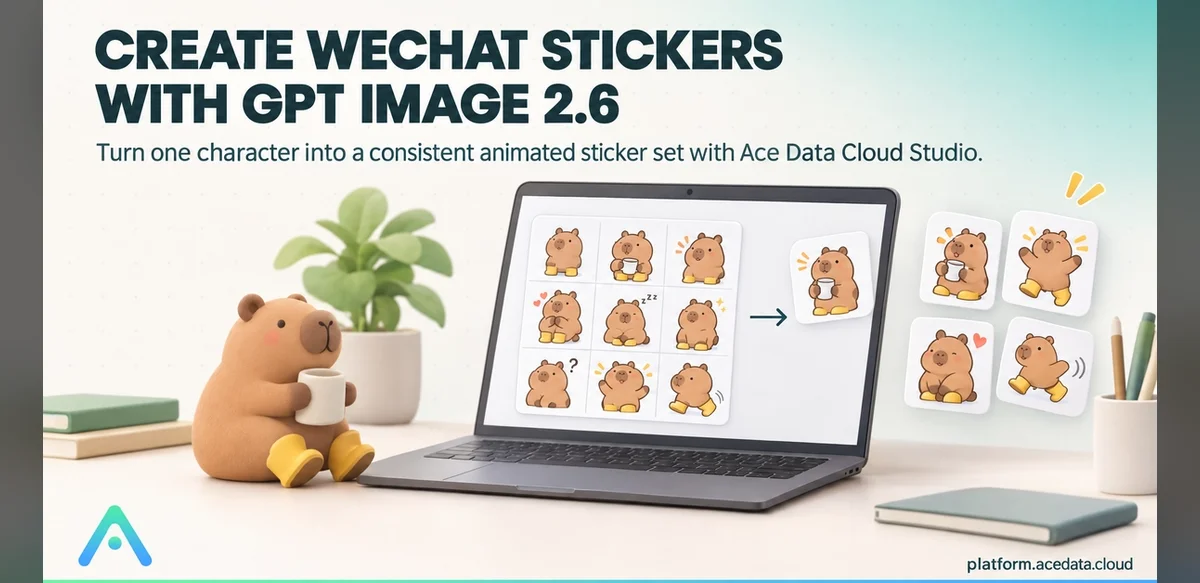
Advancements in image generation tools have led developers to explore structured approaches rather than isolated prompts. One effective method involves a two-stage pipeline designed specifically for sticker production. This process emphasizes consistency across iterations while incorporating mechanisms to retain key visual elements throughout.
The initial stage focuses on establishing core designs. Users begin by defining base shapes, color palettes, and thematic elements. Rather than generating complete images immediately, the emphasis lies on creating foundational layers that can be refined later. This reduces variability and allows for targeted adjustments without starting over each time.
Following the base creation, the second stage applies refinement and integration. Here, additional details such as textures, shadows, and borders are introduced. Preservation gates play a central role by enforcing rules that protect original attributes from being altered unintentionally. These gates function as checkpoints, verifying that essential features remain intact before proceeding to final output.
Implementation typically requires careful prompt engineering. Instructions should reference previous outputs explicitly to maintain continuity. For instance, prompts can direct the system to build upon an established composition while introducing controlled variations. This method proves particularly useful for series of related stickers where uniformity in style is desired.
Testing the pipeline reveals benefits in efficiency and quality control. Teams report fewer discarded generations and improved alignment with project specifications. The approach also supports scalability, enabling the production of multiple variants from a single foundational set.
Considerations for broader application include adapting the gates to different themes or formats. While the core structure remains consistent, parameters can be adjusted based on specific requirements such as size constraints or thematic focus. Documentation of successful configurations aids in replicating results across projects.
Overall, this structured methodology transforms image generation from a random process into a reliable workflow. By prioritizing preservation and staged development, users achieve more predictable outcomes suitable for commercial or creative sticker collections. Continued exploration may yield further optimizations tailored to evolving tool capabilities.

