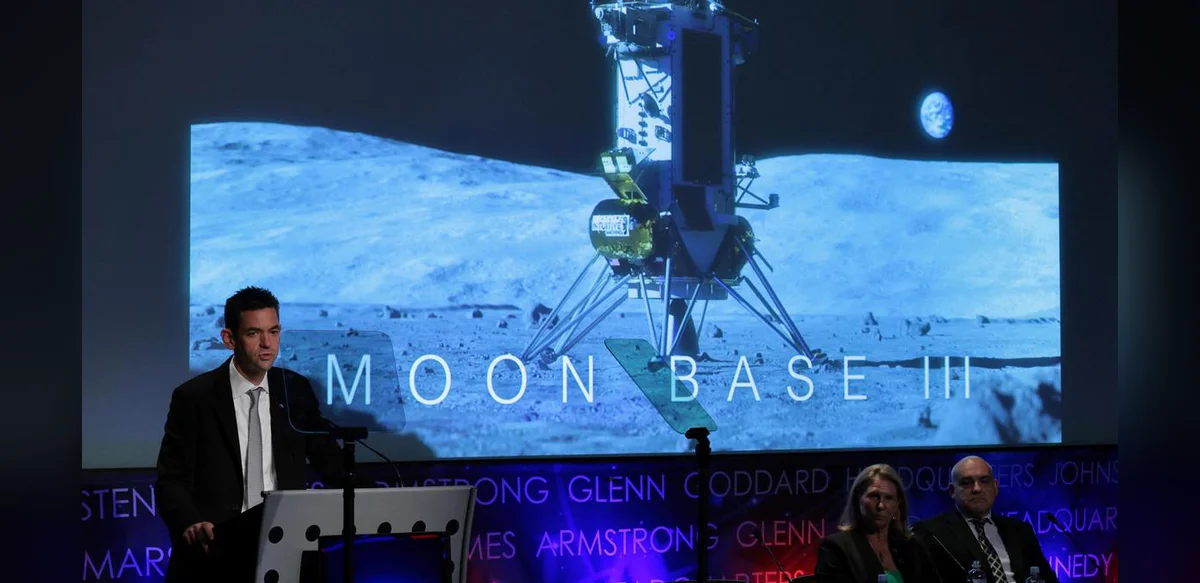
At the ninth meeting of the India-U.S. Civil Space Joint Working Group in Bengaluru on August 5 and 6, NASA extended a formal invitation to ISRO to join its lunar outpost program under the Artemis Accords. NASA aims to create a permanent human presence at the Moon’s south pole, where astronauts would live, work, and perform scientific tasks over the coming decade and beyond. The agency and its partners intend to carry out multiple crewed and robotic missions. The initiative was unveiled on March 24, 2026, during NASA’s Ignition event as part of efforts to fulfill national space policy goals, with projected costs exceeding $20 billion. Execution is divided into three phases. The first, running through 2029, focuses on reliable lunar access and environmental study. The second phase, through 2032, involves deploying infrastructure with international partners. The third phase, starting in 2032, centers on sustained human operations. The south pole was chosen for its extreme conditions, ranging from -203°C to 54°C, to investigate lunar origins and support future exploration of Mars and Venus. Russia and China are developing a separate International Lunar Research Station, with plans for a permanent base and satellite network, targeting a Chinese crewed landing by 2030. India signed the Artemis Accords in 2023 as the 27th nation. The invitation builds on this partnership and aligns with India’s Chandrayaan-4 sample return mission, its planned space station by 2035, and a crewed lunar flight by 2040.