


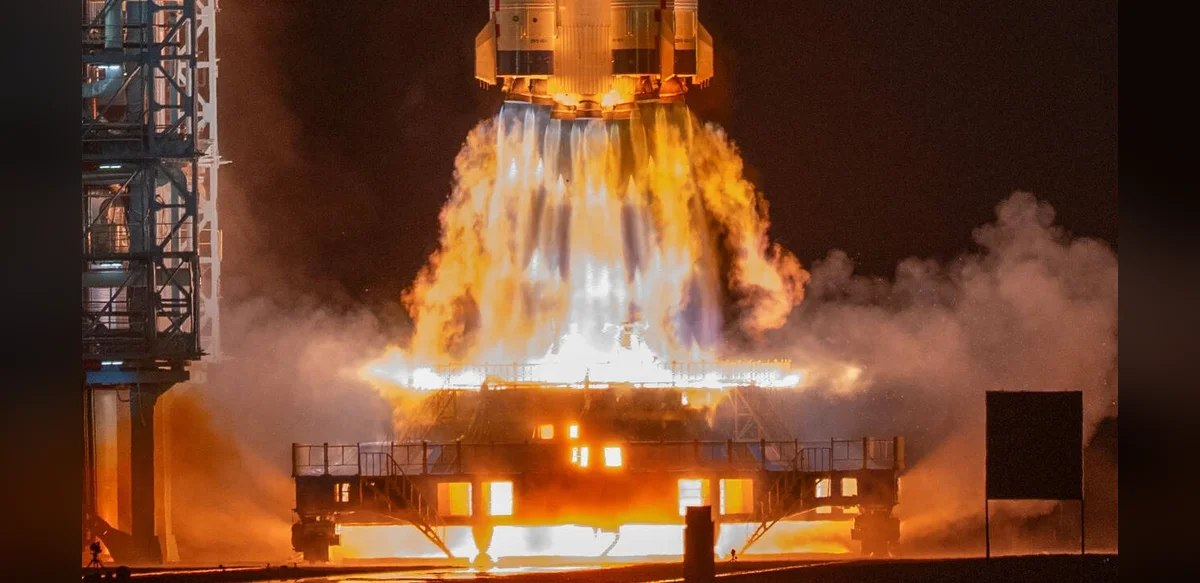
Pakistan has announced plans to send one of its astronauts to China’s space station aboard the upcoming Shenzhou-24 mission. The decision marks a notable step in bilateral cooperation between the two countries in the field of space exploration. Officials from both nations have confirmed that the mission will provide Pakistani personnel with direct access to the orbiting laboratory for scientific work and operational experience.
China’s space station, known as Tiangong, has been operational for several years and serves as a platform for long-duration human presence in low Earth orbit. The facility supports experiments in biology, materials science, and Earth observation. Shenzhou-24 is scheduled as one of the regular crewed flights that rotate personnel and deliver supplies to the station.
The selection process for the Pakistani astronaut is expected to involve rigorous medical and technical evaluations. Candidates will undergo training in China to familiarize themselves with station systems, emergency procedures, and research protocols. This preparation phase ensures that the visiting crew member can contribute effectively during the mission.
Pakistan’s space program has historically focused on satellite development and remote sensing applications. Participation in a crewed mission represents an expansion of these activities into human spaceflight. The collaboration is viewed as an opportunity to build domestic expertise and strengthen scientific ties with China.
Both governments have emphasized that the mission will be conducted under established international guidelines for space activities. Data collected during the flight is expected to be shared through joint research channels. The partnership aligns with broader efforts to promote peaceful use of outer space.
Training timelines and exact launch dates remain subject to final coordination between the space agencies involved. Additional details regarding the scientific objectives of the Pakistani participant are anticipated in the coming months. The mission is seen as a milestone that could open further avenues for joint projects in astronautics and related technologies.
Observers note that such international crew exchanges help distribute knowledge across emerging spacefaring nations. Pakistan’s involvement may encourage similar initiatives with other partners in the future. The Shenzhou series has a proven record of reliable transport to the Chinese station, providing a dependable vehicle for this cooperative endeavor.
Public statements from Pakistani authorities highlight the educational and inspirational value of the mission for younger generations interested in science and engineering. Schools and universities across the country are expected to follow developments closely. Coverage in national media has already begun to outline the significance of the planned flight.
China has welcomed the participation and expressed readiness to support the necessary preparations. Joint working groups have been formed to address logistical and technical requirements. These groups will oversee everything from equipment compatibility to health monitoring standards.
The overall duration of the Pakistani astronaut’s stay aboard the station has not yet been disclosed. Mission planners are balancing scientific goals with operational constraints typical of crewed spaceflight. Safety remains the paramount consideration throughout all phases of the project.
This development occurs against a backdrop of growing global interest in crewed space activities. Multiple nations are expanding their presence in orbit through partnerships or independent programs. Pakistan’s decision to join the Shenzhou-24 flight places it among a small group of countries that have sent citizens to a space station.
Further announcements are expected once training milestones are reached. The two countries have a history of cooperation in satellite launches and ground infrastructure. Extending this relationship to human spaceflight represents a natural progression of existing agreements.
Analysts suggest the mission could yield valuable experience for Pakistan’s future ambitions in space. Lessons learned will inform planning for additional flights or even independent projects. In the meantime, attention remains focused on the successful completion of Shenzhou-24 preparations.

