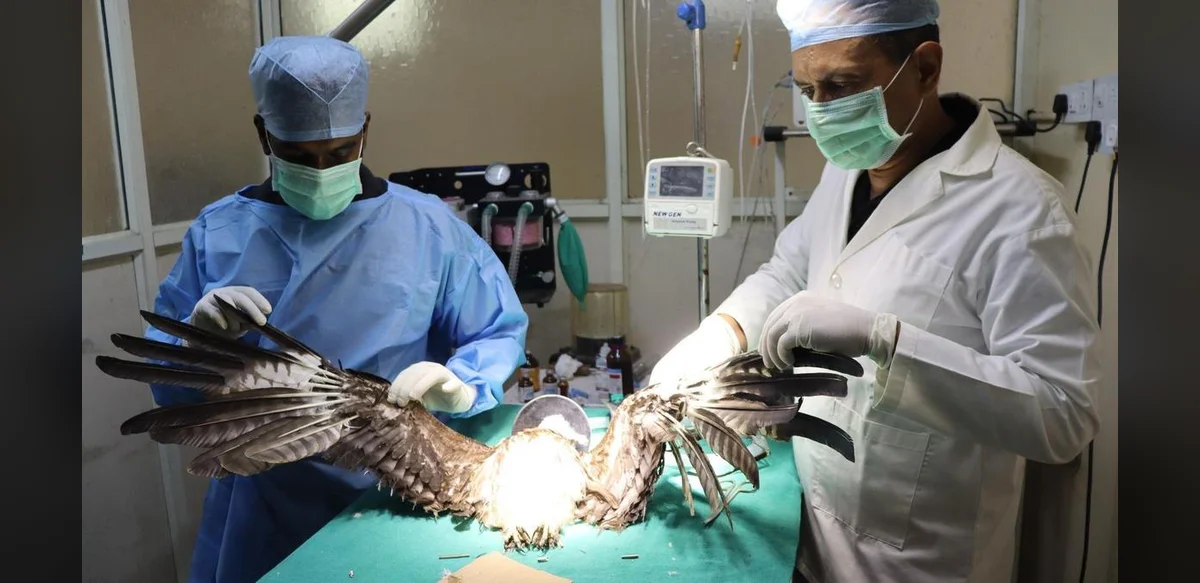
Prosthetic limbs for peacocks, electro-acupuncture for snakes and implants for birds that have lost feathers may sound unusual, yet they form part of daily operations at the People for Animals Wildlife Hospital in Bengaluru. The facility has spent three decades rescuing, treating and releasing animals that require medical care. Col. Navaz Shariff (retd), the general manager and chief wildlife veterinarian, described the case of a seven-month-old leopard cub struck by a motorcycle. The cub suffered a non-fatal head injury and recovered under hospital care. Standard rules require such cubs to be transferred to Bannerghatta Biological Park. Staff had previously observed the mother and her young in the same area, so they sought permission from the chief wildlife warden to attempt a reunion. They recorded the cub’s calls and spread its urine in locations the mother used. Loudspeaker playback of the sounds failed to attract her, yet the healthy cub was released into the forest and later observed with its mother and sibling. The organisation has built an aquatic rescue unit that includes a motorised boat. A four-wheel vehicle stocked with medical supplies and staffed by a daily duty veterinarian allows operations across varied terrain. Navaz described the technique of imping, or feather implantation. Birds entangled in manja or plastic often lose feathers while struggling. Collection boxes placed around Vijayanagar gather found feathers, which volunteers deliver weekly. After cleaning and storage, the hospital maintains feathers from about 32 species, possibly the only such bank in the country. Donor feathers are fitted into prepared sockets using surgical glue, a process lasting two to three hours. Primary, secondary and tail feathers are implanted. Following test flights, birds are released. Implanted feathers fall out naturally as new growth appears. Paralysis affects some birds, particularly peacocks that contact live wires. Three-dimensional printing has produced prosthetic limbs that the birds learn to use within weeks. These animals cannot return to the wild but can manage basic needs. The same method was applied to fit a prosthetic leg on a pony in Mysore. A request from Romania for a calf’s adjustable prosthetic limb has been received, with dimensions supplied for future growth. Attempts to treat macaques with gangrene from electrocution have not succeeded. The hospital has rescued around 8,000 spectacled cobras displaced by urban expansion. One badly injured snake caught in machinery required surgery on the oesophagus and trachea and was named Scarface. Permission has been sought to attach transmitters to released snakes for monitoring. Spinal injuries in snakes usually require 45 days or longer to heal. Electro-acupuncture and physio-laser treatment now supplement earlier methods such as UV lights and hot-water baths, following positive results in dogs. The organisation runs awareness programmes in schools and residential areas to promote ecological understanding and safe responses to snakes and other wildlife.