


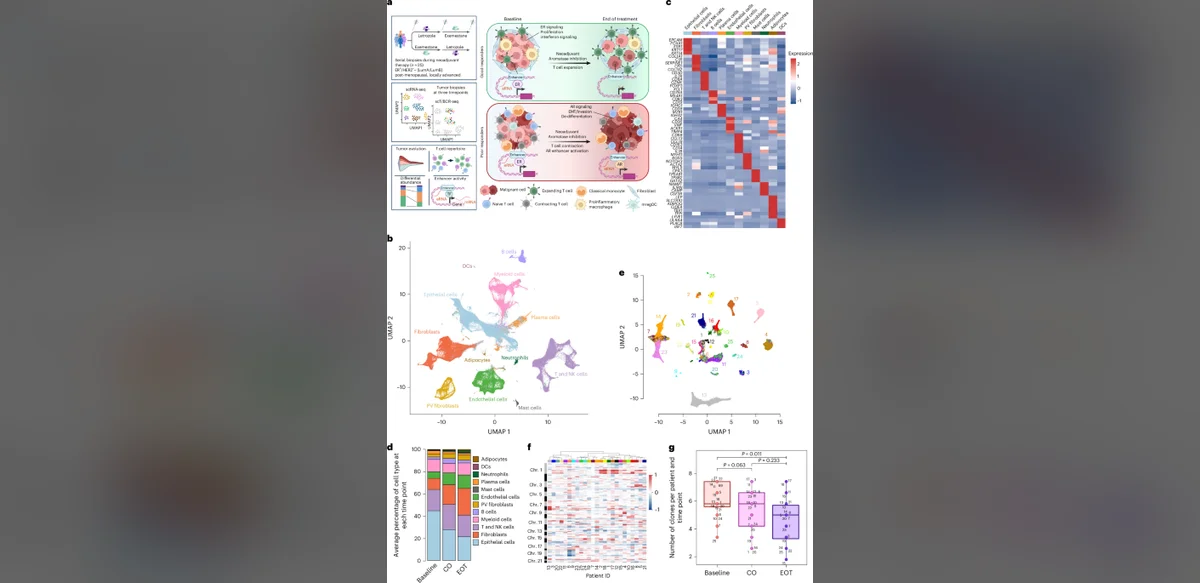
A recent investigation into estrogen receptor positive breast cancer has provided new insights into why some tumors respond well to aromatase inhibitors while others develop resistance. The work relied on repeated single cell analysis over time to track changes inside tumors during treatment.
Researchers focused on patients receiving aromatase inhibitors, a common therapy that lowers estrogen levels to slow cancer growth. By examining individual cells rather than bulk tissue, the team observed distinct patterns linked to treatment outcomes. Tumors showing strong estrogen related activity and specific enhancer regions tied to the estrogen receptor tended to shrink more effectively.
Active involvement of T cells, a type of immune cell, also appeared connected to better responses. These immune cells seemed to support the effects of hormone suppression, suggesting that an engaged immune environment can improve therapy results.
In contrast, cases where tumors resisted the drugs showed increased activity in androgen signaling pathways. Enhancers associated with hormone sensing cells played a role in this shift, allowing cancer cells to bypass estrogen dependence and continue growing.
The longitudinal design of the study allowed scientists to follow these molecular changes as they unfolded. This approach revealed that resistance mechanisms can emerge gradually, offering potential windows for early intervention.
Experts note that these findings could help guide future treatment decisions. Identifying patients likely to benefit from aromatase inhibitors based on estrogen signaling strength and immune activity might reduce unnecessary side effects for those unlikely to respond.
Further research is needed to confirm whether targeting androgen pathways or boosting T cell responses could overcome resistance in non responsive cases. The study underscores the value of single cell technologies in uncovering subtle tumor dynamics that traditional methods might miss.
Overall, the results highlight how combining hormone signaling data with immune profiling may refine personalized approaches to breast cancer care. Continued exploration of epigenetic factors could lead to new strategies that address both sensitivity and resistance mechanisms.
This work contributes to a growing body of evidence on the complex interplay between hormones, genetics, and immunity in cancer progression. It emphasizes the importance of monitoring tumors at the single cell level to capture evolving treatment responses accurately.

