


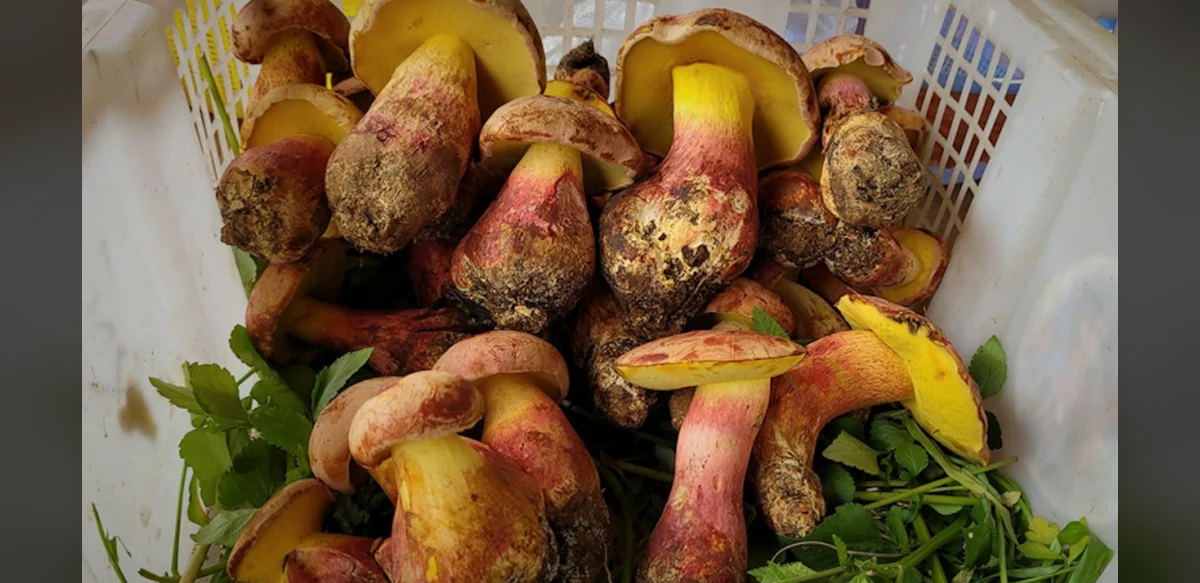
Recent scientific work has drawn attention to a particular mushroom species known as Lanmaoa asiatica and its reported association with distinctive hallucinatory experiences. Accounts from individuals in parts of China and the Philippines describe encounters with numerous small, vividly colored human-like figures. These descriptions appear consistent across different users and regions, suggesting a shared perceptual pattern.
The phenomenon itself is not entirely new. Records indicate that interest in similar effects began as early as 1934, when early observers noted unusual reports linked to certain fungi. At that time, limited tools for precise identification left many questions unanswered. Modern methods in mycology have now allowed researchers to isolate and study the species more accurately, yielding clearer biological details.
Lanmaoa asiatica belongs to a group of mushrooms found in specific Asian habitats. Its chemical composition is under examination to understand how it may trigger the reported visions. Scientists emphasize that such effects vary among individuals and depend on dosage, preparation, and personal physiology. No single explanation accounts for every case, yet the recurring theme of tiny colorful figures stands out in collected testimonies.
Field studies in affected areas have gathered additional context. Local communities sometimes incorporate the mushroom into traditional practices, though awareness of its psychoactive properties remains uneven. Researchers stress the importance of careful documentation to separate anecdotal reports from verifiable data. Ongoing laboratory analysis focuses on identifying active compounds that could influence perception.
Public health considerations also arise from these findings. Health authorities in the regions involved advise caution regarding consumption of unidentified wild mushrooms. Accurate species identification helps reduce risks associated with misidentification or unexpected reactions. Educational efforts aim to inform foragers and traditional practitioners about both potential benefits and hazards.
The broader scientific community views this development as part of larger efforts to catalog fungal diversity and its interactions with human biology. Advances in genetic sequencing and chemical profiling have accelerated progress since the initial inquiries decades ago. Collaboration between international teams continues to refine understanding of how certain mushrooms produce consistent visual patterns across cultures.
Further research is planned to explore environmental factors that influence the mushroom’s growth and potency. Climate conditions, soil composition, and seasonal variations may all play roles in determining the strength of its effects. Such variables could explain why reports cluster in particular locations within China and the Philippines.
While the core observations remain centered on the described hallucinations, investigators caution against overgeneralization. Individual experiences differ, and not every user reports identical imagery. Controlled studies, where feasible, seek to establish reproducible results that can be compared with historical accounts dating back to 1934.
In summary, the identification of Lanmaoa asiatica provides a concrete biological anchor for long-standing reports of miniature colorful figures. Continued investigation promises additional insights into the mechanisms involved, supported by improved taxonomic tools and cross-cultural data collection. The work underscores the value of combining historical records with contemporary science to address questions that have persisted for nearly a century.

