


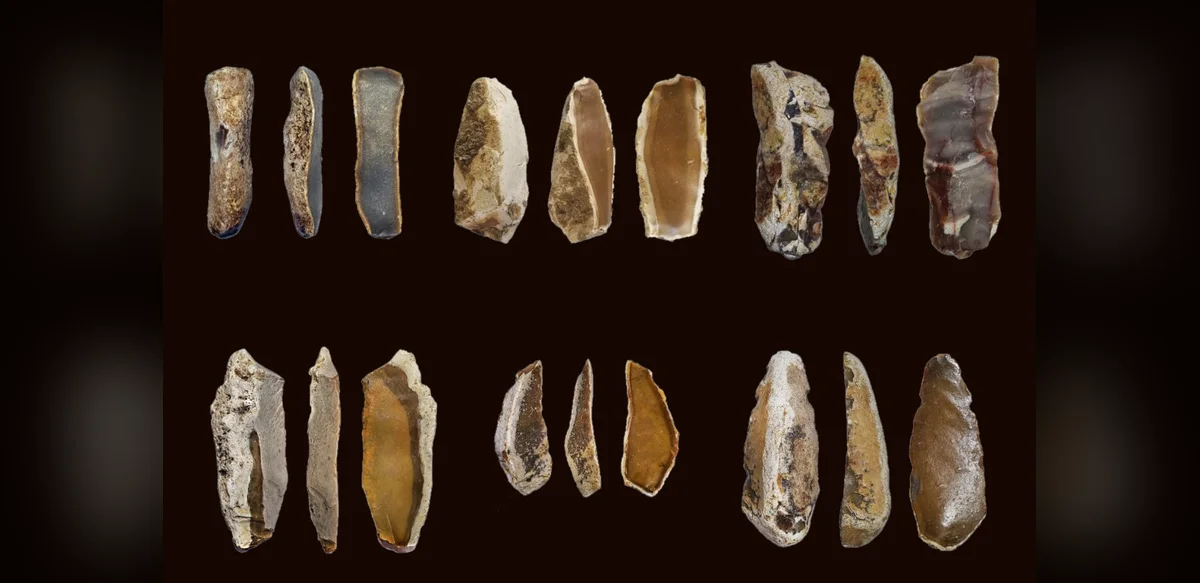
Recent findings in the region of Israel have brought attention to early production of sophisticated stone blades by ancient populations in southwest Asia. These implements appeared far earlier than their eventual broad acceptance across communities. Evidence indicates that such advanced tools emerged approximately one hundred thousand years prior to becoming common in daily use. This timeline suggests that technological innovations did not spread or gain acceptance immediately among groups.
The discovery challenges assumptions about how knowledge and skills transfer occurred in prehistoric societies. Rather than rapid uptake, the pattern points to prolonged periods where new methods remained limited or localized. Communities may have maintained established practices even when superior alternatives existed nearby. Such resistance or delay highlights the complex social factors influencing change.
Archaeological analysis of the blades reveals careful craftsmanship that exceeds simpler earlier forms. The precision in shaping and the selection of materials demonstrate advanced understanding at the time. Yet records show these techniques stayed confined for many generations before wider distribution. This extended interval raises considerations about barriers to transmission, whether due to social structures, environmental conditions, or other influences.
Scholars examining the evidence note that cultural evolution often follows uneven paths. Innovation alone does not guarantee integration into broader populations. Instead, acceptance appears tied to additional circumstances that align with existing ways of life. The southwest Asian context provides a clear case where early capability did not translate directly into common practice.
Further study of related sites may clarify why adoption lagged. Comparisons with other regions could reveal similar patterns of delayed uptake in tool technologies. The overall picture emphasizes that human groups navigated change selectively rather than through automatic progression. This perspective encourages reevaluation of models describing prehistoric development.
The blades themselves serve as tangible markers of capability that existed long before impact on larger scales. Their unexpected early presence underscores gaps in current understanding of how skills propagate. Continued investigation into these artifacts promises additional insights into the rhythms of cultural adaptation across ancient landscapes.

