

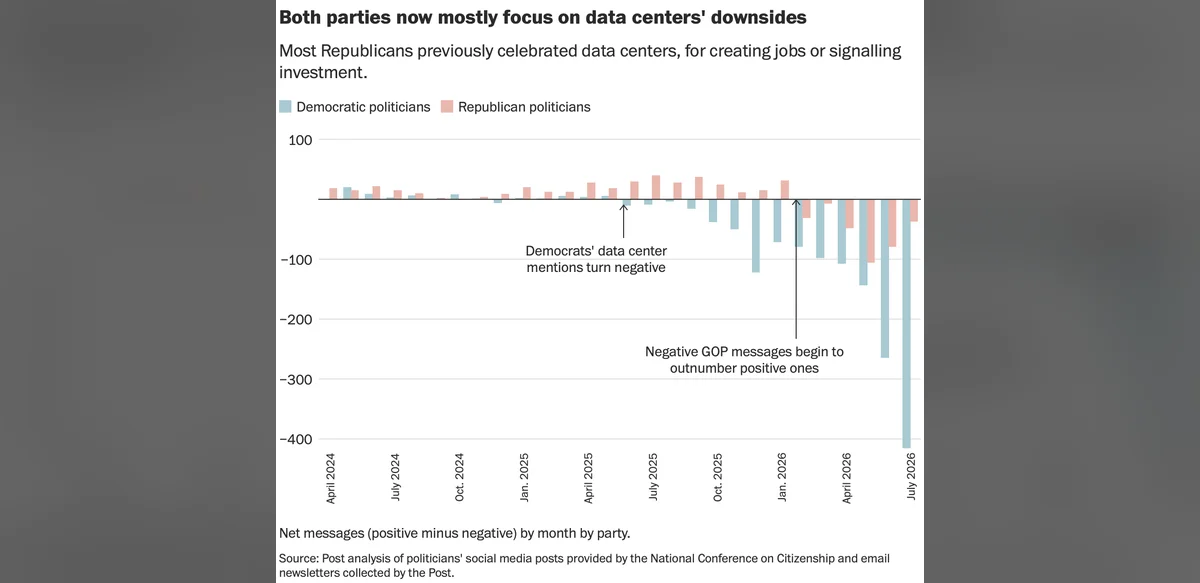
Recent analysis of political communications reveals a notable shift in how elected officials discuss data centers. Researchers examined newsletters and social media activity to track changes in tone over time. The findings indicate that Democratic voices have expressed increasing criticism since the previous year.
Data centers form the backbone of modern digital services, supporting everything from cloud computing to online streaming. Their rapid expansion has raised questions about energy consumption, land use, and local infrastructure demands. These concerns appear to have influenced messaging from various political figures.
The study focused on public statements rather than private positions. It highlighted patterns in how Democrats framed the issue, often emphasizing environmental impacts and community effects. This approach contrasts with earlier periods when such facilities received broader support across party lines.
Data centers require substantial electricity and water resources for cooling systems. As their numbers grow in suburban and rural areas, residents have voiced worries about rising utility costs and noise levels. Politicians responding to these local sentiments have adjusted their public communications accordingly.
The analysis covered multiple states where large technology projects are underway. It showed a consistent trend among one party toward more cautious or negative language. This development could affect future permitting processes and investment decisions in the sector.
Industry representatives have noted the importance of addressing these concerns through better planning and transparency. They point to economic benefits including job creation and tax revenue that data centers bring to host communities. Balancing growth with sustainability remains a key challenge.
Public discourse around technology infrastructure continues to evolve. Factors such as grid reliability and renewable energy integration play roles in shaping opinions. Observers expect ongoing debate as more facilities are proposed in coming years.
The research method relied on keyword tracking and sentiment evaluation across digital channels. It provided a snapshot of messaging trends without claiming to represent all viewpoints. Additional studies may examine Republican positions or regional variations in greater detail.
Local governments face pressure to update zoning rules and environmental reviews. These adjustments aim to accommodate data center needs while protecting resident interests. Collaboration between officials and developers could help mitigate conflicts.
Overall, the shift in political tone reflects broader societal discussions about technology’s footprint. As digital demands increase, so does scrutiny of the physical systems enabling them. Future policy decisions will likely build on these emerging narratives.


