

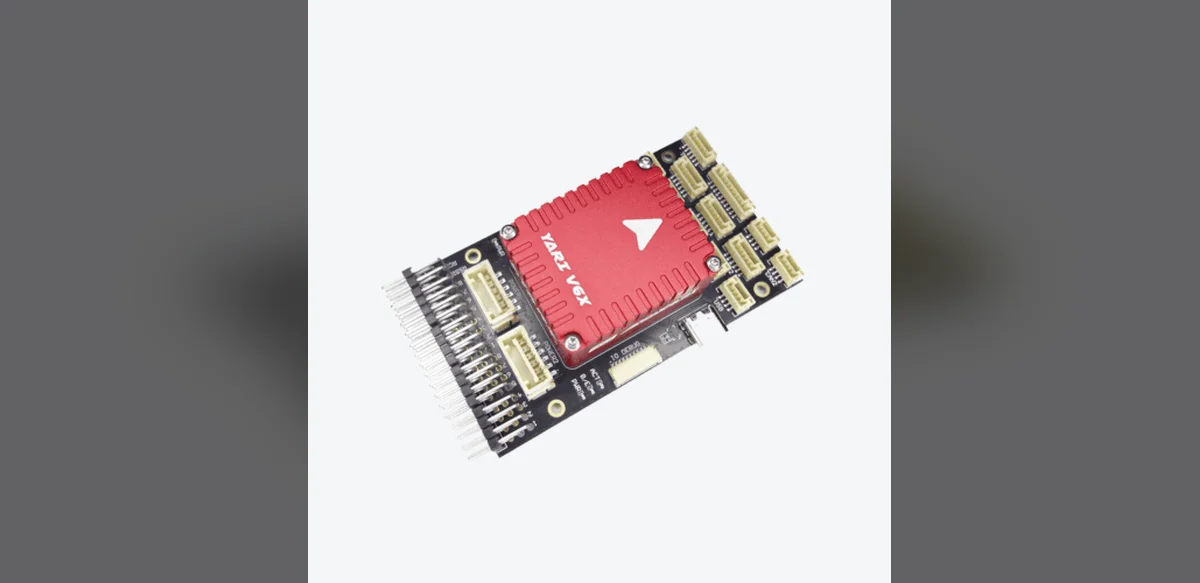
The newly introduced YARI V6X represents an enterprise-grade FMUv6X modular flight controller and autopilot platform intended for demanding missions involving small unmanned vehicles. Developed entirely in India, the system targets teams focused on copter development and related unmanned applications. Its design emphasizes reliability and adaptability in professional settings where precise control is essential.
Engineers have created the platform to support a range of operational requirements typical in unmanned vehicle projects. The modular architecture allows for flexible integration with various hardware configurations, making it suitable for specialized tasks that demand consistent performance. Built with attention to quality standards, the controller aims to meet the needs of organizations working on advanced unmanned systems.
India’s growing role in aerospace technology is reflected in this development. The platform provides a domestically produced option for developers seeking robust autopilot solutions without reliance on external suppliers. This approach supports local innovation in the unmanned vehicle sector by offering a tailored tool for research and operational use.
Key aspects of the YARI V6X include its adherence to the FMUv6X standard, which ensures compatibility with established protocols in the field. The system is positioned as a professional-grade choice for missions that require high levels of precision and durability. Teams developing copters can utilize its features to enhance vehicle stability and control during flights.
Overall, the introduction of this platform contributes to the expansion of indigenous capabilities in unmanned technology. By focusing on modularity and enterprise-level specifications, it addresses practical challenges faced by developers in India and potentially beyond. The emphasis remains on delivering a dependable solution for small unmanned vehicle operations across diverse scenarios.
Further details on integration and performance metrics are expected to be shared as adoption increases among relevant teams. The platform’s design prioritizes ease of use alongside advanced functionality, supporting both prototyping and full-scale deployment phases. This balanced approach helps streamline development workflows for unmanned vehicle projects.
In summary, the YARI V6X stands as a notable addition to available tools for unmanned systems development, highlighting India’s contributions to this specialized domain. Its focus on modularity and quality positions it as a practical resource for professionals engaged in copter and related vehicle advancements.

