

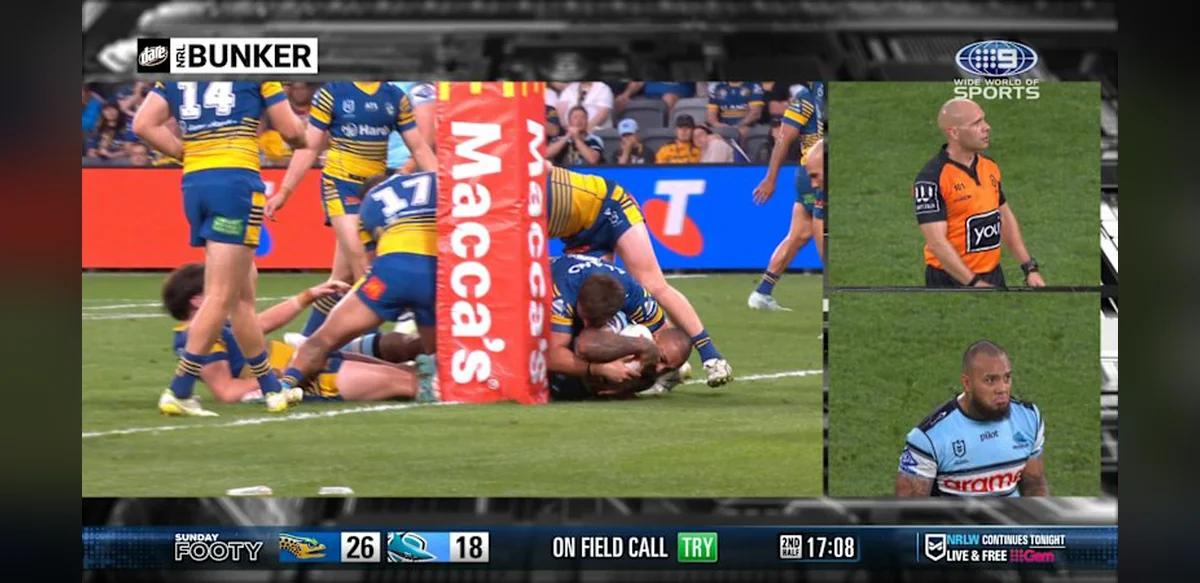
In a tightly fought rugby league encounter, a promising scoring opportunity for the Sharks was disallowed following a detailed review by match officials. The prop forward’s effort to ground the ball was initially thought to have resulted in a try, yet the decision was reversed after careful examination of the available footage.
The incident occurred during a key attacking phase when the player appeared to cross the line. On-field referees referred the matter for further assessment, leading to the conclusion that the grounding did not meet the required criteria. This outcome shifted momentum and left the attacking side without the anticipated points.
Rugby league rules stipulate that a try must be clearly grounded with downward pressure. The bunker system allows for multiple camera angles and slow-motion replays to ensure accuracy in such calls. Officials are trained to apply these standards consistently across matches.
The reversal prompted discussion among players and coaching staff on the sideline. While the team maintained composure, the lost opportunity highlighted the fine margins that often decide professional fixtures. Supporters in attendance reacted with a mix of surprise and acceptance as the game continued.
Throughout the remainder of the contest, both sides focused on building structured attacks and solid defensive lines. The absence of that particular score meant adjustments to planned strategies became necessary. Coaches emphasized the importance of maintaining discipline and capitalizing on subsequent chances.
The bunker review process has become an integral part of modern rugby league, providing an additional layer of verification for critical decisions. It aims to reduce errors and uphold the integrity of the sport. Players are accustomed to waiting for these outcomes before resuming play.
In the broader context of the season, such moments can influence team standings and individual performances. Forwards like the one involved are expected to contribute both in attack and defense, and denied tries represent part of the competitive challenge. The focus now turns to upcoming fixtures where similar situations may arise.
Analysts note that accurate officiating supports fair competition and encourages teams to refine their execution under pressure. Training sessions often incorporate scenarios that simulate bunker reviews to prepare athletes mentally. This preparation helps maintain focus regardless of immediate outcomes.
The match proceeded with renewed intensity after the decision. Defending players gained confidence while the attacking unit sought alternative routes to the line. Both teams demonstrated resilience and tactical awareness in the closing stages.
Overall, the event underscored the role of technology in contemporary sports. It also illustrated how individual plays can shape the narrative of an entire game without altering the fundamental respect between competitors. The Sharks will look to build on other aspects of their performance in future outings.


