

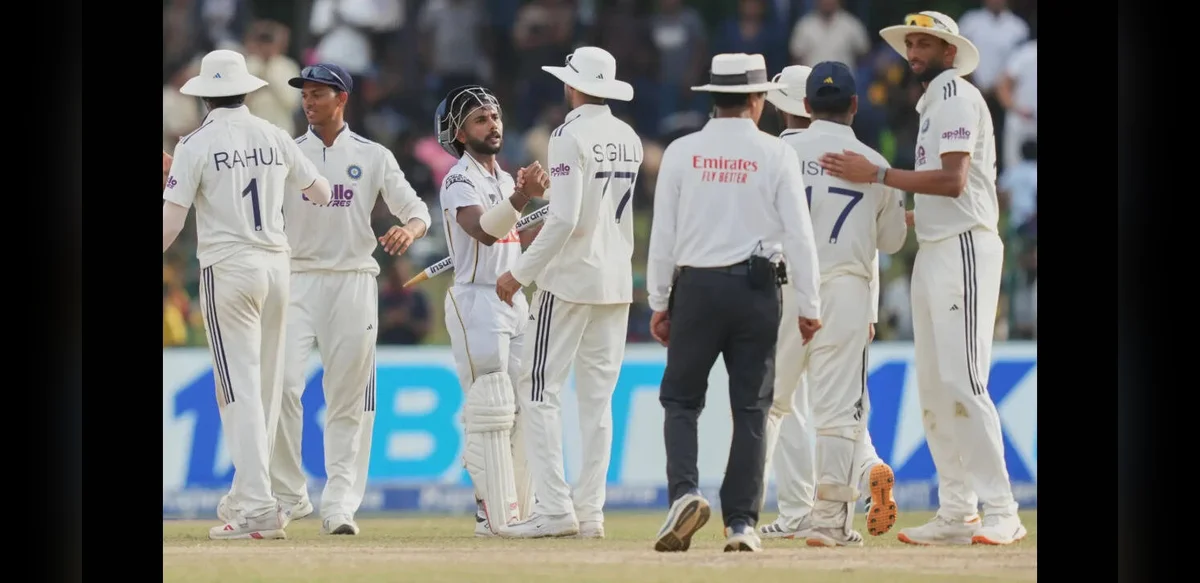
The contest in Colombo concluded without a decisive result after Sri Lanka’s lower order mounted a determined resistance that denied India a victory. The match had seen the visitors in control for much of the proceedings, yet they were unable to break through the final partnerships. This outcome leaves India facing increased pressure in their pursuit of a place in the World Test Championship final.
Sri Lanka’s innings featured a standout performance from one of their younger players, who remained unbeaten on 133. His contribution proved pivotal in securing the draw and highlighted a strong individual series for the batsman. The home side’s ability to withstand pressure during the closing stages turned what appeared to be a likely defeat into a shared point.
India had established dominance earlier in the game through effective bowling and field placements. However, their approach became less incisive as the match progressed, allowing the Sri Lankan tail to accumulate runs and consume valuable time. The failure to remove the remaining batters promptly meant the target remained out of reach and the contest ended in stalemate.
The result carries significant implications for India’s campaign in the World Test Championship. With limited opportunities remaining in the cycle, the team now operates under tighter constraints and must secure favorable outcomes in upcoming fixtures to stay in contention. Analysts note that the points lost in Colombo reduce the margin for error considerably.
Throughout the series, Sri Lanka demonstrated resilience, particularly in the latter stages of this encounter. Their lower-order contributions not only salvaged the draw but also provided momentum heading into future assignments. For India, the experience serves as a reminder of the challenges posed by determined opposition in home conditions abroad.
The surface in Colombo offered assistance to bowlers at times, yet the pitch remained playable into the final day. Both teams adapted their strategies accordingly, with the visitors seeking quick wickets and the hosts focusing on occupation of the crease. The tactical battle underscored the nuances of test cricket, where patience and precision often determine the outcome.
India’s bowlers had earlier claimed key scalps to restrict the scoring rate. Despite these breakthroughs, the absence of further inroads during critical periods allowed Sri Lanka to build an unbroken stand. The visitors’ fielding remained sharp in patches but lacked the consistency needed to close out the innings.
Looking ahead, India will need to refine their finishing skills and maintain intensity across all phases of the game. The World Test Championship features a demanding schedule, and each match carries weight in the overall standings. Sri Lanka, meanwhile, can take confidence from their performance and build upon the positives from this drawn contest.
The series as a whole provided valuable insights into the strengths of both sides. While India showed capability in controlling large portions of the match, Sri Lanka’s fightback illustrated the importance of depth in the batting order. Such encounters contribute to the competitive nature of international test cricket and prepare teams for future challenges.
In summary, the draw in Colombo represents a missed opportunity for India while marking a successful defensive effort by Sri Lanka. The unbeaten century by the home team’s standout performer stands as a highlight, and the result adjusts the trajectory of India’s championship aspirations. Both teams now turn their attention to the next phase of their respective calendars with lessons learned from this closely fought affair.


