


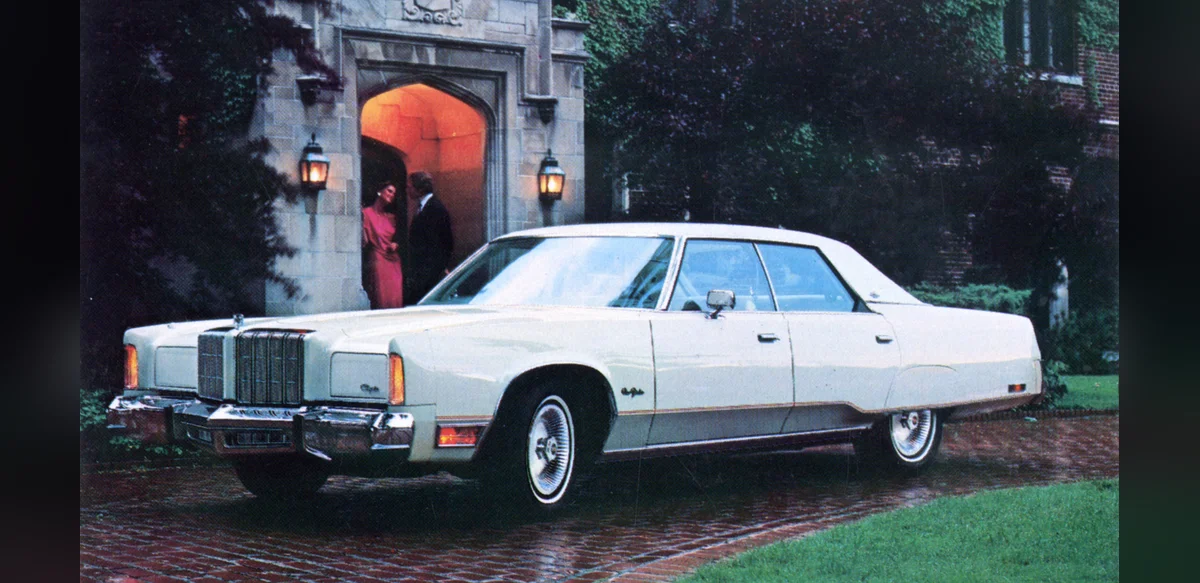
In the automotive landscape of the late 1970s, a notable chapter concluded for a prominent American manufacturer. The final vehicles from Chrysler to incorporate the substantial 440 big block powerplant were the 1978 Newport along with its more upscale counterpart, the 1978 New Yorker Brougham. This marked the conclusion of an era defined by larger displacement engines in the company’s passenger car lineup.
The 1978 model year represented a transitional period for the industry as a whole. Manufacturers faced increasing pressure to adapt to evolving regulations and consumer preferences. Within this context, the Newport served as a full-size offering that balanced traditional proportions with the engineering available at the time. Its companion, the New Yorker Brougham, positioned itself as a step above in terms of appointments and overall refinement, appealing to buyers seeking additional comfort features.
Both models shared the distinction of being the last to carry the 440 engine under their hoods. Prior to this point, the big block had been a staple in various Chrysler products, delivering the kind of robust performance associated with earlier decades. By 1978, however, the focus had begun shifting toward more efficient alternatives across the broader market.
The Newport stood out for its straightforward design philosophy, emphasizing spacious interiors and straightforward functionality. Meanwhile, the New Yorker Brougham added layers of luxury through enhanced materials and detailing, creating a more opulent experience for occupants. Together, these two vehicles encapsulated the end of the line for that particular engine configuration in Chrysler passenger cars.
Industry observers noted that the transition away from such large displacement units reflected broader trends. Fuel economy considerations and emissions standards played significant roles in shaping product strategies. The 1978 Newport and New Yorker Brougham thus became symbols of a bygone approach to vehicle propulsion, one centered on substantial power outputs.
Enthusiasts and historians often look back on these models as representatives of a specific moment in automotive development. Their production signaled the close of an engineering chapter that had spanned multiple years and numerous vehicle lines. After 1978, subsequent Chrysler offerings moved in different directions regarding engine choices.
The legacy of these final examples lies in their representation of scale and presence. The Newport offered a no-frills execution of full-size motoring, while the New Yorker Brougham elevated the same platform with additional emphasis on comfort. Both remained true to the core specification of housing the 440 big block.
As the calendar turned to subsequent years, the automotive sector continued its evolution. Smaller engines and alternative technologies gained prominence. Yet the 1978 models retained their place in records as the concluding instances of the 440’s use in Chrysler cars.
This development underscored the pace of change within manufacturing. What had once been standard practice gave way to new priorities. The Newport and New Yorker Brougham stood at the intersection of these shifts, serving as the last bearers of a powerful engine tradition.
In summary, the historical record identifies these two 1978 vehicles as the terminal applications of the 440 big block in the Chrysler range. Their combined presence highlighted both the capabilities of the era and the impending transformations that would redefine personal transportation.

