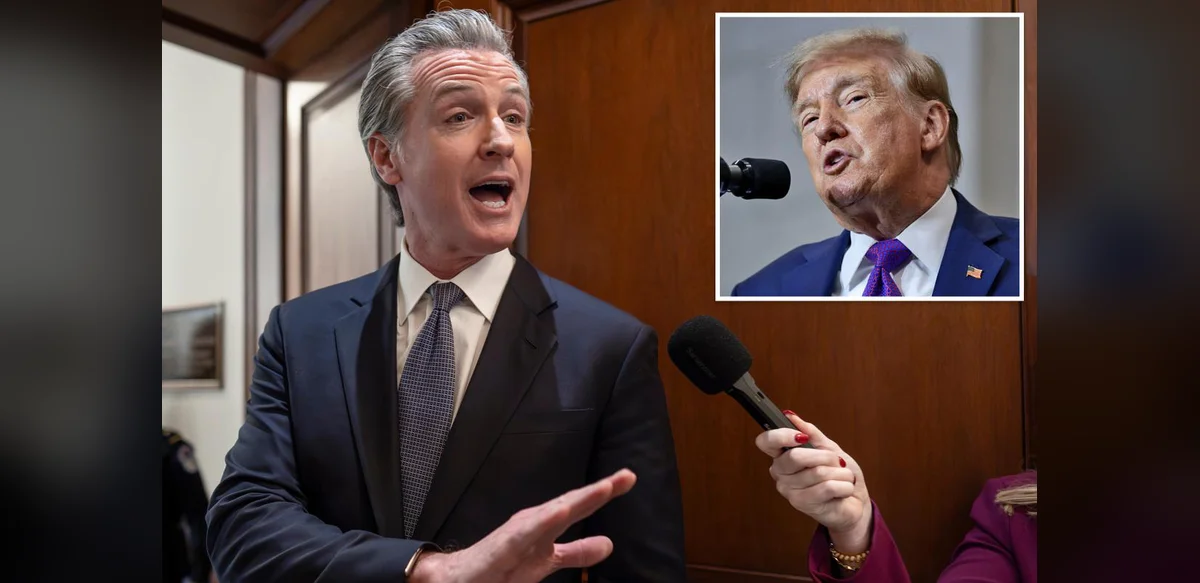
California Governor Gavin Newsom has drawn sharp criticism from political opponents following his decision to commute sentences for hundreds of individuals on the state’s death row. The move, which affects 548 inmates, has prompted accusations of inconsistency after Newsom publicly suggested that former President Donald Trump engages in the sale of pardons. Republican Representative Nancy Mace of South Carolina responded directly on social media, stating that the governor appears to be creating the very issues he claims to oppose. The statement frames the commutation action as contradictory to Newsom’s earlier comments on federal pardon practices. Observers note that the governor’s office has not issued an immediate detailed response to the specific charge of hypocrisy. Instead, the administration has pointed to the broader context of criminal justice reform efforts in California, where capital punishment has long been a subject of debate and legal challenges. The commutations represent one of the largest single actions of its kind in recent state history. Legal experts indicate that such decisions fall within the governor’s executive authority under the state constitution. Critics, however, argue that the timing and scale of the action invite questions about selective application of clemency powers. Supporters of the policy change emphasize humanitarian concerns and the high costs associated with maintaining death row facilities. They also highlight ongoing concerns about the fairness of capital trials and the risk of wrongful convictions. The federal side of the discussion centers on how presidential pardons have been granted in past administrations. Newsom’s remarks referenced perceived patterns in those grants, though specific evidence of financial transactions has not been presented in public records. Mace’s comment uses a metaphor to suggest that the governor’s own record undermines his position. Political analysts describe the exchange as part of a wider partisan divide over criminal justice and executive authority at both state and national levels. The issue has resurfaced in media coverage as campaigns prepare for upcoming electoral cycles. Public reaction remains divided along familiar lines, with some viewing the commutations as a necessary step toward reform and others seeing them as an overreach. State lawmakers have not yet scheduled hearings specifically on the commutation list, though related budget discussions for the corrections department are expected in the coming months. The governor’s office continues to release information on individual cases as reviews conclude. Meanwhile, federal pardon processes remain under scrutiny from multiple directions, including congressional oversight committees. No formal investigation into the sale of pardons has been announced at this time. The debate illustrates ongoing tensions between state and federal approaches to sentencing and clemency. Both sides have used the moment to reinforce their positions on law enforcement priorities and the role of executive discretion. Further statements from involved parties are anticipated as the story develops.