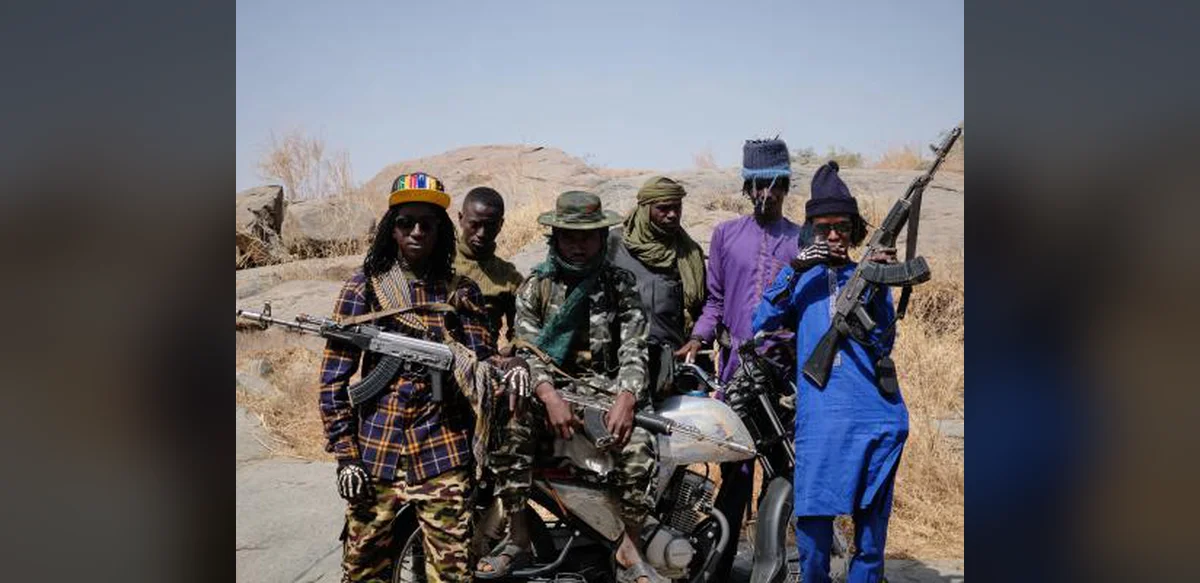
Under the broad branches of a neem tree, five young armed men in camouflage and headwear holding rifles sought shade from the intense midday sun. They shared chilled water and an energy drink. Nearby, a teenager with a rifle leaned against one of three parked motorcycles on the grass, while another rolled a cigarette. The meeting of these feared figures occurred near Batsari in Katsina state, inside the Rugu forest reserve that extends into Niger. Locals refer to such groups as terrorists or bandits, citing kidnappings for ransom, killings, and cattle theft. Gang leader Abu Bello, aged 32, rejected the labels, stating after prayers that they were simply providing for families amid interference that caused clashes. Bello’s words contrast with the harsh reality of Nigeria’s banditry problem. Since 2011, hundreds of similar gangs have operated across poorly policed northern areas, destroying villages and committing widespread violence. Recruits, largely ethnic Fulani herders, represent key non-state actors in Africa’s most populous nation. Data from Acled records 13,485 banditry-related deaths from 2010 to 2023 across seven north-western states. The conflict originated in disputes between farmers and nomadic herders over land, worsened by climate change, deforestation, and population growth. Some herders formed self-defense groups that evolved into criminal bands. Bello, born in Nigeria with an official ID, recalled cross-border ties with Fulani communities. In north-central areas, parallel tensions involve Fulani militias and vigilantes in Christian farming zones. In the north-west, violence occurs between Muslim groups of Hausa and Fulani ethnicity. Weak state presence has allowed non-state actors to dominate remote zones, including official reserves. Many settlements lack official recognition or policing. Similar patterns appear with other armed factions nationwide using ungoverned areas. Government efforts have faltered, with terrorism deaths rising sharply after earlier declines. Bandit leaders blame official corruption, while porous borders and limited security resources heighten insecurity. Bello listed unfulfilled promises of infrastructure. Concerns grow over blurring lines between banditry and jihadist ideology, notably with groups like Lakurawa.