


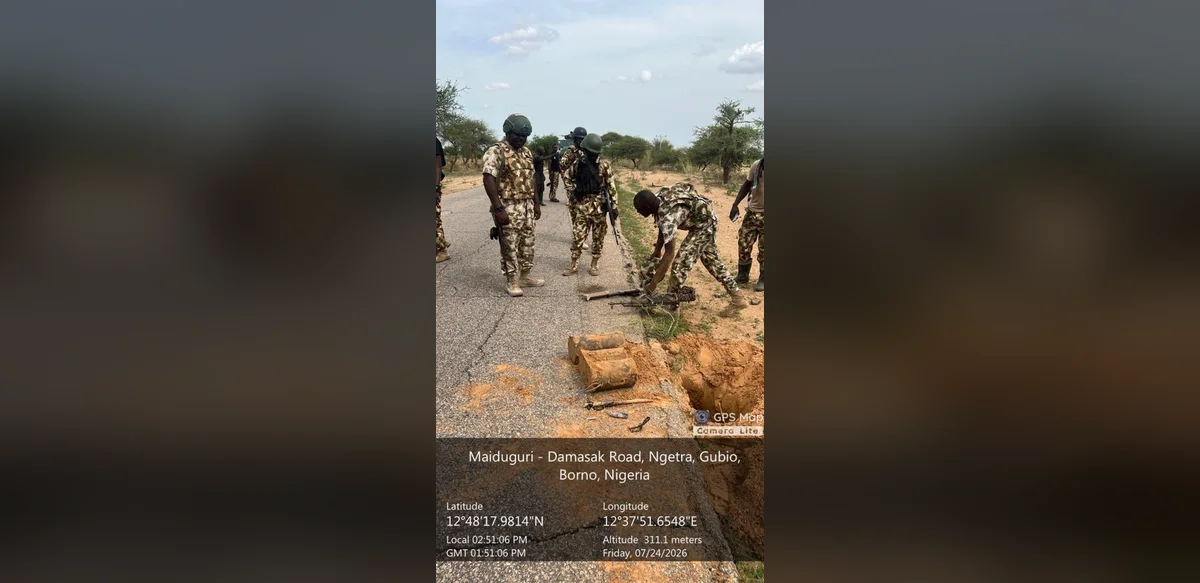
Military personnel from the Nigerian Army successfully disrupted a potential attack by locating and removing a command-wire improvised explosive device positioned along a roadway in Borno. The operation took place during routine patrols aimed at maintaining security in the region. Officials reported that the device had been concealed in a manner suggesting intent to target passing vehicles or personnel.
The recovery highlights ongoing efforts by security forces to address threats in areas affected by militant activity. Command-wire mechanisms allow remote detonation, making such devices particularly hazardous when buried near travel routes. Troops followed standard procedures to neutralize the threat without incident, ensuring no harm occurred to civilians or military members.
Local authorities emphasized the importance of continued vigilance along key transportation corridors. The incident occurred amid broader initiatives to stabilize the northeastern part of the country, where similar devices have been encountered in the past. Recovery operations typically involve specialized teams trained to handle unexploded ordnance safely.
Residents in nearby communities were advised to report any suspicious objects to the nearest security post. Such measures help prevent accidental detonations and support the overall goal of reducing risks associated with hidden explosives. The army continues to conduct sweeps in coordination with other agencies to clear potential hazards.
This event underscores the challenges faced by forces operating in terrain that allows for concealment of improvised weapons. Training programs focus on detection techniques using both visual inspection and electronic tools. Successful interventions like this one contribute to safer movement for both military and civilian traffic.
Further assessments of the recovered device are underway to understand its construction and origin. Information gathered from such finds can inform future prevention strategies. The army has reiterated its commitment to protecting populations from threats posed by non-state actors.
Operations in Borno remain a priority due to the strategic significance of the area. Regular patrols and intelligence gathering form the backbone of these activities. By removing the device promptly, troops averted what could have been a serious disruption.
Public cooperation plays a vital role in these efforts, with calls for community members to stay alert and share relevant observations. Security briefings stress that early detection often prevents escalation. The focus stays on maintaining stability through proactive measures rather than reactive responses.
In summary, the neutralization of the buried explosive represents one instance in a series of actions designed to counter threats. Detailed reports on the operation will be compiled for review by higher command. This approach ensures lessons learned are applied across similar environments.
The army encourages continued support from local populations in identifying and reporting anomalies along roads and pathways. Such collaboration enhances the effectiveness of patrols and reduces the likelihood of successful attacks. Ongoing training ensures personnel remain prepared for evolving tactics employed by adversaries.
Overall, the incident demonstrates the value of persistent presence and rapid response capabilities in contested regions. By securing the area and removing the device, forces have contributed to the safety of the broader community. Future operations will build on this success to address remaining risks.

