

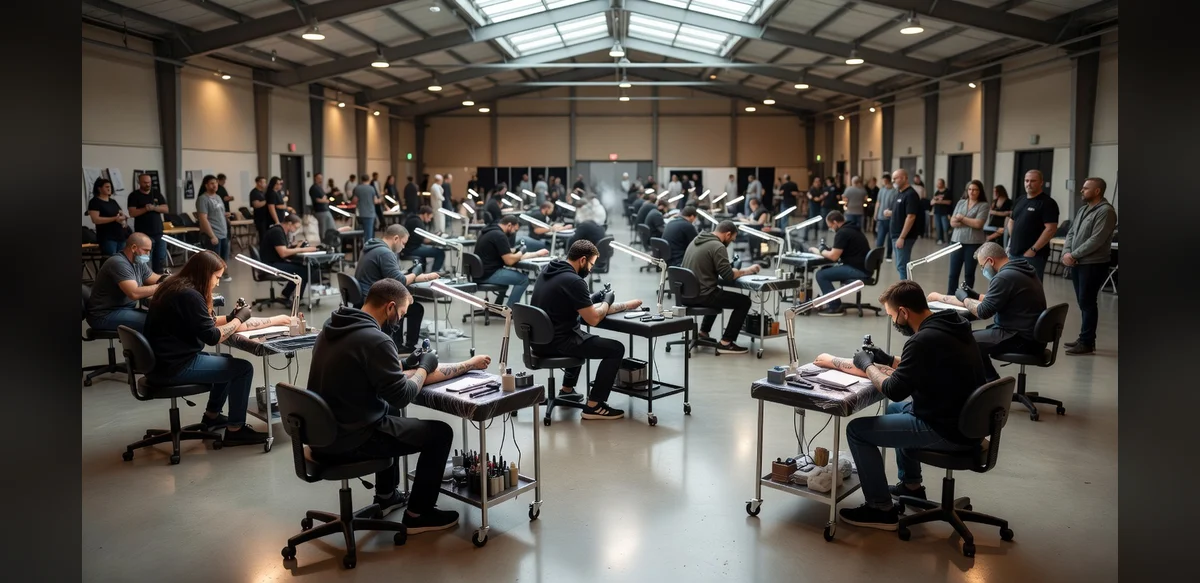
VIRGINIA BEACH, Va. — The annual tattoo gathering at the Virginia Beach Convention Center drew attention this year for a noticeable shift toward quieter methods of applying body art. Unlike past events that featured loud music and lively performances, this edition highlighted a more subdued approach known as quiet tattooing.
Organizers noted that the change created a different atmosphere inside the large hall. Artists worked without background noise, allowing clients and observers to focus on the process itself. Many attendees remarked that the absence of distractions made the experience more personal and less overwhelming.
Quiet tattooing involves minimal conversation and no amplified sound systems. Practitioners concentrate on steady hand movements and precise line work. Several artists at the festival explained that the technique reduces stress for both the person receiving the tattoo and those nearby. One participant described the setting as meditative, with only the soft hum of machines breaking the silence.
The convention center hosted dozens of booths where visitors could watch demonstrations or schedule sessions. Traditional styles remained on display, yet the quiet stations attracted steady lines throughout the weekend. Festival staff reported higher interest in this format compared with previous years.
Local health officials attended to ensure safety standards were followed. They checked equipment sterilization and reviewed consent procedures. Attendees were encouraged to ask questions about aftercare before any work began. The emphasis on calm surroundings appeared to support clearer communication between artists and clients.
Several long-time tattoo enthusiasts said the trend reflected broader changes in how people approach body modification. They pointed to increased awareness of sensory sensitivities and a desire for controlled environments. Younger visitors in particular seemed drawn to the option of receiving art without loud surroundings.
Vendors offered supplies suited to the quiet method, including specialized needles and inks designed for steady application. Workshops held in side rooms covered topics such as client positioning and breathing techniques to maintain focus. These sessions filled quickly, indicating strong demand for learning opportunities.
The festival continued through the weekend with scheduled breaks for rest and equipment checks. Attendance figures remained consistent with prior events, though the overall tone felt more measured. Organizers plan to survey participants to determine whether quiet tattooing will feature more prominently next year.
Community members expressed appreciation for the inclusive approach. Some noted that individuals who avoid crowded or noisy spaces now have a viable option at such gatherings. The event concluded without reported incidents, and feedback collected on-site leaned positive regarding the new emphasis.
Industry observers suggested that quiet tattooing could influence future conventions across the region. They highlighted potential benefits for concentration and reduced fatigue during longer sessions. As the practice gains visibility, more artists may adopt elements of the style in their regular studios.
The Virginia Beach Convention Center has hosted the festival for several years, providing ample space for both demonstration areas and private consultation zones. This layout supported the separation of quiet stations from livelier sections, allowing attendees to choose their preferred experience.
Overall, the shift toward quieter methods marked a notable evolution for the local tattoo community. Participants left with new artwork and observations about how atmosphere affects the creative process. Future editions may build on this foundation to accommodate varying preferences among enthusiasts.


