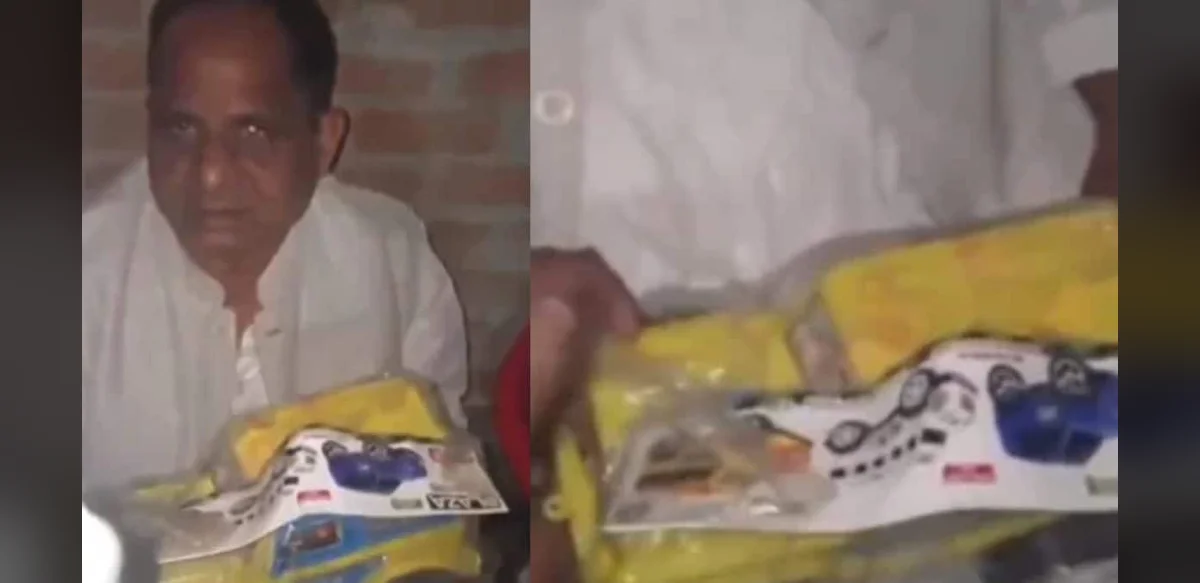
In a recent incident reported from Meerut in Uttar Pradesh, a groom’s family is said to have requested a specific sport utility vehicle as part of dowry arrangements ahead of a wedding. According to accounts, the bride’s side responded by providing a miniature replica of the requested model rather than the full-sized vehicle. The event, captured on video, has drawn attention to ongoing discussions around marriage customs in the region.
Local authorities have not yet issued an official statement on the matter, though dowry demands remain prohibited under Indian law. Community members in the area have expressed varied opinions, with some viewing the response as a pointed commentary on traditional expectations during matrimonial negotiations. Others have noted that such practices continue despite legal prohibitions and public awareness campaigns.
The video appears to show the moment when the smaller version was handed over, leading to visible reactions from those present. Reports indicate the gathering took place at a private residence, with family members from both sides involved in the exchange. No injuries or further disputes were reported in connection with the event.
This occurrence highlights broader patterns observed in parts of northern India, where expectations tied to weddings can sometimes extend beyond agreed terms. Legal experts emphasize that any form of dowry request violates existing statutes, which were strengthened over decades to protect individuals entering marriage. Enforcement varies by district, and awareness programs by government and nonprofit groups aim to reduce such occurrences through education and support services.
Residents of Meerut and surrounding areas have shared the footage on social platforms, prompting conversations about changing attitudes toward these customs. Some observers suggest the use of a toy model served as a creative way to address the situation without escalation. Others call for stronger community involvement to discourage similar requests in the future.
Officials from the local administration have been approached for comment but have not provided additional details at this stage. The bride and groom involved have not been publicly identified, in line with privacy considerations common in such reports. The focus remains on the circumstances surrounding the alleged demand and the subsequent response.
Similar stories have surfaced periodically across Uttar Pradesh and neighboring states, often shared via digital media. They contribute to ongoing debates about social norms, economic pressures, and the role of families in marriage decisions. Advocacy groups continue to promote alternatives centered on mutual consent and financial independence for both parties.
The video in question has circulated widely, generating thousands of views and comments within hours of posting. Viewers have offered interpretations ranging from humorous to critical, reflecting diverse perspectives on the topic. Analysts note that while individual incidents may seem isolated, they point to persistent challenges in fully eradicating certain practices.
In the absence of further verified information, the account stands as one example of how families navigate sensitive negotiations. Authorities encourage anyone facing pressure related to dowry to seek assistance through established helplines or local police stations. Public discourse on the matter is expected to continue as more people engage with the shared content.
Overall, the episode underscores the importance of adherence to legal frameworks designed to ensure equitable treatment in personal matters. As communities in Uttar Pradesh and beyond reflect on these events, emphasis is placed on dialogue, education, and gradual shifts in longstanding traditions. The story serves as a reminder of the complexities involved in modern matrimonial arrangements within the cultural context of the region.