


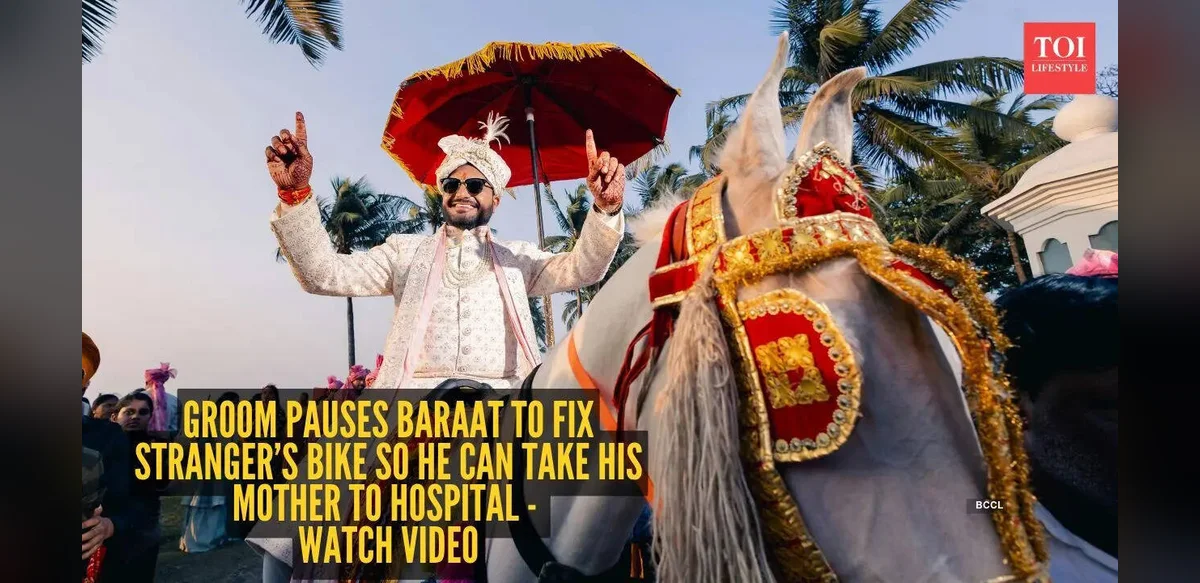
A video that has gained widespread attention online captures a groom interrupting his wedding procession to assist a stranger. During the lively event, filled with music and dancing, the groom noticed a man facing difficulties with his malfunctioning motorcycle. The man was urgently trying to transport his ailing elderly mother to a medical facility.
The groom immediately dismounted, adjusted his formal clothing, and repaired the vehicle’s chain. Despite the significance of his wedding day and the strict timing often associated with such ceremonies in Indian culture, he chose to address the stranger’s emergency first. The repair was completed quickly, allowing the man to proceed to the hospital.
The footage has amassed millions of views, resonating with audiences for its display of selflessness. In a society where wedding schedules are meticulously planned and delays are frowned upon, the groom’s actions highlight a disregard for personal convenience in favor of helping others.
This incident exemplifies how spontaneous acts of compassion can foster human connections amid everyday challenges. Research supports that such gestures release oxytocin, which alleviates stress and enhances well-being. Studies by psychologist Sonja Lyubomirsky indicate that regular kind actions can sustain happiness over extended periods. Recipients often experience a sense of appreciation, promoting trust and stronger community bonds.
In a fast-paced world, these moments counteract negativity and encourage positive interactions. They are simple, cost-free ways to improve one’s own day and that of others.

